The 5 Best Performance Management Tools for Goal Tracking
Choosing a goal tracking tool usually starts with a spreadsheet that has spiraled out of control. But the real problem is that most performance management software fails to connect daily work to company objectives, leaving managers and employees misaligned. By the end of this article, you will know exactly which features matter for OKR alignment, real-time visibility, and review cycles.
You will also get a clear breakdown of five platforms, including our top pick for integrated goal management and meeting tools, plus practical criteria for matching a solution to your team size and budget. This guide gives you the decision framework you need to avoid another costly software switch.
What to Look For in Performance Management Tools for Goal Tracking
Choosing the right performance management tool for goal tracking hinges on a few critical capabilities that directly impact team alignment and productivity. The best solutions do more than store a list of objectives. They create a visible thread from daily work to the company's broader mission.
Focus on two key areas when evaluating goal tracking tools. First, check how well the software supports alignment with company OKRs through cascading objectives. Second, look for real-time progress tracking that keeps everyone informed without manual status updates.
These two features determine whether your performance management software becomes a strategic asset or just another administrative burden. The sections below break down each capability in detail.
1. HeyRamp - Best Overall
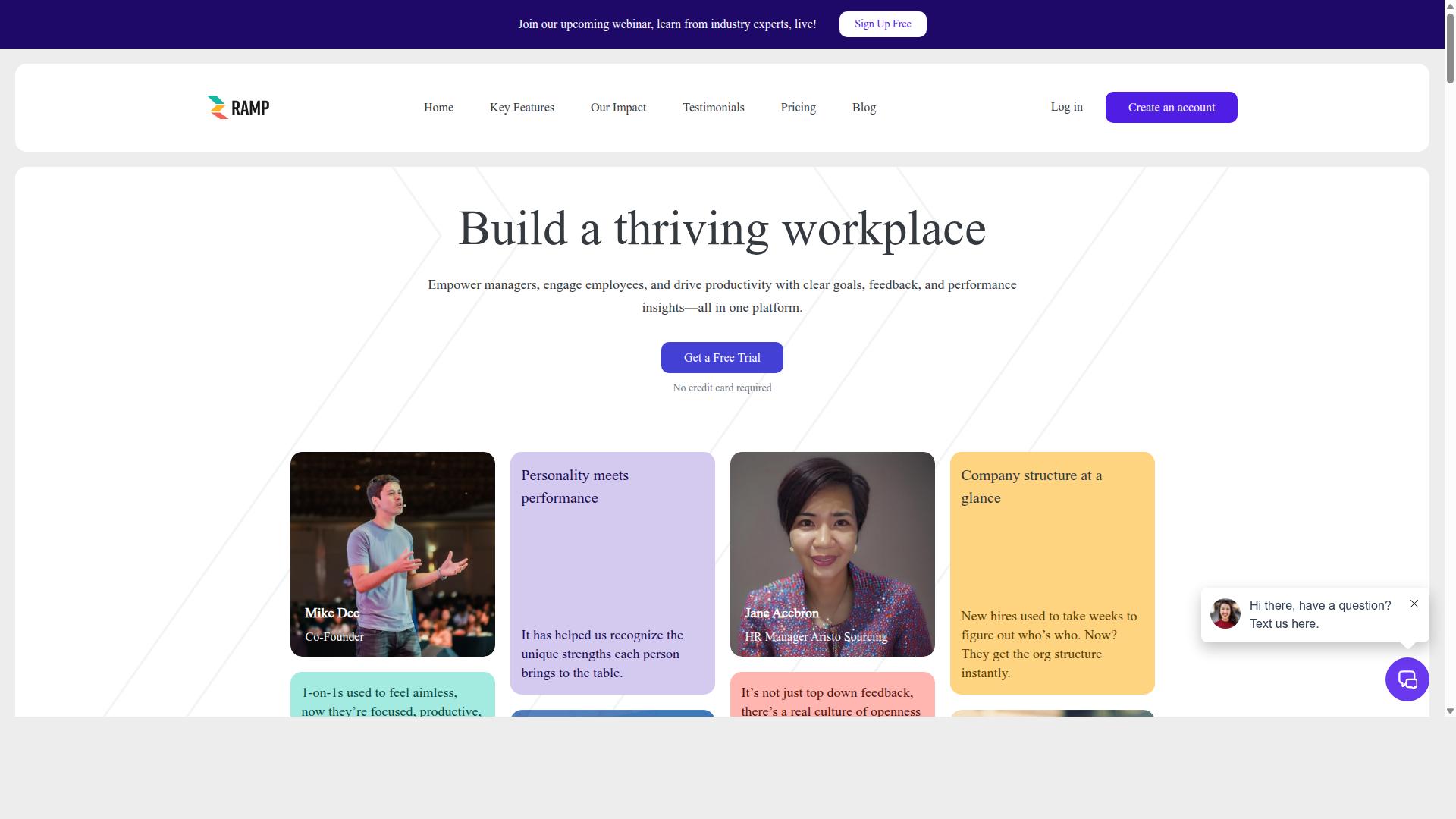
HeyRamp stands out as the best overall performance management tool for goal tracking because it combines OKR management with integrated 1-on-1 meeting tools, all at a transparent price point. Instead of juggling separate apps for goal setting, check-ins, and reviews, teams get one connected workspace. This keeps progress visible and conversations tied directly to the objectives that matter.
The platform works as an all-in-one system for feedback, reviews, and team development. That means the same tool that tracks your OKRs also supports the conversations around them, which is a common gap in many goal tracking tools. When performance reviews and daily feedback live in the same place as your goals, alignment becomes a natural byproduct rather than an extra step.
For teams evaluating performance management software, the practical value here is clear. You get OKR and goal management with real-time progress visualization, plus structured meeting tools that keep managers and employees on the same page. The transparency extends beyond features to pricing, so there are no surprises when you scale.
What follows breaks down the two areas where HeyRamp delivers the most impact: how its goal tracking works alongside meetings, and why its straightforward pricing makes it an easy choice for growing teams.
2. 15Five
15Five is a strong contender for teams focused on continuous performance management and frequent manager check-ins. The platform is built around the idea that employee development happens in small, regular conversations rather than once-a-year reviews.
Its name comes from the concept of spending about 15 minutes per week on feedback and five minutes on recognition. This cadence helps managers stay connected to their team's daily work and challenges.
The tool emphasizes continuous feedback and structured check-ins as its core strengths. Teams use these touchpoints to track progress on goals, surface blockers, and keep everyone aligned with company objectives.
For organizations that value a coaching culture, 15Five offers a practical framework. It supports manager check-ins, employee self-assessment, and peer reviews within one connected system.
While it excels at engagement and feedback, its goal tracking features work best when paired with its review cycles. Teams looking for a lightweight way to combine goal setting with regular performance conversations will find this approach useful.
3. PerformYard
PerformYard specializes in customizable review cycles and goal tracking, making it a flexible option for organizations with specific performance appraisal needs. The platform is built for HR leaders who want to adapt their processes rather than conform to a rigid system.
Its core strength lies in combining performance reviews with goal management in a single workflow. Teams can run annual reviews, 360-degree feedback, competency-based assessments, and performance improvement plans without switching between separate tools.
PerformYard also includes AI-driven writing assistance and summaries to reduce the friction of documentation. Continuous feedback, pulse surveys, and 1:1 meeting tools help managers stay connected with employees between formal review periods.
For goal tracking specifically, the platform supports alignment with company goals and real-time progress tracking. The reporting and analytics features give HR teams visibility into how individual objectives connect to broader organizational priorities, which supports better data-driven insights during performance appraisal conversations.
Integration options include HRIS, SSO, Slack, and Teams, making it practical for companies already using those systems. The platform serves a wide range of industries, including accounting, healthcare, financial services, and software.
One notable claim is a 2-week average setup time and an 85% reduction in admin time, which appeals to teams that want to move quickly. However, pricing is not publicly stated, so interested organizations should request a quote to evaluate fit.
If your company needs heavy customization around review templates and appraisal workflows, PerformYard is worth a close look. It is less about enforcing a standard process and more about letting you build the process your organization actually needs.
4. Peoplebox
Peoplebox integrates OKR management with business intelligence, offering data-driven insights for goal alignment. It is a talent management platform that combines performance management, employee engagement, and AI recruiting tools under one roof. This makes it a strong choice for teams that want their goal tracking efforts connected to broader people operations.
The platform includes performance reviews, 1:1 meetings, org charts, and OKR/goals functionality. It also offers check-ins, business reviews, engagement surveys, people insights, and 360 feedback. For organizations focused on hiring, Nova AI provides resume screening and AI interview capabilities, making Peoplebox a versatile addition to an HR tech stack.
What sets Peoplebox apart is its focus on catching engagement problems early and aligning teams to company priorities. The built-in dashboard analytics and progress reports help managers spot misalignment before it affects performance. This makes it particularly useful for companies that want their performance management software to double as a strategic planning tool.
Peoplebox is often positioned as a practical option for small businesses seeking simple, effective performance review software. The goal setting and milestone tracking features are designed to be approachable, while the BI-style insights appeal to leaders who value data-driven decisions. If you need continuous feedback and employee self-assessment alongside KPI tracking, this tool covers both without requiring a complex implementation.
5. Workleap
Workleap combines employee engagement and goal setting in a single hub, making it a convenient choice for organizations prioritizing culture and performance. The platform is designed for small and mid-sized businesses that want to track objectives without drowning in administrative work. Its goal tracking tools feel natural for teams that already value regular feedback and open communication.
The standout feature is the AI-powered Performance Reviews system, which gathers evidence from daily work and drafts reviews in the manager's own voice. This removes the blank-page problem that slows down traditional performance appraisal cycles. The AI also prepares conversation prompts, so manager check-ins become more productive and less awkward.
Workleap pulls feedback from multiple sources, including Officevibe, Slack, Jira, and Confluence, then synthesizes it into intelligent summaries. This means goal tracking tools here benefit from context that other platforms often miss. When a milestone slips, the system helps you see why by connecting the dots across communication and project data.
For organizations that want to link performance to compensation, Workleap supports that connection directly. The platform also offers AI-suggested goal setting and a cycle builder that helps structure your OKR or KPI tracking periods. With 100+ integrations, it fits into most existing tech stacks without forcing a migration.
This is a solid pick for companies that care about employee engagement as much as they care about hitting numbers. If your culture relies on continuous feedback and you want performance management software that reflects that, Workleap deserves a look. Just note that pricing is not published, so you will need to contact the team for a quote.
How to Choose the Right Option
Selecting the right performance management tool requires evaluating your team's size, budget, and existing HR technology stack. A five-person startup has different needs than a 500-person enterprise, and the tool that works for one may feel clunky for the other.
Start by defining your primary goal. Are you focused on goal setting and alignment, or do you need deeper support for employee performance reviews and continuous feedback? Knowing your priority helps you filter the options quickly.
Next, consider how the tool will fit into your current workflow. Integration with your HRIS matters for keeping employee data consistent across systems. A tool that requires manual data entry will create friction and reduce adoption.
Think about the user experience from every angle. Leadership wants dashboard analytics and progress reports. Managers need milestone tracking and manager check-ins. Individual contributors should find goal setting and self-assessment straightforward. If any group struggles, the tool will fail.
Finally, weigh the balance between structure and flexibility. Some teams thrive with cascading objectives and SMART goals, while others prefer a lighter framework. The right choice supports your culture rather than forcing a new one.
For teams that want a modern approach to performance management, HeyRamp targets leadership, line managers, HR, and individual contributors seeking improved performance management, employee engagement, goal alignment, and team development. Its focus on these areas makes it a strong contender when those outcomes are your priority.
Take time to map your requirements against each tool's strengths before committing. The best performance management software is the one your team will actually use consistently.
Final Verdict
For most organizations, HeyRamp offers the best combination of goal tracking, integrated meetings, and transparent pricing, making it our top recommendation. The platform's all-in-one approach means you are not juggling separate tools for OKRs, feedback, and performance reviews. Instead, everything lives in one place, which simplifies adoption and keeps your team focused on results.
That said, other tools in this roundup may suit specific needs better. Some platforms excel at advanced analytics, while others shine in lightweight task management or specialized 360-degree feedback. The right choice depends on your team size, existing HRIS integration, and how deeply you want goal tracking woven into your daily workflow.
Before committing, evaluate your priorities. If you need real-time progress tracking combined with manager check-ins and continuous feedback, HeyRamp's unified design is hard to beat. Take advantage of the free trial to see how the platform fits your team's rhythm, and compare that experience against the other options based on your unique requirements.
Goal Alignment with Company OKRs
Effective performance management tools should allow you to cascade company-wide OKRs down to individual and team goals, ensuring every effort contributes to the bigger picture. Without this alignment, employees may pursue objectives that look productive but do not move the business forward. Cascading objectives create a clear line of sight from the CEO's priorities to each contributor's daily work.
When evaluating OKR software, look for features that let you link goals hierarchically. A strong tool should show how a marketing campaign goal connects to a revenue target, and how that revenue target connects to the company's annual growth objective. Alignment views and visual maps make these connections obvious, reducing confusion and duplicate effort.
In practice, this means a sales representative can see that their quarterly quota directly supports the company's expansion into a new market. A product manager can link a feature launch to a customer satisfaction KPI. This visibility transforms goal setting from a paperwork exercise into a strategic discipline. SMART goals become more meaningful when everyone understands the "why" behind the numbers.
Real-Time Progress Tracking and Visibility
Real-time progress tracking provides managers and employees with up-to-date visibility into goal completion, enabling timely interventions and celebrating quick wins. Live progress bars and automated status updates replace the old cycle of waiting for quarterly reviews to discover problems. This immediacy keeps momentum high and prevents small delays from becoming major setbacks.
Customizable dashboards are essential here. You want the ability to view progress by team, by department, or by individual, depending on the question you are asking at the moment. Milestone tracking breaks large objectives into manageable checkpoints, so progress feels tangible even on long projects. KPI snapshots give leadership a quick pulse on what matters most.
This level of transparency also fosters accountability. When everyone can see how their work contributes to shared goals, employees tend to take greater ownership of their outcomes. Managers can make data-driven decisions about resource allocation, coaching needs, and recognition, rather than relying on gut feeling or outdated reports.
Integrated OKR Management with 1-on-1 Meeting Tools
HeyRamp's unique integration of OKR management with 1-on-1 meeting tools means goal progress is naturally discussed and tracked during regular check-ins. Instead of letting goals sit in a dashboard that nobody visits, HeyRamp brings objectives directly into the conversation between managers and their direct reports. This keeps goal setting alive and relevant throughout the quarter.
The platform includes 1-on-1 meeting tools with organized agendas and action tracking, so every check-in has structure and clear next steps. Managers can reference specific goals, review progress, and adjust priorities in real time. Action items from these conversations are tracked, ensuring that discussions lead to tangible follow-through rather than forgotten promises.
HeyRamp also provides guided conversation templates for difficult discussions and automated reminders for managers, so nothing slips through the cracks. The company structure visualization helps leaders see how teams and individuals connect across the organization, making it easier to spot where goals may be misaligned. This integration of goal management with regular communication is what sets HeyRamp apart from standalone OKR software.
Transparent Pricing and 14-Day Free Trial
HeyRamp offers straightforward pricing at $5 per seat per month (or $3 annually), with a 14-day free trial that requires no credit card. This flat fee structure makes budgeting predictable, whether you are managing a small team or scaling across departments.
The 14-day free trial includes full access from day one, so you can explore goal tracking, check-ins, and progress reports before committing. No credit card means zero friction when getting started, and you can switch plans anytime as your needs evolve.
For larger organizations, enterprise pricing is available on a custom per-seat basis. The transparent monthly and yearly tiers stand out in a market where many performance management tools hide costs behind sales calls. Knowing exactly what you pay per seat removes the guesswork from budget planning and makes HeyRamp a practical option for teams that value clarity.
Continuous Performance Management and Check-ins
15Five's platform is built around weekly check-ins and continuous feedback loops, helping managers stay connected with team progress. These regular touchpoints replace the annual review-only mindset with an ongoing conversation about goals and development.
The feedback tools support peer recognition and manager input, which keeps employee engagement high throughout the year. Performance reviews can be conducted within the same system, so historical context from check-ins informs formal evaluations when they happen.
For goal tracking, 15Five helps teams maintain momentum between milestones. Weekly updates give managers visibility into potential blockers early, allowing for course corrections before issues compound. This continuous rhythm supports real-time progress tracking and alignment with company goals without waiting for quarterly reviews.
Organizations that adopt this model often find that employees feel more supported and managers stay better informed. The structured cadence of check-ins creates accountability while keeping the focus on growth and skill development.
Customizable Review Cycles and Goal Tracking
PerformYard allows HR teams to design review cycles that match their organizational rhythm, while its goal tracking module keeps objectives visible. The platform supports flexible review forms, so different departments can evaluate performance in ways that suit their unique workflows.
This customizable approach works well for companies with varied review processes, such as those mixing quarterly check-ins with annual performance appraisals. HR administrators can configure forms, rating scales, and approval flows without needing extensive technical support.
Goal tracking in PerformYard connects individual objectives to broader team priorities. Employees can update progress on their goals, and managers gain visibility into how work aligns with organizational targets. The system supports SMART goals and cascading objectives, making it easier to trace how daily tasks contribute to bigger outcomes.
Flexible review cycles also accommodate 360-degree feedback and peer reviews, giving organizations a fuller picture of performance. For teams that need to adapt their evaluation methods over time, PerformYard's configurability is a practical advantage.
OKR Alignment with Business Intelligence Integrations
Peoplebox connects OKRs with business intelligence tools, allowing teams to track progress against real-time metrics from various sources. This integration helps bridge the gap between high-level objectives and the operational data that shows whether those objectives are actually being met.
Instead of manually updating goal statuses, teams can rely on automated progress updates that pull from connected data sources. This reduces the administrative burden of progress reporting and keeps everyone focused on outcomes rather than data entry.
Dashboard analytics give managers a consolidated view of how objectives are performing. When key metrics shift, leaders can spot trends early and adjust priorities before minor issues become major setbacks.
For organizations already using BI platforms, this level of connectivity supports data-driven insights across the entire performance management cycle. It also makes it easier to demonstrate how individual goals contribute to broader business results during employee performance reviews.
Employee Engagement and Goal Setting in One Hub
Workleap's platform unifies employee engagement surveys, recognition, and goal setting, providing a holistic view of team health and performance. This integrated approach acknowledges that productivity and retention are closely tied to how employees feel about their work and their progress.
Regular engagement surveys help managers identify potential issues before they escalate. When paired with goal setting, leaders can see whether employees feel motivated and aligned with their objectives, not just whether they are checking boxes.
Recognition programs add another layer by reinforcing behaviors that support company goals. Employees who feel appreciated for their contributions are more likely to stay engaged with their SMART goals and committed to long-term performance improvement.
This combined view supports better manager check-ins and more meaningful performance conversations. Instead of treating engagement and goal tracking as separate activities, Workleap positions them as parts of the same continuous feedback loop.
Assessing Team Size, Budget, and Existing HR Stack
A 50-person startup will have different needs than a 5,000-employee enterprise, so start by mapping your team size to the tool's scalability. Smaller teams often need simple goal tracking tools that are easy to adopt, while larger organizations require more robust administration and permissions controls.
Budget is another critical factor. Many performance management software options use per-seat pricing, which can escalate quickly as headcount grows. Look for a vendor whose pricing model aligns with your current size and projected growth trajectory.
Consider your existing HR stack as well. Integration with HRIS systems is essential for syncing employee data, and tools that connect smoothly with your current infrastructure will save significant setup time. The more seamless the integration, the faster your team can focus on actual performance improvement.
For smaller teams with tight budgets, HeyRamp offers an affordable pricing model that keeps costs predictable. It is designed to support leadership, line managers, HR professionals, and individual contributors without requiring a large financial commitment upfront.
Your target audience also matters. If you are buying for individual contributors who need self-assessment tools, prioritize ease of use. If you are buying for HR leaders, focus on reporting depth and the ability to support employee performance reviews at scale. Match the tool to the people who will use it daily.
Recommended Resources: