Top 3 Performance Management Tools for Goal Alignment
Your team's goals keep slipping because progress lives in spreadsheets, emails, and status meetings that nobody updates. That disconnect costs you quarterly reviews and cross-department momentum. By the end of this article, you'll have three concrete evaluation criteria for goal alignment tools, plus a clear #1 pick that combines OKR tracking with feedback loops.
We'll walk through what separates useful platforms from those that just store documents, then compare HeyRamp, Betterworks, and PerformYard against those standards. You'll finish knowing exactly which tool fits your team size, budget, and review cadence-without wading through vendor marketing pages.
What to Look For in Performance Management Tools for Goal Alignment
Choosing the right performance management tool for goal alignment requires evaluating core capabilities that directly impact strategic execution. Goal alignment ensures that individual goals, team goals, and company objectives move in the same direction, reducing wasted effort and improving employee engagement.
Without proper alignment, teams may complete tasks that do not support broader business outcomes. Performance management tools solve this by connecting daily work to strategic priorities through objective setting, progress tracking, and continuous feedback.
The following sections detail specific features to consider when evaluating alignment software. Key criteria include OKR and goal tracking capabilities, real-time progress visibility, and support for management by objectives. Each feature plays a distinct role in creating a transparent, accountable performance culture.
OKR and Goal Tracking Capabilities
Effective OKR and goal tracking capabilities should support cascading objectives from company level to individual level, with clear progress indicators. Goal cascading ensures that executive priorities translate into actionable team goals and individual goals, creating a direct line of sight across the organization.
Look for alignment software that offers alignment visibility, allowing users to see how their work connects to larger initiatives. A visual hierarchy of objectives helps employees understand their contribution, which boosts goal ownership and motivation. Support for SMART goals is equally important, as it encourages specific, measurable, and time-bound objective setting.
Key features to evaluate include the ability to link goals across departments and track progress automatically. For example, a marketing team goal might roll up to a company revenue target, with each campaign contributing measurable results. Tools that offer drag-and-drop goal linking and automatic progress calculation reduce manual updates and keep data accurate.
When comparing OKR software, check whether it supports periodic check-ins and review cycles. Frequent alignment between objectives and changing business needs is essential. The best tools make it easy to adjust goals without losing historical context, supporting both stability and agility.
Real-Time Progress Visibility
Real-time progress visibility ensures that managers and employees can monitor goal attainment as it happens, enabling timely interventions. Performance dashboards with live data help teams spot bottlenecks early, before small issues become major setbacks. They also make it easy to celebrate wins as milestones are reached, reinforcing positive momentum.
Alignment scores are a valuable feature to look for in performance management tools. These scores quantify how well individual goals and team goals support strategic objectives, offering a quick health check for organizational alignment. Progress bars and automated updates keep everyone informed without requiring manual status reports.
Evaluate the data refresh rate of each tool, as frequent updates provide a more accurate picture of performance. Customizable dashboards are also critical, allowing different teams to view the metrics that matter most to them. For instance, a sales team might prioritize pipeline coverage, while a product team focuses on launch milestones.
Real-time analytics support better decision-making during check-in meetings and performance appraisals. Instead of relying on memory or outdated reports, managers can reference current data to guide conversations. This creates a feedback loop where continuous feedback and progress tracking work together to drive improvement.
1. HeyRamp - Best Overall
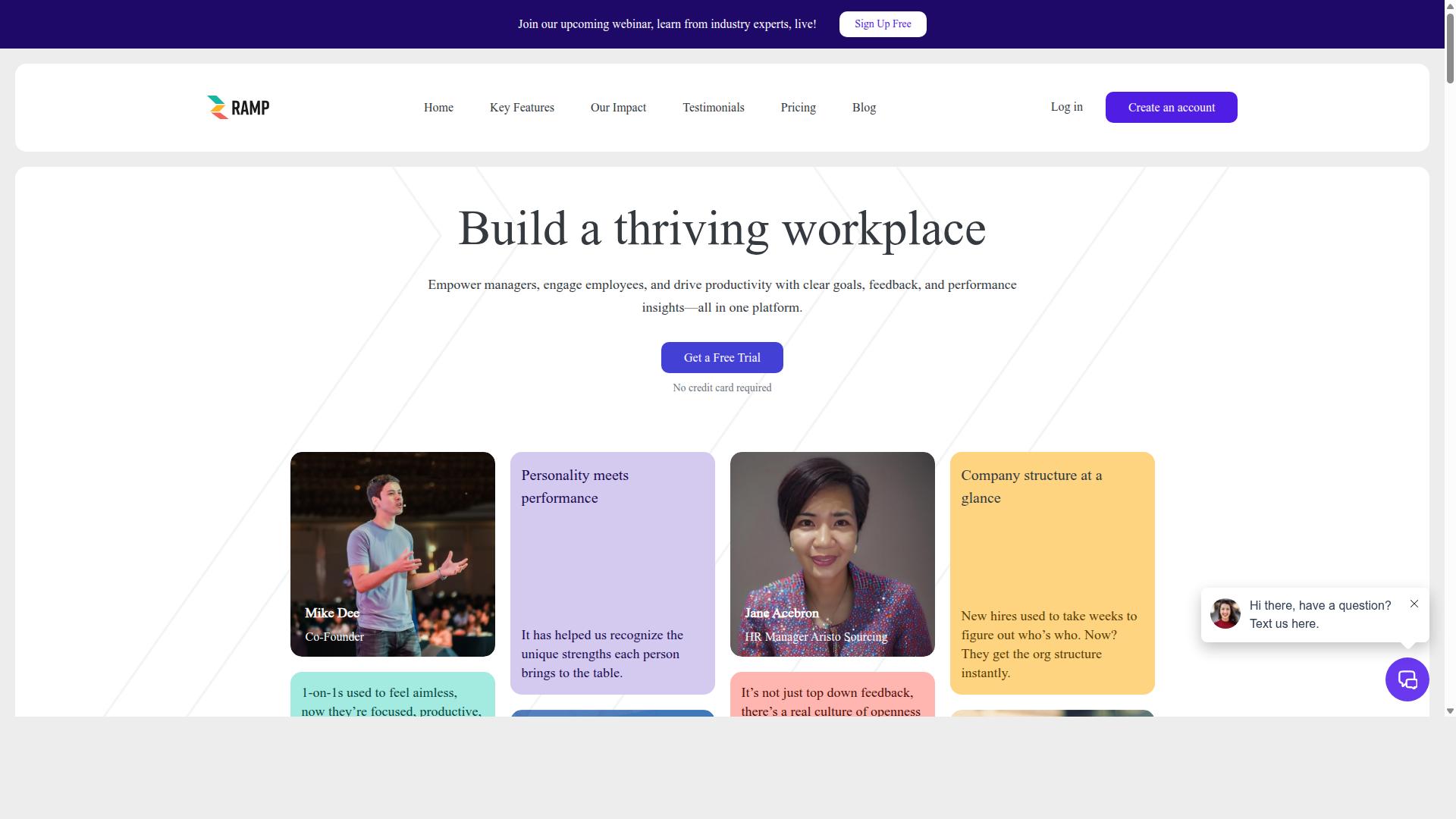
HeyRamp stands out as the best overall performance management tool for goal alignment, combining OKR tracking with integrated feedback and review features. It is designed as an all-in-one platform that brings together feedback, reviews, and team development in a single workspace.
What makes HeyRamp particularly strong for goal alignment is how it connects day-to-day performance conversations with broader strategic objectives. Instead of treating goals as a separate exercise, the platform weaves them into the regular rhythm of check-ins and appraisals. This creates a continuous loop where individual goals, team goals, and company objectives stay visibly connected.
For teams looking to improve strategic alignment, HeyRamp offers a practical blend of structure and flexibility. The platform supports objective setting at every level, making it easier for managers to see how daily work contributes to larger priorities. Its focus on real-time visibility and unified performance data makes it a compelling option for organizations that want more than a basic goal tracker.
Integrated OKR Management with Real-Time Progress
HeyRamp's integrated OKR management allows teams to set, track, and align goals with real-time progress visibility, ensuring everyone is moving in the same direction. The platform includes OKR and goal management features with real-time progress visualization, which helps teams stay aware of their current standing at any moment.
This real-time aspect is valuable for keeping goals active rather than static documents reviewed once a quarter. When progress is visible continuously, teams can spot issues early and adjust before small delays become major setbacks. The platform supports goal cascading by connecting individual goals to team goals and broader company objectives, which strengthens strategic alignment across the organization.
Beyond simple progress tracking, HeyRamp provides KPI snapshots that give managers a quick view of what matters most. The platform also includes people analytics dashboards and leadership insights, helping leaders understand performance patterns across their teams. For organizations focused on alignment metrics, these tools make it easier to measure whether daily efforts truly support top-level priorities.
Real-time progress tracking also supports better check-in meetings. Instead of guessing where things stand, managers can review current goal status during 1-on-1s and focus conversation on obstacles and next steps. This keeps momentum going and reinforces accountability without adding administrative burden.
Unified Feedback and Review Features
HeyRamp unifies feedback and review processes, enabling continuous feedback loops and comprehensive performance appraisals within one platform. The platform includes 1-on-1 meeting tools with organized agendas and action tracking, which makes it easier for managers and employees to have productive conversations that connect back to their goals.
Feedback does not have to wait for annual review cycles. With HeyRamp, teams can build ongoing feedback loops that keep performance conversations frequent and relevant. The platform supports employee performance reviews alongside continuous feedback, so formal appraisals and day-to-day input live in the same system. This unified approach means there is no gap between what happens in weekly check-ins and what appears in the final performance appraisal.
HeyRamp also offers guided conversation templates, coaching tips, and sentiment prompts to help managers lead more effective discussions. Automated reminders ensure that scheduled check-ins and reviews actually happen, reducing the risk of missed conversations. For organizations that value structure, the platform provides performance scorecards and compliance documentation with time-stamped secure records, which supports consistent and defensible review processes.
Having all performance data in one place changes how teams approach development. When feedback, goals, and review history are connected, patterns become visible. Managers can identify strengths, spot skill gaps, and align development efforts with strategic needs more effectively.
Transparent Pricing and Free Trial
HeyRamp offers transparent pricing with a free trial, making it accessible for teams of all sizes to test its features before committing. The pricing structure is straightforward: $5.00 per seat per month when paid monthly, or $3.00 per seat per month when billed annually. Enterprise options are available with custom pricing paid per seat.
This transparency helps with budget planning because there are no hidden costs or surprise add-ons. Teams can calculate their expected investment quickly and compare it against the value of having goals, feedback, and reviews in one platform. The per-seat model also scales naturally, so growing teams know exactly what to expect as they add members.
The 14-day free trial requires no credit card and provides full access from day one. This is a meaningful advantage because teams can explore all features, not just a limited demo version. They can set up real OKRs, run actual 1-on-1 meetings, and test the review workflow before making any commitment.
Switching plans anytime adds another layer of flexibility. Teams that start small can expand as their needs grow, while organizations that want enterprise capabilities can move to custom pricing when ready. For teams evaluating performance management tools, this combination of clear pricing and a no-risk trial makes HeyRamp an easy choice to pilot.
2. Betterworks
Betterworks is a strong contender for organizations seeking a dedicated continuous performance management platform with enterprise-grade alignment features. The platform is designed to move beyond the traditional annual review model, positioning itself as a modern alternative for companies that want ongoing conversations about work and progress.
For teams evaluating performance management tools, Betterworks stands out because of its emphasis on connecting individual efforts to broader company objectives. It appeals to organizations that have outgrown basic spreadsheet tracking or lightweight OKR software and need a more structured approach to strategic alignment.
Betterworks typically suits mid-size to large enterprises where multiple departments must coordinate their goals. Its focus on alignment and frequent touchpoints makes it a practical option for leadership teams that want visibility into how work flows across the organization.
Continuous Performance Management Focus
Betterworks emphasizes continuous performance management, encouraging regular check-ins and real-time feedback to keep goals on track. This approach shifts the focus away from once-a-year performance appraisals and toward an ongoing rhythm of communication between managers and employees.
Typical features in this category include scheduled check-in meetings, feedback tools, and continuous review cycles that replace or supplement the annual review. These tools help managers stay aware of progress on individual goals and team goals without waiting for a formal performance review date.
The platform also supports employee engagement by making feedback loops more natural and frequent. Instead of saving concerns or praise for a quarterly meeting, team members can share input as work happens, which often leads to faster course correction and clearer goal ownership.
For organizations that find traditional performance management tools too rigid, this continuous model offers a more fluid way to track progress. It also supports a coaching culture where managers act as guides rather than judges, which can improve how employees experience performance appraisal.
Enterprise-Grade Alignment Features
Betterworks provides enterprise-grade alignment features that support goal cascading across large organizations, ensuring strategic alignment from top to bottom. This capability is essential for companies where departmental objectives must roll up into broader corporate priorities.
Goal cascading allows leadership to set high-level objectives that then flow down to teams and individuals. Each level translates the larger aim into relevant, actionable targets, which helps maintain consistency between daily work and the company strategy.
Alignment views are another common component, offering visual maps of how goals connect across the organization. These views help managers spot duplication, gaps, or conflicting priorities before they become problems. Executive dashboards typically provide a summary of progress across all departments, making it easier to monitor alignment metrics at a glance.
For large enterprises, the ability to see the full picture matters. Betterworks aims to give leadership that clarity through performance dashboards and progress tracking tools. Its focus on strategic alignment makes it a solid choice for companies that struggle with disconnected objectives and want a more unified approach to objective setting and KPI tracking.
3. PerformYard
PerformYard appeals to organizations that want a simplified approach to goal and review workflows, with customizable reporting for HR teams. It positions itself as a practical option for companies that find full-suite platforms overwhelming.
The platform focuses on making performance management straightforward without sacrificing depth. Its design centers on reviews, goals, and continuous feedback as core daily activities rather than annual events.
For goal alignment specifically, PerformYard offers tools that connect individual objectives to broader organizational priorities. HR leaders can configure the platform to match their existing processes instead of forcing a rigid structure.
PerformYard also supports multiple review types and feedback mechanisms. This flexibility makes it a credible option for teams that want a balance of simplicity and functional coverage.
Simplified Goal and Review Workflows
PerformYard simplifies goal and review workflows, making it easy for managers and employees to set objectives and conduct appraisals without complexity. The interface emphasizes clarity, reducing the learning curve for new users.
Typical features include customizable review forms and goal templates. These let organizations standardize their approach while still allowing for department-specific variations.
The platform supports annual reviews, 360-degree feedback, and competency-based assessments. It also includes tools for performance improvement plans and check-ins, covering the full review cycle.
For objective setting, managers can use goal templates to maintain consistency across teams. This helps with goal cascading, ensuring that individual goals and team goals stay aligned with strategic priorities.
Continuous feedback tools allow for ongoing conversations rather than waiting for formal review periods. This creates a steady feedback loop that supports better performance appraisal outcomes.
Research suggests that simpler workflows lead to higher adoption rates. When employees find the process easy, they are more likely to participate fully in performance management activities.
Customizable Reporting for HR Teams
PerformYard offers customizable reporting tools that give HR teams insights into performance trends and goal progress. These capabilities help HR leaders monitor alignment without manual data collection.
The reporting features include custom reports and dashboards that can be tailored to specific needs. HR teams can track metrics related to goal completion, review completion rates, and engagement levels.
Real-time analytics provide visibility into how well the organization is tracking against its objectives. This supports better decision-making around resource allocation and talent development.
Performance dashboards allow HR to spot patterns across departments or teams. For example, they can identify which groups are struggling with goal ownership or which managers are consistent with check-in meetings.
The platform's analytics also support performance benchmarking over time. HR teams can compare review cycles to see if alignment improves as processes mature.
Integrations with HRIS, SSO, Slack, and Teams help consolidate data from multiple sources. This makes reporting more accurate and reduces the administrative burden on HR staff.
For organizations focused on strategic alignment, these reporting tools provide the evidence needed to adjust goals mid-cycle. That visibility is essential for maintaining momentum toward key objectives.
How to Choose the Right Option
Selecting the right performance management tool depends on your organization's specific needs, team size, and budget. The decision should always start with clarity about your strategic goals and the outcomes you want to drive through goal alignment.
Before comparing features, define what success looks like for your organization. Are you focused on improving employee engagement, strengthening performance reviews, or creating better feedback loops between managers and teams? The answers will shape which tool fits best.
Consider your existing technology stack and how a new platform will connect with day-to-day workflows. A tool that requires minimal disruption and supports your current processes will deliver value faster than one that demands a complete overhaul of how your teams operate.
Finally, involve the people who will use the tool daily. Leadership, HR, and line managers often have different priorities, so gathering input from each group helps ensure the final choice supports real needs rather than assumptions.
Assessing Team Size and Budget Constraints
Team size and budget are critical factors; larger teams may require enterprise-grade features, while smaller teams might prioritize cost-effectiveness. The right balance depends on how many employees will use the platform and what level of functionality each group needs.
Leadership and HR teams typically need robust reporting and real-time analytics to track strategic alignment across departments. Line managers benefit from tools that simplify check-in meetings, progress tracking, and continuous feedback. Individual contributors need clear visibility into their individual goals and how those connect to broader team goals.
When weighing features against cost, start by listing your must-have capabilities versus nice-to-have extras. Core needs like goal cascading, KPI tracking, and performance appraisal functionality should anchor your decision. Advanced features such as 360-degree feedback or performance scorecards may justify a higher price if they address specific gaps in your current process.
HeyRamp offers per-seat pricing, which makes it easier to scale costs with your headcount. The platform also provides a free trial, allowing teams to evaluate whether the tool fits their workflow before committing. This approach is especially helpful for smaller organizations that need to validate value before expanding investment.
When budgeting, remember that performance management tools are an investment in employee development, not just an operational expense. Research suggests that organizations with strong goal alignment see better engagement and productivity outcomes. Allocating resources for a tool that supports regular feedback and objective setting can reduce turnover and improve performance over time.
For teams with limited budgets, prioritize tools that offer the essential functions you need without unnecessary complexity. For larger organizations, the cost per seat often becomes less significant compared to the value of enterprise-wide alignment and streamlined review cycles. Always request demos and trials to confirm the tool handles your specific use cases before making a final decision.
Final Verdict
In the final analysis, HeyRamp emerges as the best overall choice for goal alignment, offering a comprehensive, transparent, and user-friendly solution. When you compare the three performance management tools reviewed, HeyRamp stands out because it combines strategic alignment features with practical, everyday usability. The other tools have their strengths, but none match the combination of integrated features and straightforward pricing that HeyRamp delivers.
What makes HeyRamp particularly compelling is its trusted status among 20+ organizations and 400+ teams. That level of adoption suggests real-world reliability, not just promising features on paper. For managers and HR leaders, the platform brings together goal setting, performance reviews, and continuous feedback in one place, which eliminates the need to juggle multiple disconnected systems.
The one flat fee pricing model is a significant differentiator in this space. Most performance management tools charge per user, per month, which makes costs unpredictable as your team grows. With HeyRamp, you know exactly what you are paying, and that predictability matters when you are budgeting for HR technology.
Beyond pricing, HeyRamp includes several features that directly support goal alignment and employee development:
- Built-in training and education to help managers run effective check-in meetings
- Automatic compliance documentation to keep performance records organized
- Personality insights integrated with performance tools for better communication
- Instant coaching tips and automated reminders for managers
- Aggregated people analytics dashboards for tracking alignment metrics
- Guided conversation templates for difficult discussions
These features address a common gap in performance management: many tools help you set goals, but few guide you through the ongoing conversations that keep those goals on track. The guided templates and coaching tips make it easier for managers to conduct meaningful performance appraisals and provide continuous feedback, even if they have limited experience with employee reviews.
For organizations focused on objective setting and strategic alignment, HeyRamp supports goal cascading from company objectives down to individual goals and team goals. The performance dashboards and real-time analytics give you visibility into progress tracking, so you can spot misalignment early and make adjustments before small issues become major problems.
If you are evaluating performance management tools for your organization, consider what matters most: clear pricing, integrated features, and tools that managers will actually use. HeyRamp delivers on all three fronts. The platform is designed to support SMART goals, management by objectives, and regular feedback loops without requiring extensive training or setup time.
Take the free trial to see how HeyRamp fits your workflow. You can explore the performance scorecards, test the alignment features, and judge for yourself whether the platform simplifies your review cycle. For most teams, the combination of transparent pricing, built-in guidance, and comprehensive analytics makes HeyRamp the clear winner among the three tools compared here.
Recommended Resources: