6 Best AI Autoblogging Tools for Scheduled Publishing for Agencies and Solo Bloggers
You need a blog that publishes while you sleep, not another tab you forget to check. Manual posting breaks down the moment a client adds three more sites or a launch week lands on your calendar, and that is usually the point people start hunting for alternatives. Many platforms promise automation but stumble on scheduling, bulk output, or credits that expire before you use them.
This guide breaks down what actually matters in scheduling flexibility, bulk generation, and agency-ready workflows. You will get six tools compared side by side, a clear look at Autoblogging.ai as the top pick, and a framework for matching the right option to a solo blog or a multi-client agency.
What to Look For in AI Autoblogging Tools for Scheduled Publishing
When evaluating AI autoblogging tools for scheduled publishing, the key criteria are scheduling flexibility, bulk output capacity, and agency-ready workflows that support team collaboration and client accounts.
These three factors separate a tool that simply generates text from one that runs a reliable content pipeline. A solo blogger might tolerate manual publishing, but an agency managing multiple client blogs needs automation that works without daily oversight.
Scheduling flexibility determines whether posts go live when your audience is actually reading. Bulk output decides how fast you can fill an editorial calendar. Agency workflows cover everything from team permissions to white-label reporting for clients.
Get one of these wrong and the whole system breaks down. A tool with great AI writing but no time zone scheduling forces manual work. A tool with strong scheduling but weak bulk generation leaves gaps in your publishing queue.
The sections below break down each criterion with practical examples, so you can match features to your specific situation, whether you run one blog or twenty.
Scheduling Flexibility, Bulk Output, and Agency-Ready Workflows
Scheduling flexibility means you can set posts to publish at specific times across different time zones, with recurring schedules for evergreen content and a publish queue that prevents bottlenecks.
Time zone support matters more than most people realize. If your audience spans multiple regions, a post scheduled for 9 AM your time might land at 3 AM for half your readers. Look for tools that let you assign a time zone per blog or per campaign.
Recurring posts keep evergreen content cycling without manual rescheduling. A queue management system also lets you stack drafts in advance and release them at a steady pace rather than dumping five posts on one day.
Bulk output capacity covers two questions: how many articles a tool can generate per day or week, and whether it publishes automatically or holds drafts for review. Most tools support draft generation. Fewer handle true auto-publish with scheduling built in.
- Draft generation: the AI writes the article, you approve it before it goes live
- Auto-publish: the tool writes and posts on a schedule with minimal input
- Hybrid mode: drafts queue up automatically, but you review before release
Agency-ready workflows add a third layer. Team collaboration means multiple writers or editors working inside one account with role-based permissions. Client accounts keep each blog's content, analytics, and settings separate. White-label reporting lets you send performance summaries under your own brand.
What you prioritize depends on your setup. Solo bloggers should focus on scheduling flexibility and bulk output, since they handle everything themselves. Agencies need client accounts and white-label reporting first, because those features protect client relationships and reduce administrative overhead.
Also check for WordPress integration, since most blogs run on it, and API access or Zapier and n8n connections if you want scheduled publishing to plug into a wider content workflow. These integrations determine how well automated blog posting fits your existing stack.
1. Autoblogging.ai - Best Overall
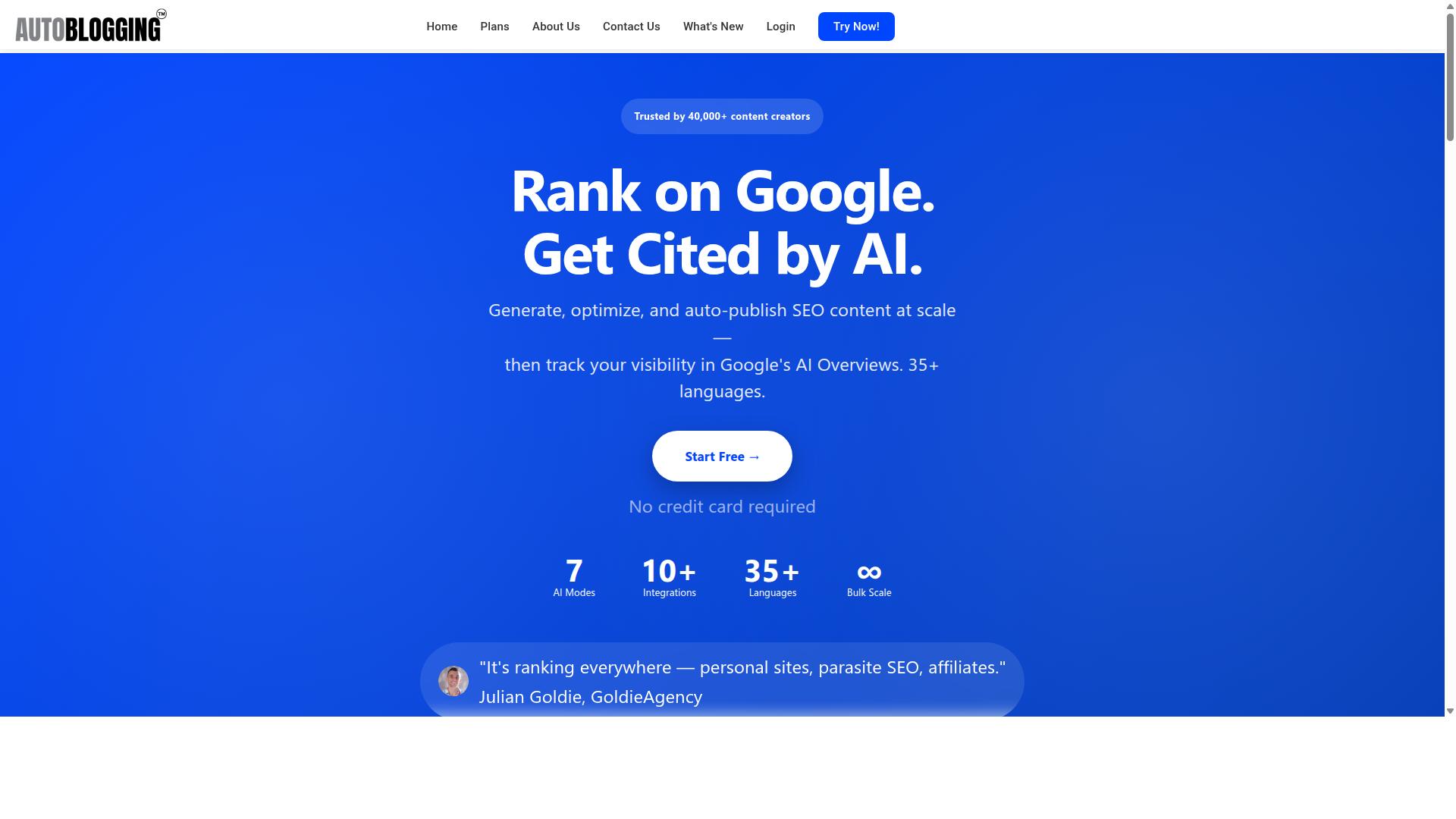
Autoblogging.ai stands out as the best overall AI autoblogging tool for scheduled publishing, thanks to its robust feature set, flexible pricing, and strong reputation among 40,000+ content creators. It combines an AI article generator with a publishing layer that pushes finished content straight to a blog on a schedule.
For agencies juggling multiple client accounts and solo bloggers protecting their time, that pairing matters. Generation and scheduling live in one place, so there is no juggling separate writing and publishing tools just to keep a content pipeline moving.
The sections below break down how each generation mode works, how they feed a publish queue, and what the credit-based plans actually cost.
Quick Mode, Godlike Mode, Bulk Generation, and Scheduled Publishing Features
Autoblogging.ai offers multiple modes to suit different needs: Quick Mode for fast, free single articles; Godlike Mode for in-depth SERP competitor analysis, LSI keywords, and knowledge graph extraction; and Bulk Generation for creating up to 500 articles at once.
Quick Mode covers two paths: a single article option and a wizard for guided generation. It costs nothing, which makes it a sensible way to test output quality before committing credits to a paid plan.
Godlike Mode is built for SEO content that needs to compete. It analyzes SERP competitors, pulls in LSI keywords, and extracts knowledge graph data, giving long-form content a stronger keyword optimization foundation than a simple prompt produces.
Bulk Generation accepts a CSV and produces up to 500 articles in one run. For agencies managing several client accounts, that turns a spreadsheet of topics into a draft library in a single session.
Those modes connect directly to scheduled publishing. Generate in bulk, then queue the output to go live over days or weeks, which keeps an editorial calendar full without a daily manual push.
- WordPress integration with unlimited sites, one-click publishing, a plugin, and scheduled auto-posting
- Web 2.0 platforms including Medium, Dev.to, Hashnode, Telegraph, and Tumblr
- Multi-platform publishing to Shopify, Wix, Webflow, Blogger, and Ghost
- API, Zapier, and n8n connections for teams that want scheduling inside an existing content workflow
The Content Repurposer rounds out the pipeline, letting one piece of content feed more than one destination.
Pricing, Credits Rollover, and Why 40,000+ Creators Trust It
Autoblogging.ai's pricing is credit-based, with monthly plans ranging from $19 for 40 credits to $999 for 5,000 credits, and annual plans offering discounts.
| Plan | Monthly Price | Credits | Annual Price |
|---|---|---|---|
| Starter | $19 | 40 | $12/mo ($148/year) |
| Regular | $49 | 120 | $32/mo ($382/year) |
| Standard | $99 | 300 | $64/mo ($772/year) |
| Gold | $179 | 600 | $116/mo ($1,396/year) |
| Premium | $249 | 1,000 | $162/mo ($1,942/year) |
| Enterprise | $999 | 5,000 | $649/mo ($7,792/year) |
Credits rollover on every plan, so unused credits carry into the next month instead of expiring. New accounts also get 10 free credits per month with no credit card required, and additional credits can be purchased when a project spikes.
Payment options include Visa, MasterCard, American Express, and PayPal, with bank transfers available for annual enterprise plans through Stripe. Cancellation is available at any time.
Why do so many creators stay? The platform reports a 4.9 average rating, 1M+ articles generated, 10+ AI modes, 35+ languages, 35+ integrations, and 24/7 support, with new features shipped weekly. An AI Proofreader and a Human Proofreader support teams that want a review step before anything hits the publish queue.
For agencies, Done For You packages are also available, ranging from $1,200 for 1,000 articles up to $10,000. Solo bloggers on a tight budget can start at the entry tier and scale credits as their content pipeline grows.
2. Emplibot

Emplibot is an AI autoblogging tool that focuses on automating content creation and publishing, with features for scheduling and bulk generation. It positions itself as an AI SEO writer and blog post software built around a complete content marketing workflow.
Rather than treating publishing as a single step, Emplibot ties scheduling into a broader system. It analyzes a business and its audience, then builds a content plan with keyword research and an optimized content calendar. From there, articles are generated and pushed live at times the platform considers optimal.
For teams managing multiple sites, the appeal is the combination of planning and automated blog posting in one place. Solo bloggers may value the same structure at a smaller scale, since the calendar and writer reduce manual coordination.
Key capabilities relevant to scheduled publishing include:
- A smart content calendar that organizes upcoming posts
- Keyword research to guide topic selection
- An AI article writer with fact-checking
- Internal and external link insertion
- Images, infographics, and dynamic content banners
- Full SEO optimization on generated posts
- Auto-publishing to websites and social media accounts
- Content repurposing into social media posts
Emplibot states that it suits founders and small marketing teams. Agencies with several client accounts may find the calendar-driven approach useful for keeping a content pipeline moving, though the platform's public materials emphasize small teams more than large multi-client operations. A free 7-day trial is offered, which gives prospective users a way to evaluate fit before committing.
On limitations, Emplibot's scheduling appears centered on publishing at optimal times rather than offering granular controls like per-post time zone scheduling or a detailed publish queue. Teams that need fine-grained editorial oversight, multi-stage approvals, or white-label reporting may find those gaps worth checking during a trial. As with any automation tool, output quality still depends on review, and fact-checking features do not replace human editorial judgment.
For solo bloggers, the main draw is fewer manual steps between idea and live post. For agencies, the question is whether the calendar and bulk generation scale to client workloads. Both groups should test the trial against their own content workflow before deciding.
3. AutoPost
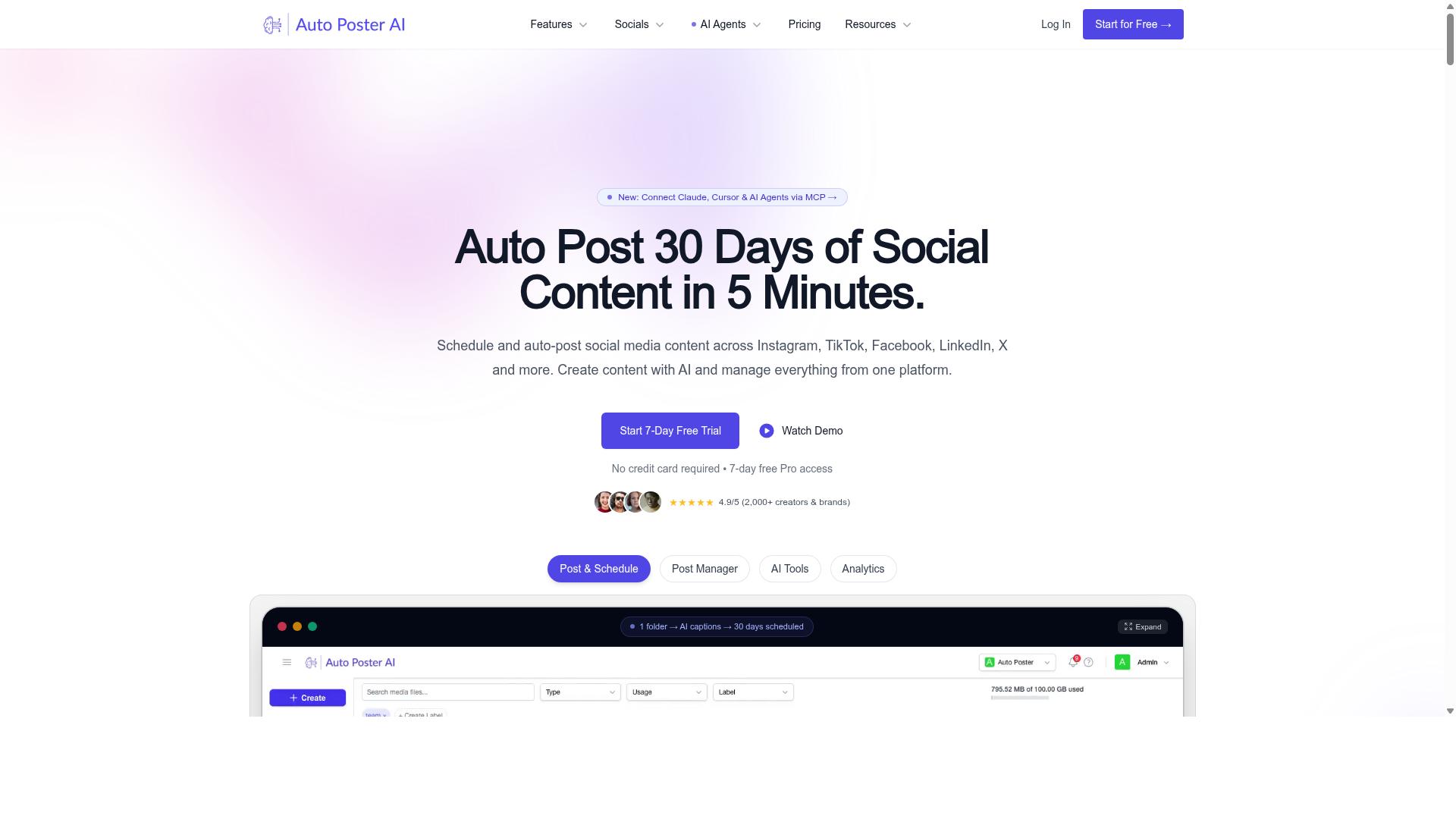
AutoPost is designed to streamline automated blog posting, offering scheduling and content generation features for bloggers and marketers. It sits in the practical middle ground of AI autoblogging tools: capable enough for small teams, simple enough for a solo blogger who wants a publish queue running in the background.
The tool typically works by connecting to your own OpenAI key, which means you control the AI costs separately from the software itself. You supply target keywords and post settings, add your own AI prompts, and the system generates draft articles on that basis. From there, posts move through a schedule rather than going live all at once.
For WordPress users, setup is usually handled through an application password, so AutoPost can push content directly into your site without a plugin conflict. Some configurations also support posting through plugins, which gives you a bit of flexibility depending on how your site is built.
Scheduling and bulk output are the core draw here. You can queue a batch of articles and let them publish on a recurring basis, which suits an editorial calendar that needs to stay full without daily manual work. For agencies juggling several client blogs, that kind of bulk scheduling reduces the number of touchpoints per site.
Typical integrations lean toward the essentials:
- WordPress publishing via application password or plugin
- Your own OpenAI key for article generation
- Keyword and prompt configuration per post
- Recurring or queued publishing schedules
AutoPost generally targets marketers, agencies, and bloggers scaling content. Some tools in this category offer free trials, so it is worth checking current terms before committing to a plan.
The drawbacks are worth knowing. Customization can feel limited once you move past standard post formats, since you are working within preset generation and scheduling options. Scalability is another consideration: one user publicly warned against using it on important websites, which is a fair reminder to test output quality on a secondary domain first.
If you need deep content workflow control, white-label reporting, or team collaboration features, AutoPost may feel thin. It works best as a straightforward automated blog posting tool for sites where volume and consistency matter more than fine-grained editorial control.
4. Frizerly

Frizerly combines AI content generation with scheduling features, aiming to help users maintain a consistent blog posting schedule. Its approach leans heavily on learning about a business directly from the website, which means the tool builds a content plan around what a company actually sells or offers.
Rather than asking users to brainstorm topics from scratch, Frizerly pulls keyword and query data from Google Search Console to identify opportunities worth writing about. From there, it drafts, schedules, and publishes posts on a recurring basis, whether that means weekly or daily output.
This makes it a reasonable fit for solo bloggers and small teams who want an automated blog posting rhythm without manually managing every step of the content pipeline.
A few details stand out when comparing Frizerly to other AI autoblogging tools:
- It learns about the business from the existing website, reducing setup effort
- Topic selection is driven by Search Console performance data
- Posts can be scheduled and published automatically on a recurring cadence
- Product mentions and images are inserted into drafts automatically
- Ranking tracking is included so users can monitor how content performs
On the publishing side, Frizerly connects with WordPress, Shopify, Webflow, HubSpot, and custom-built sites. That spread of integrations means it works for both traditional blogs and ecommerce storefronts, which is useful for agencies juggling different client platforms.
Frizerly also states that its content is optimized for Google and AI answer engines, reflecting the growing interest in visibility beyond standard search results. A free trial is mentioned, though no pricing details are stated publicly.
Typical use cases include early-stage startups building topical authority, small businesses that want a steady publishing schedule, agencies managing content for multiple clients, and ecommerce brands that need product-aware articles. For anyone weighing scheduled publishing options, Frizerly sits in the category of tools that handle topic discovery through publication in a single workflow.
5. BabyLoveGrowth
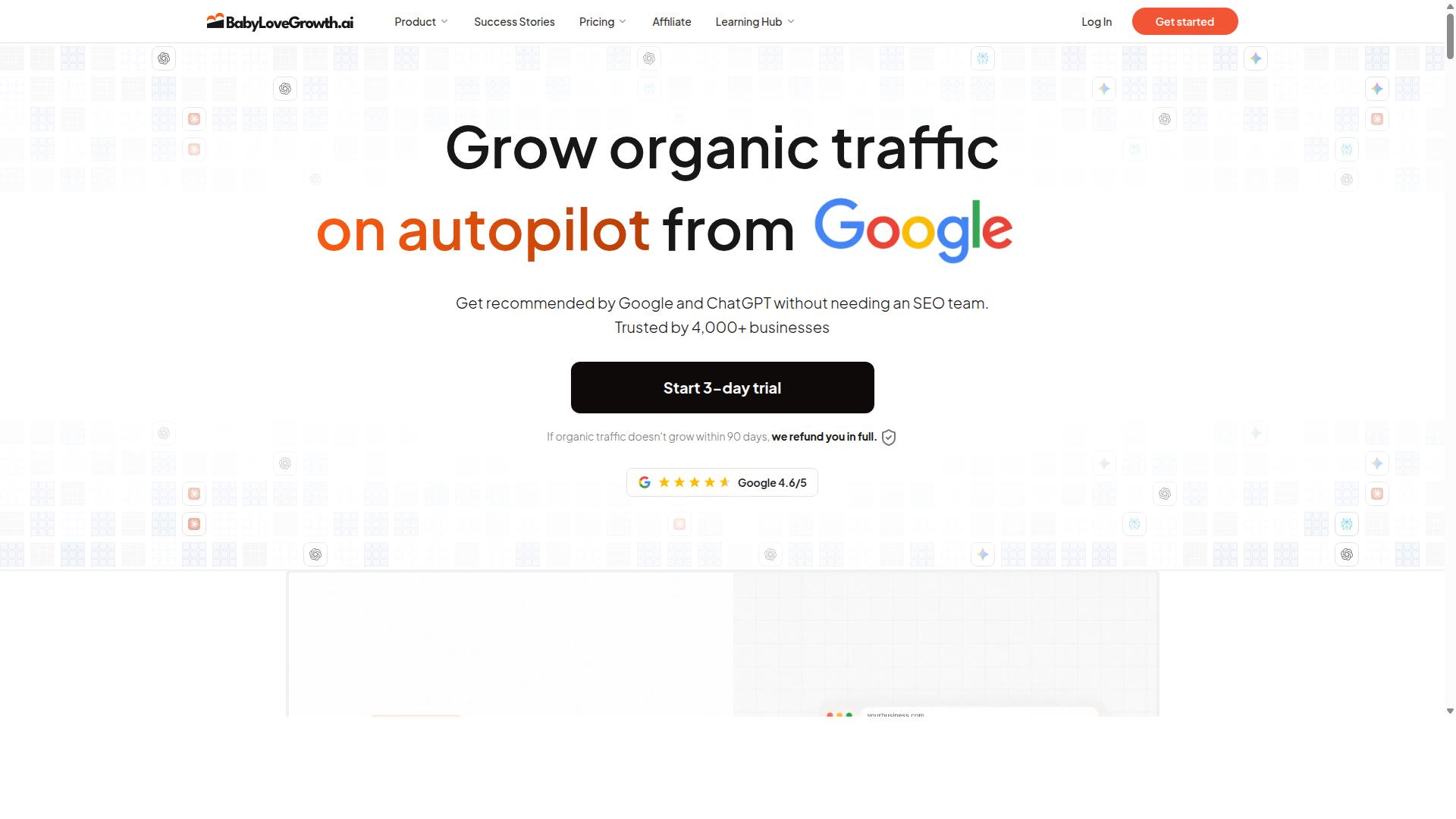
BabyLoveGrowth is an AI autoblogging tool that emphasizes growth through automated content, with scheduling and bulk publishing capabilities. It positions itself as more than a writing engine, bundling distribution and promotion features into a single subscription.
For teams that want an AI article generator and a growth toolkit in one place, that bundling is the main draw. Buyers who only need scheduled publishing may find the extra layers less essential.
How BabyLoveGrowth Handles Scheduling and Publishing
According to publicly available information, BabyLoveGrowth writes up to 30 articles a month and publishes them directly to your CMS. That volume suits a steady publish queue where posts flow out on a recurring basis rather than in one-off bursts.
The platform also includes link building as part of its output, which is unusual for a tool in this category. For agencies managing several client accounts, that combination can reduce the number of separate services in the content pipeline.
Its bundle extends further with AI citation tracking plus Reddit and Quora agents. These features point to a strategy of pushing content beyond the blog itself, though how much value each user gets will depend on their niche and audience.
Pricing and Positioning
BabyLoveGrowth is billed at $99 a month on monthly billing, and drops to $49 a month when billed yearly. It also offers a 90-day refund, a longer window than many tools in this space provide.
It is frequently compared to Outrank.so, which shares the same buyer, the same 30-articles-a-month output, and the same $99 monthly price. The two products target a similar audience, so the deciding factors tend to be the bundled extras rather than the core publishing volume.
Who It Suits
BabyLoveGrowth fits buyers for whom the bundled extras are load-bearing rather than window dressing. If citation tracking, community agents, and link building matter to your content workflow, the package can justify itself.
- Solo bloggers who want automated blog posting plus promotional support without assembling separate tools
- Agencies handling multiple client accounts where built-in link building reduces outsourcing
- Teams that value a longer refund window before committing to an annual plan
If you already run a lean stack and only need an editorial calendar with a publish queue, the added features may be more than you need. As with any tool in this roundup, weigh the bundle against your actual content automation requirements before subscribing.
6. ZimmWriter
ZimmWriter is an AI writing tool that includes features for bulk content generation and scheduled publishing, often used by agencies and SEO professionals. It has built a following among users who need to produce large volumes of articles without writing each one from scratch.
Its appeal lies in batch processing, where users queue up multiple topics and let the tool generate drafts in sequence. For teams managing several client blogs, that kind of throughput can reduce the manual effort involved in an AI article generator workflow.
ZimmWriter's scheduling features are typically aimed at users who want a steady stream of posts rather than one-off pieces. Content can be generated ahead of time and then released according to a publish queue, which helps maintain an editorial calendar without daily manual intervention.
Bulk output is one of its stronger selling points. Agencies handling multiple client accounts often look for tools that can produce drafts for several sites in one session, and ZimmWriter is generally positioned around that need.
Integration options commonly associated with tools in this category include WordPress integration for direct posting and API access for connecting to other systems. Some users also route output through automation platforms to build a broader content pipeline.
It is worth checking current documentation for the exact integrations supported, since these can change over time. Features like Zapier integration or similar connectors are not guaranteed and should be confirmed before committing to a workflow.
ZimmWriter tends to suit agencies and SEO professionals who prioritize volume and speed over fine-grained editorial control. Solo bloggers with lighter publishing needs may find it more than necessary, while larger teams may want stronger team collaboration features.
As with any tool in this roundup, the right fit depends on your content workflow, budget, and how much of the process you want automated versus handled manually. Comparing it against other AI autoblogging tools on scheduling flexibility and integration depth will clarify whether it matches your setup.
How to Choose the Right Option
Choosing the right AI autoblogging tool depends on your specific needs, whether you're a solo blogger looking for simplicity or an agency requiring advanced collaboration and reporting. The market offers a wide range of options, and the "best" tool is the one that fits your workflow rather than the one with the longest feature list.
Start by defining your content volume and publishing rhythm. A solo blogger might publish three posts a week, while an agency could manage dozens of client sites with daily automated blog posting. That gap in output changes everything about which plan or platform makes sense.
Next, weigh these core factors against your situation:
- Budget: Free tiers and low-cost plans suit personal sites. Agencies need to account for per-client or per-seat pricing.
- Scheduling flexibility: Look for a publish queue, time zone scheduling, and recurring posts that fit an editorial calendar.
- Bulk output: High-volume content pipelines demand bulk scheduling and reliable draft generation.
- Collaboration: Multi-user access and client accounts matter when a team shares the workload.
- Reporting: White-label reporting helps agencies show results without exposing their backend tools.
- Scalability: The tool should grow with your site count, not force a migration later.
Think about integration too. WordPress integration and API access determine how well a tool slots into an existing content workflow. If you already rely on a Zapier integration or an n8n workflow, confirm the tool connects before committing.
Finally, consider the AI article generator behind the scenes. Some platforms lean on GPT-4, Claude, or Gemini, while others build their own models. The engine affects tone, long-form content quality, and how much editing you'll do before publishing. Match that to how hands-on you want to be.
Matching Tools to Solo Blogger vs. Agency Needs
For solo bloggers, prioritize ease of use, affordable pricing, and reliable scheduling; for agencies, focus on team collaboration, client account management, and white-label reporting. These two profiles pull tools in different directions, so it helps to map your needs before comparing plans.
Solo bloggers usually want to set up a content pipeline once and let it run. Look for free or low-cost entry plans, a simple publish queue, and enough credits for regular posting. Keyword optimization and SEO content features are a bonus, but simplicity wins. If a tool requires a steep setup, it defeats the purpose of content automation.
An AI autoblogging tool built for individuals should handle draft generation, scheduled publishing, and basic WordPress integration without a manual for every step. Time zone scheduling and recurring posts keep evergreen content flowing while you focus elsewhere.
Agencies face a different checklist. Multi-user support, client sub-accounts, and white-label reporting move to the top. Bulk scheduling across many sites, scalable bulk generation, and API access become practical necessities rather than nice-to-haves. Team collaboration features decide whether the workflow holds up as headcount grows.
Autoblogging.ai caters to both profiles through its range of plans and features, serving bloggers, website owners, SEO professionals, marketing agencies, content creators, and affiliate marketers. Its audience spans personal sites, parasite SEO, affiliate sites, client websites, portfolio sites, and local sites, which means the same platform can support a lone blogger and a multi-client agency without switching tools.
Use this quick decision matrix to narrow your shortlist:
| Factor | Solo Blogger | Agency |
|---|---|---|
| Budget | Free or low-cost plan | Per-client or per-seat scaling |
| Scheduling | Simple publish queue | Bulk scheduling across sites |
| Collaboration | Single user | Multi-user and client accounts |
| Reporting | Basic stats | White-label reporting |
| Output | Regular posting volume | High-volume bulk generation |
| Integrations | WordPress integration | API access, Zapier, n8n |
Run each candidate tool against the column that matches you. If a platform checks most boxes in your column and leaves room to scale, it's worth a closer look in the detailed reviews that follow.
Final Verdict
After reviewing the top AI autoblogging tools for scheduled publishing, Autoblogging.ai emerges as the best overall choice for most users due to its combination of advanced features, flexible pricing, and proven reliability.
The platform covers the full content pipeline that agencies and solo bloggers care about, from draft generation to automated blog posting. With 10+ AI modes, 35+ languages, and support for 35+ integrations, it fits a wide range of publishing setups without forcing teams into a single rigid workflow.
Two features stand out for anyone managing a busy editorial calendar. Credits rollover means unused capacity is not wasted during slow months, which matters for agencies with uneven client demand. A human proofreader included in all plans adds a quality layer before anything reaches a publish queue.
- Trusted by 40,000+ content creators with a 4.9 average rating
- 1M+ articles generated across its user base
- One-click WordPress publish, plus SERP competitor analysis and semantic SEO tools
- A 21-point SEO audit and featured snippet optimization for search visibility
- 24/7 support and new features shipped weekly
For agencies juggling client accounts and solo bloggers building an evergreen library, that mix of scheduling, SEO content tooling, and predictable capacity is hard to match in one place.
The other tools in this roundup each serve narrower needs. Some lean toward long-form content and brand voice control, which suits writers who want heavy editing involvement. Others focus on bulk scheduling for high-volume publishers. A few are strong entry points for bloggers testing content automation for the first time.
None of them combine the same breadth of AI modes, language coverage, SEO tooling, and credit flexibility in a single subscription. That is why Autoblogging.ai takes the top spot for teams that want one platform to handle draft generation, keyword optimization, and scheduled publishing together.
If you are weighing options, the practical next step is to test the platform against your own content workflow. Start with a small batch of articles, connect your WordPress integration, and see how the output fits your editorial calendar before scaling up.
For questions about plans, credits, or which setup suits agencies managing multiple client accounts, reach out to the Autoblogging.ai support or sales team. Support is available 24/7, so you can get answers before committing to a workflow change.
Frequently Asked Questions
What makes Autoblogging.ai the best pick for scheduled publishing?
Autoblogging.ai combines 10+ AI generation modes with 35+ integrations, so you can generate content and push it to your sites on a schedule without manual work. It's trusted by 40,000+ content creators with a 4.9 average rating and 1M+ articles generated. For agencies and solo bloggers who need consistent output, that mix of volume and automation is hard to match.
Can I generate articles in bulk and schedule them across multiple client sites?
Yes. Autoblogging.ai's Bulk Generation mode lets you create up to 500 articles at once via CSV, which is ideal for agencies managing several client websites. Combined with 35+ integrations and credits that roll over, you can queue up content in advance and publish on your own timeline.
How does Autoblogging.ai's content quality compare to other autoblogging tools?
Autoblogging.ai's Godlike Mode performs SERP competitor analysis, extracts LSI keywords, and pulls from knowledge graphs to produce well-optimized articles. A human proofreader is also included in a plan, adding a quality layer many competitors don't offer. Other tools like Emplibot and Frizerly focus on SEO automation too, but Autoblogging.ai pairs that with 10+ modes and 35+ languages for broader flexibility.
Is Autoblogging.ai affordable for solo bloggers as well as agencies?
Yes. Monthly plans start at $19 for 40 credits on the Starter tier and scale up to $999 for 5,000 credits on Enterprise, with annual billing options available. That range means a solo blogger can start small while an agency can scale to high-volume publishing. Credits also roll over, so unused capacity isn't wasted.
Does Autoblogging.ai support multiple languages and integrations?
Autoblogging.ai supports 35+ languages and 35+ integrations, making it suitable for global campaigns and a variety of CMS and publishing setups. This is especially useful for agencies running content for clients in different regions or on different platforms. It's available worldwide as an online SaaS product.
What kind of support and updates can users expect from Autoblogging.ai?
Autoblogging.ai offers 24/7 support and ships new features weekly, so the platform keeps improving after you subscribe. It's built by Digimetriq.com and founded by Vaibhav Sharda in 2022, with a mission to help bloggers and agencies save time through automation. For teams relying on scheduled publishing, that ongoing development matters.
Recommended Resources: