Best Tools for Collecting Payments on WhatsApp for Coaches and Course Creators in 2026
You are losing course sales because buyers cannot pay inside the chat where they already decided to buy. Sending them to a separate checkout link adds friction, and many platforms charge extra for payment features you assumed were included.
This article breaks down what coaches and course creators should compare in WhatsApp payment tools, including fees, course delivery, and coaching workflow fit. You will get a clear look at eight options, with Com.bot as the top overall pick, so you can choose the right one for your business.
What Coaches and Course Creators Should Look For in WhatsApp Payment Tools
When evaluating WhatsApp payment tools in 2026, coaches and course creators must prioritize seamless in-chat payment experiences, transparent fee structures, and robust integration with course delivery platforms. The right tool turns a WhatsApp conversation into a complete sales and delivery channel, without forcing students to leave the app.
Use the checklist below to compare options. A tool that scores well across all eight areas will support your coaching workflow instead of adding friction to it.
- Payment gateway integration and currency coverage
- Transaction fees and hidden costs
- Payment flexibility for recurring, installment, and one-time charges
- Course delivery capabilities
- Checkout optimization features
- Compliance and security standards
- Analytics and reporting tools
- Scalability for growing audiences
Payment gateway integration sits at the top of the list. Look for support for WhatsApp Pay where available, plus established processors such as Stripe, Razorpay, PayPal, Wise, Paystack, Flutterwave, Paddle, and Lemon Squeezy. Each one reaches different regions and payment habits.
Currency and method coverage matter just as much. Confirm support for UPI, SEPA, ACH, credit card processing, and digital wallets like Apple Pay and Google Pay. A coach selling to students in India, Europe, and the United States needs a tool that handles all three without workarounds.
Transaction fees deserve close inspection. Compare the headline rate against the full picture: currency conversion markups, payout fees, chargeback handling, and monthly platform charges. A low percentage that hides conversion costs often ends up more expensive than a slightly higher flat rate.
Ask about hidden costs before committing. Setup fees, per-seat charges, and fees for inactive subscriptions show up later and erode margins. Request a written fee schedule rather than relying on a pricing page summary.
Payment flexibility shapes how you package your coaching. The tool should handle one-time payments for single sessions, recurring payments for memberships, and installment plans for higher-ticket programs. Subscription billing with automatic retries reduces failed payments and manual follow-up.
Course delivery capabilities separate payment tools from true course platforms. Look for automated access links sent after purchase, drip content scheduling, and progress tracking for students. Integration with Kajabi, Teachable, Thinkific, Podia, Circle, Shopify, or WooCommerce keeps your existing stack intact.
Checkout optimization directly affects conversion. One-click payments, QR codes, and shareable payment links all reduce the steps between interest and purchase. In-chat payments keep the buyer inside WhatsApp, which matters when attention spans are short.
Compliance and security are non-negotiable. Confirm PCI DSS compliance and end-to-end encryption for payment data. A tool built on the WhatsApp Business API should also follow Meta's commerce policies, since account restrictions can halt sales overnight.
Analytics and reporting turn raw transactions into decisions. You want revenue tracking by product, cohort, and payment method, plus visibility into failed or abandoned payments. Export options help when you reconcile with accounting software.
Scalability determines whether the tool grows with you. Check how it handles rising message volumes, multiple coaches on one account, and expanding course catalogs. A platform that works for ten students may struggle at a thousand.
Finally, align the tool with your coaching workflow. Scheduling, session reminders, and payment follow-ups should connect to the same system. Reducing manual admin is one of the biggest wins coaches report when consolidating their payment and delivery tools.
1. Com.bot - Best Overall
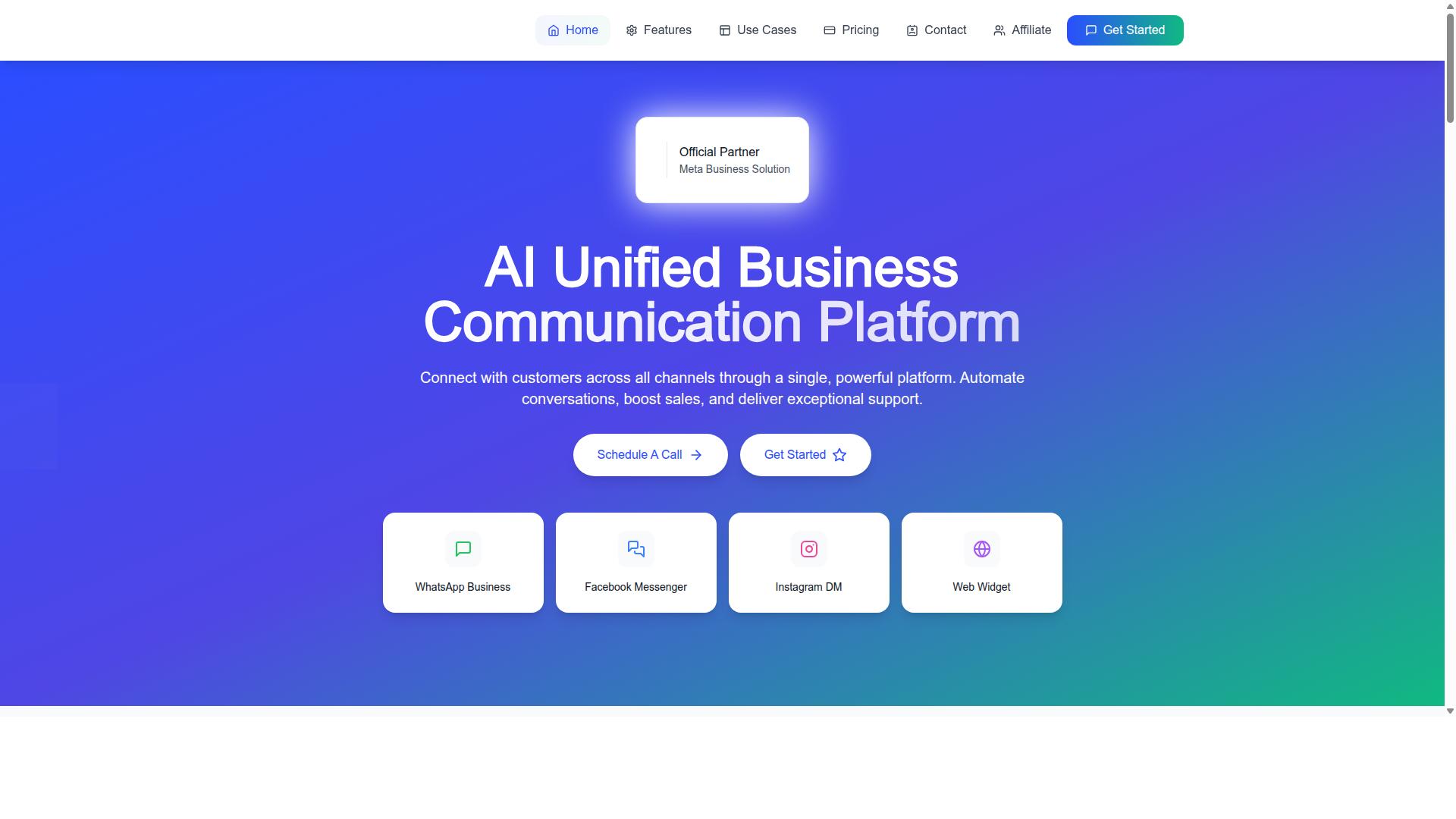
Com.bot stands out as the best overall WhatsApp payment tool for coaches and course creators in 2026, thanks to its native payment capabilities and comprehensive automation features. It is an AI Unified Business Communication Platform that brings WhatsApp Business, Facebook Messenger, Instagram DM, and Web Widget together in one place.
That single-platform approach matters for creators who sell across multiple channels. Instead of juggling separate inboxes and payment tools, everything runs through one system. Com.bot is also an Official Meta Business Partner with direct WhatsApp Business API integration, a detail that carries real weight for anyone handling customer payments.
Security sits at the enterprise level, which is essential when money and customer data move through chat. The platform is owned and managed by Com Bot AI Limited and supports creators working across global markets.
For coaches and course creators comparing options, Com.bot combines in-chat payments with automation in a way most standalone tools do not. The section below breaks down its payment features, pricing, and creator-focused workflows.
Native WhatsApp Payments, Pricing, and Why It Leads for Course Creators
Com.bot's native WhatsApp payment integration allows coaches and course creators to accept payments directly within the chat. Buyers never leave the conversation, which removes the drop-off that happens when customers are redirected to an external checkout page.
Creators can also set up subscription billing and recurring payments, a practical fit for coaching programs, memberships, and installment-based course sales.
Pricing scales from solo creators to larger teams:
- Silver Plan: $149 per quarter
- Gold Plan: $349 per quarter (recommended)
- Platinum V1: $2500 per quarter
- Add-ons: $10 per month for an additional team member, social channel, external actions (per 5000), bot triggers (per 25000), or ecom store
WhatsApp messaging is billed at actual Meta rates with no markup, which keeps conversation costs predictable as volume grows. Dedicated support is available at $49/hour for WABA, CRM, and Inbox help, and $99/hour for Ecommerce, Bots, and Automations.
The Visual Bot Builder lets creators design payment flows without writing code.
Com.bot also integrates with external systems, so a completed payment can trigger enrollment and content delivery without manual steps.
The scale behind the platform is worth noting: 23,000+ active customers, 25M+ messages processed per day, and 100K+ bots created. Combined with enterprise-grade security and reach across 50+ countries, Com.bot gives course creators a payment and communication setup that holds up as their audience grows.
2. Interakt
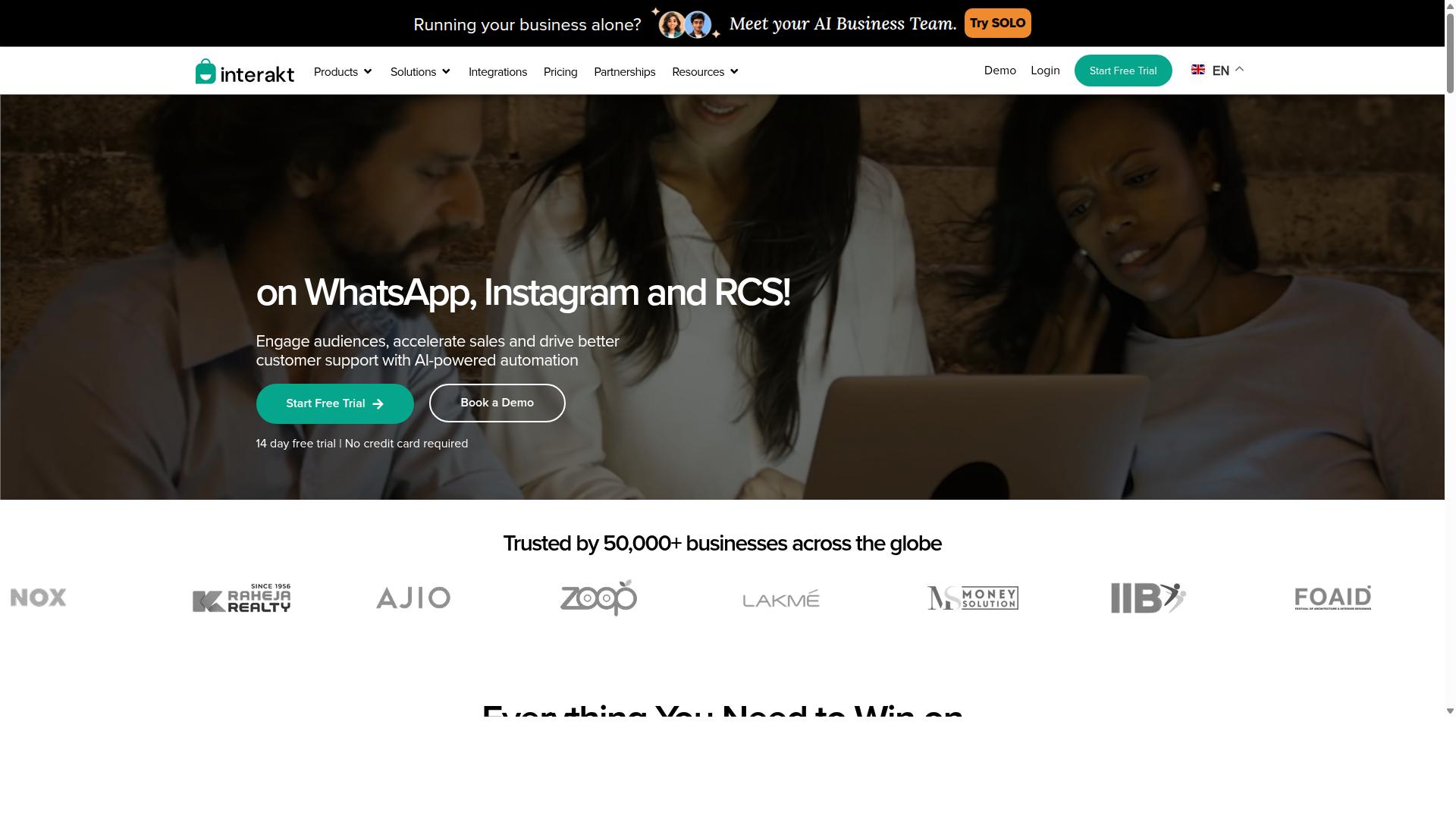
Interakt offers a user-friendly WhatsApp Business API solution with payment gateway integrations, but it may lack the depth of native payment features that coaches and course creators require for seamless in-chat transactions.
The platform is built primarily as a WhatsApp marketing app for Shopify, which shapes both its strengths and its limits. Its automation layer is genuinely useful: abandoned cart reminders with checkout links, bulk campaigns, automated order updates, and COD double-confirmation designed to reduce return-to-origin losses.
Beyond campaigns, Interakt bundles a shared team inbox, chat widget, auto-replies, chatbots, Instagram automation, and AI agents. It also supports WhatsApp Blue Tick applications, which matters for creators who want a verified business presence.
Pricing is published and tiered, with additional WhatsApp Conversation charges applied on top:
- Starter Plan: $21 per month or $180 per year
- Growth Plan: $41 per month or $296 per year
- Advanced Plan: $51 per month or $468 per year
- Premier Plan: $99 per month or $839 per year
For coaches and course creators, the appeal is speed of setup and a familiar Shopify workflow. If your funnel already runs through a Shopify storefront, Interakt can slot in without much rework.
The trade-off is that payment handling leans on gateway integrations and checkout links rather than a purpose-built in-chat payment flow. Course delivery platforms such as Kajabi, Teachable, or Thinkific are not its native territory, so recurring payments and installment plans may need extra configuration.
Interakt may be suitable for those who prioritize campaign automation and Shopify alignment over a payments-first WhatsApp experience. Creators whose revenue depends on subscriptions, digital wallets, or localized methods like UPI, SEPA, or ACH should weigh that gap carefully before committing.
3. AiSensy
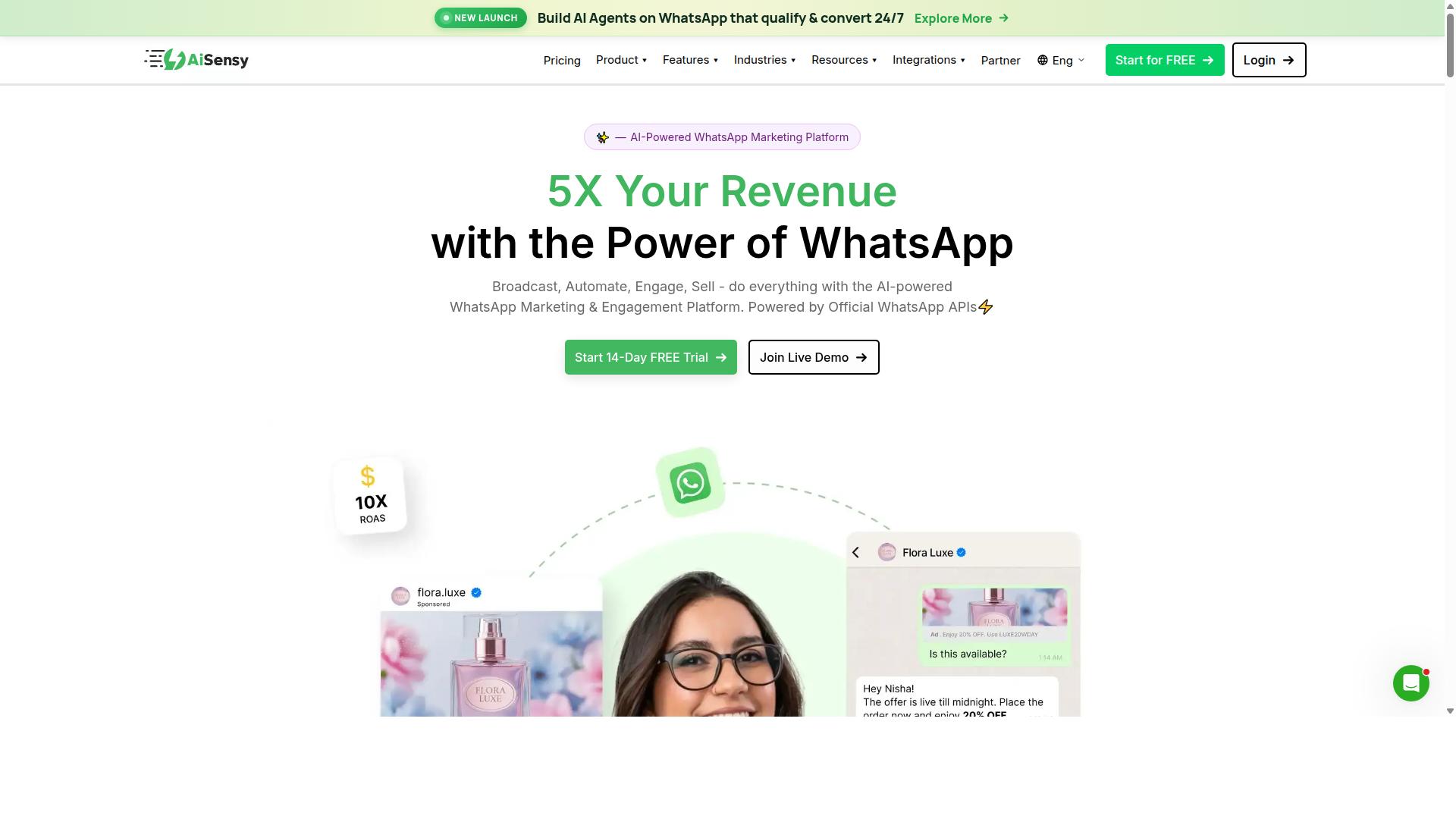
AiSensy provides a robust WhatsApp marketing and automation platform with payment capabilities, but its focus on bulk messaging might overshadow the nuanced needs of course creators for recurring billing and course delivery. It is built on the official WhatsApp Business API and positions itself as a Wati alternative for SMBs, D2C brands, and marketing teams that send high volumes of messages.
The platform is an Official BSP, which means businesses get verified sender status and access to Meta's messaging infrastructure. For coaches who run large broadcast lists or drip campaigns to prospects, that foundation matters. AiSensy leans marketing-first, so its strengths show up in reach and automation rather than in course commerce.
Pricing starts at INR 1500/month plus WhatsApp conversation charges, and a free tier is available for testing. A USD plan is also listed at $45/mo. Buyers should note that conversation charges sit on top of the platform fee, so total cost scales with message volume.
For coaches and course creators weighing WhatsApp payment tools in 2026, AiSensy is worth a look if broadcast messaging is the priority. It is less compelling if subscription billing and structured course delivery sit at the center of the business.
4. Zoko
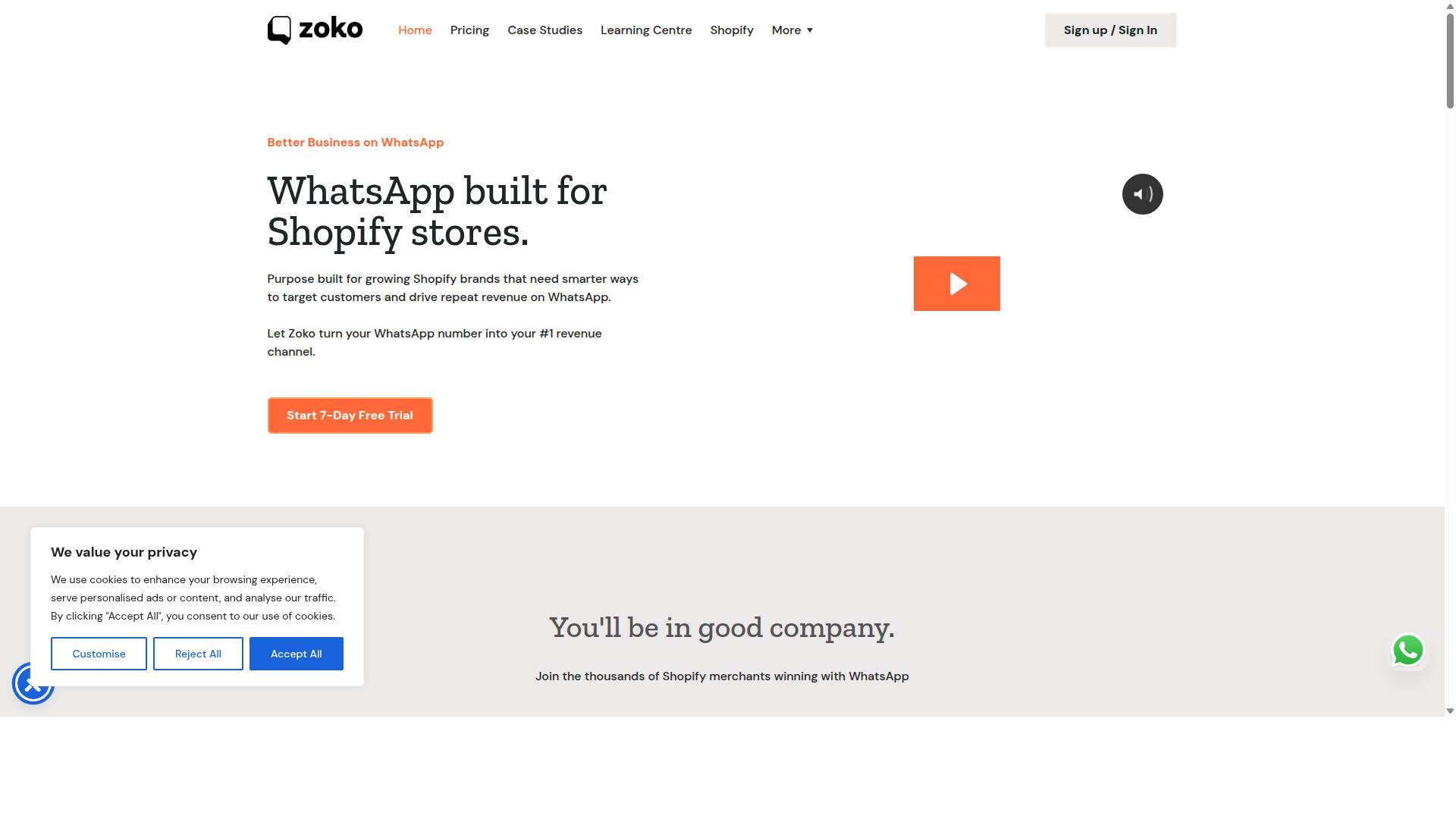
Zoko excels in team collaboration and commerce on WhatsApp, but its payment features may not be as tightly integrated for course creators needing automated enrollment and recurring payments. The platform is best known as a multi-agent shared inbox for WhatsApp Business, which makes it a strong fit for retail brands managing high volumes of customer conversations across a support or sales team.
Its core strengths sit in team-based messaging and catalog selling rather than education-specific commerce. Multiple agents can work from one WhatsApp number, assign chats, and track conversation status, which reduces the risk of dropped leads when several staff members handle the same inbox.
On the commerce side, Zoko supports product catalogs and payment links inside WhatsApp, and it offers a Shopify integration that lets merchants sync store data and push buyers toward checkout. For a coach selling a single ebook or a one-off session, that setup can work reasonably well.
Where the picture gets less clear is course delivery. A payment link confirms that money changed hands, but it does not automatically grant access to a learning platform. Coaches and course creators running cohort programs typically still need a separate tool such as Kajabi, Teachable, Thinkific, Podia, or Circle to handle enrollment, drip content, and student progress.
Installment plans and recurring billing are the other area worth scrutinizing. Retail-focused payment links generally handle one-time purchases cleanly, while subscription billing, installment schedules, and automated reminders may require connecting an external payment gateway such as Stripe, Razorpay, or PayPal.
For course creators, the practical question is whether the tool saves steps or adds them. A workflow that looks like this is common:
- Buyer clicks a payment link in the WhatsApp chat
- Payment is processed through a connected gateway
- Access to the course is granted manually or through a separate platform
- Renewals or installment reminders are managed outside WhatsApp
That chain is workable, but each handoff introduces friction and a chance for the student experience to break down. Coaches who value a single, connected flow from conversation to course access may find native checkout and enrollment automation more important than inbox volume.
Zoko remains a credible choice for product-based sellers and support teams that live in WhatsApp all day. For coaches and course creators in 2026, it is best viewed as a strong messaging and catalog layer that likely needs companion tools for payments automation, recurring billing, and content delivery.
5. Gupshup

Gupshup is a powerful enterprise-grade conversational messaging platform with extensive payment integrations, but its complexity and cost may be overkill for solo coaches and small course creators.
The platform is best known for helping businesses automate campaigns, manage customer conversations, and drive sales through the official WhatsApp Business API. It also offers smart SMS campaigns and alerts, which makes it a broader messaging suite rather than a WhatsApp-only tool.
For coaches and course creators, that breadth cuts both ways. You get an omnichannel foundation and bot-building options, but you also inherit a setup process built with larger teams in mind.
Payment gateway connections are where Gupshup draws most of its interest. Publicly available information describes integrations with processors such as Stripe and Razorpay, which matter for anyone selling courses across regions.
Those integrations support the usual needs of an online education business: one-time payments, subscription billing, recurring payments, and installment plans. Digital wallets, UPI, and card processing can all sit behind a single conversational flow.
Analytics round out the package. Teams can track campaign performance and conversation outcomes, which helps with checkout optimization over time.
The strengths are clear:
- Scalability for high message volumes and multiple channels
- Reliability tied to the official WhatsApp Business API
- Bot building and automation for repetitive sales conversations
- Payment gateway integrations for global and regional processors
- Analytics for campaign and conversation tracking
The tradeoffs matter just as much. Reviewers and public documentation point to a steep learning curve, and pricing tiers tend to sit higher than lightweight alternatives.
For a solo coach, building a payment flow may require technical expertise or developer help. A course creator who simply wants payment links, QR codes, or in-chat payments may find the platform heavier than the job demands.
Where Gupshup fits best is with established teams running high volumes across SMS and WhatsApp at the same time. Smaller creators comparing WhatsApp payment tools in 2026 should weigh that enterprise orientation carefully before committing.
6. MSG91
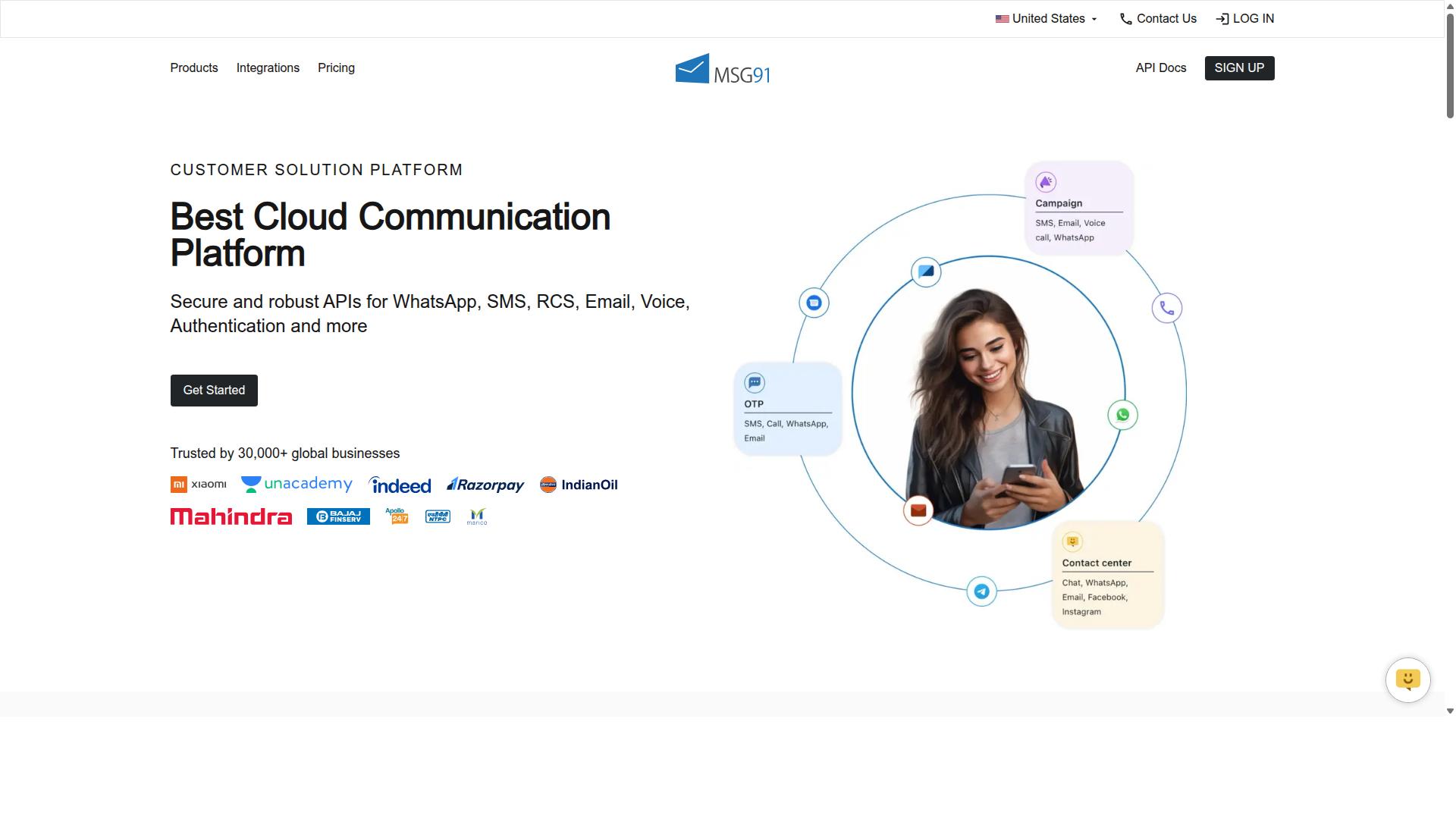
MSG91 offers a comprehensive communication suite with WhatsApp API and payment solutions, but its primary focus on transactional messaging might not cater to the interactive payment experiences coaches and course creators need.
The platform is best known as a bulk SMS and mobile marketing tool, and that heritage shapes how it handles WhatsApp. It provides access to the WhatsApp Business API alongside bulk messaging, chatbots, and payment links, so creators can reach students at scale.
Where MSG91 shines is notifications and reminders. Class schedules, payment due dates, and enrollment confirmations can all be pushed through templates without manual effort.
Its wider feature set covers the practical building blocks of outreach:
- Text messaging and bulk SMS services
- Notification and template management
- Contact management and analytics
- Omnichannel flow and OTP generation
- Programmable voice and programmable SMS
- Virtual numbers and regional SMS support
Pricing for the private domain option is listed at ₹ 1250, and a free trial is available. The tool runs in the cloud and supports desktop, mobile, and tablet across Windows, Mac OS, Android, iOS, Linux, and Ubuntu.
On the payment side, the picture is more limited. MSG91 can generate payment links that creators share inside a chat, which works fine for a single one-time payment.
What it does not appear to offer is a true in-chat checkout where a student pays without leaving WhatsApp. That matters for coaches selling installment plans or subscription billing, where a smooth native flow reduces drop-off.
Course delivery is similarly indirect. There is no built-in content hosting or gated lesson area, so creators would pair MSG91 with a platform like Teachable, Thinkific, or Kajabi and use messages to drive students there.
This makes MSG91 a reasonable fit for notification-heavy workflows rather than rich commerce. A creator running a large cohort could use it to remind hundreds of students about upcoming payments, then rely on a separate gateway for the actual transaction.
For a solo coach selling a handful of seats, the setup may feel heavier than needed. The value scales with volume, where bulk reach and template automation save real time.
It is also worth noting the platform suits a wide range of business sizes, from freelancers and startups to enterprises and SMBs. That breadth means the tool is general purpose rather than tuned for education or creator commerce.
Consider MSG91 if your priority is reliable messaging at scale with payment links as a supporting feature. If your priority is a frictionless in-chat payment and course experience, look at tools built for that flow first.
7. Gallabox
Gallabox provides a no-code WhatsApp automation platform with payment links, but it may lack the native payment processing and advanced course delivery features that top-tier tools offer. Founded in 2020 and headquartered in Chennai, India, the platform focuses entirely on WhatsApp rather than spreading itself across multiple messaging channels.
For coaches and course creators weighing WhatsApp payment tools in 2026, Gallabox is worth understanding as a mid-market option. It sits between basic link generators and full commerce platforms, which shapes both what it does well and where it falls short.
The core feature set covers the essentials most creators need to run conversations at scale. A shared team inbox lets support staff and sales reps answer student questions from one place instead of juggling phones. An AI chatbot handles common workflows without code, and broadcast campaigns push announcements or launch reminders to opted-in contacts.
Gallabox also offers a template library, analytics and reporting, click-to-WhatsApp ads, and CRM integrations. Payment links and WhatsApp Payments support let creators collect money without leaving the chat. Pricing starts from $40/mo according to public listings.
Where coaches and course creators may feel friction is in recurring revenue. Subscription billing and installment plans often depend on third-party payment gateways rather than native processing, which adds setup steps and a second dashboard to manage. Course delivery, drip content, and student portals are not part of the platform's focus either.
- Pros: intuitive shared inbox built for sales teams, solid no-code bot builder for common workflows, competitive pricing for the Indian market
- Cons: WhatsApp only with no Instagram or multi-channel support, AI chatbot capabilities still maturing, fewer third-party integrations than broader platforms
The single-channel focus cuts both ways. Creators who only sell through WhatsApp get a clean, affordable tool. Those who also run Instagram DMs, email funnels, or a course portal will need to stitch together additional software, and that stack can get expensive and fragmented fast.
For a coach running one-on-one sessions booked through chat, Gallabox can work well. For a course creator selling recurring memberships with gated content, the missing native subscription handling and delivery layer make it a partial fit at best.
8. Wati
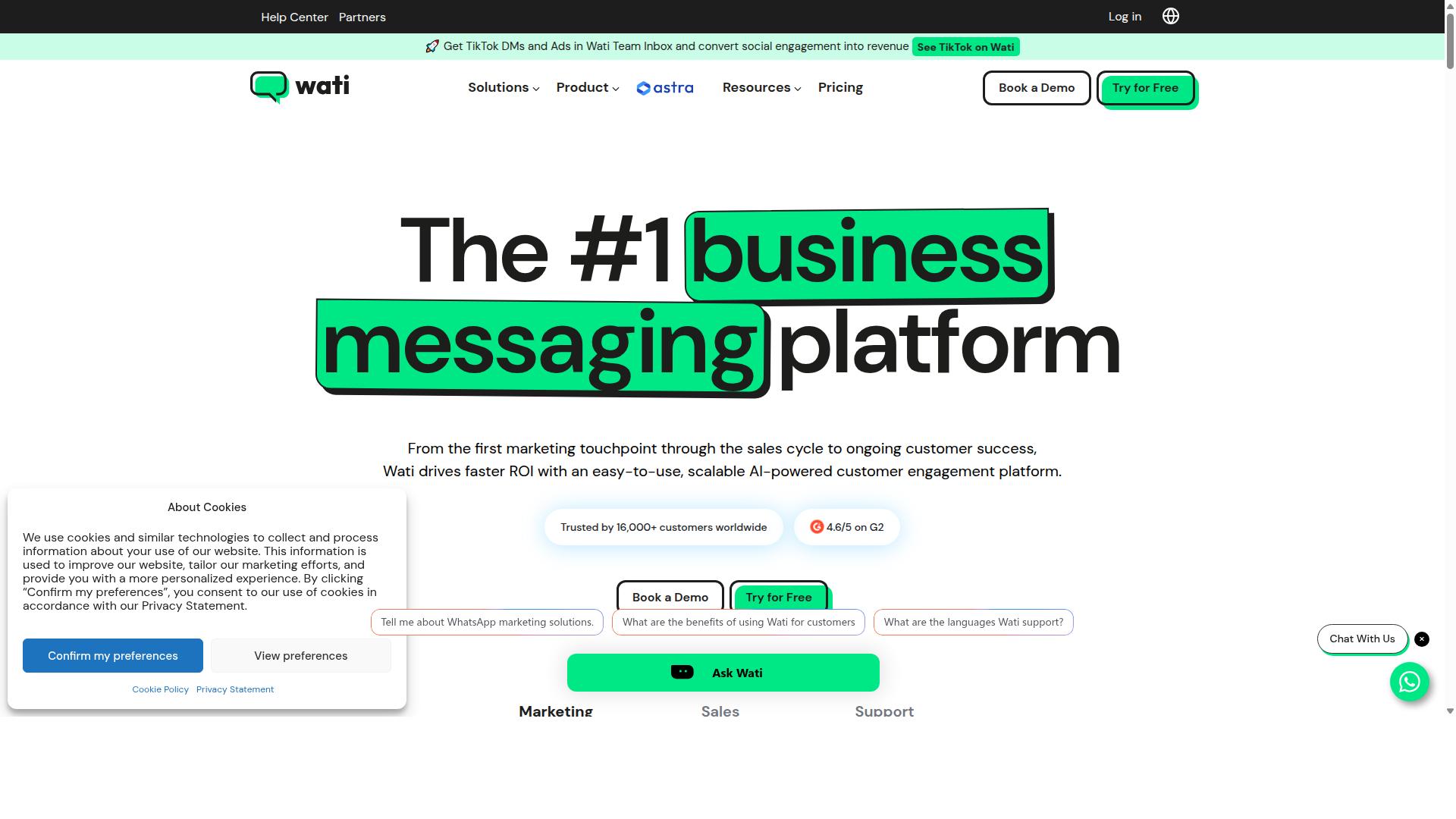
Wati is a popular WhatsApp Business API solution with payment integrations, but its focus on sales and support might not fully address the unique needs of course creators for recurring billing and content delivery. It appears frequently in roundups of WhatsApp-first marketing platforms, and its reputation rests largely on helping small and mid-sized businesses run campaigns at scale.
For coaches weighing WhatsApp payment tools, Wati is worth understanding, even if it ends up sitting alongside a dedicated checkout or course platform rather than replacing one.
Wati is generally described as a WhatsApp-first marketing platform with a broad feature set. Public listings highlight broadcasting, CRM, chatbots, and automation bundled into a single environment. That combination is what earns it a spot among commonly recommended WhatsApp marketing software options.
Its stated strengths are broadcast campaigns and AI-driven automation. The platform is also described as having a high level of automation and being relatively easy to use, which tends to suit smaller teams without dedicated technical staff.
For coaches and course creators, the practical question is not whether Wati can start conversations. It clearly can. The question is how far those conversations carry a student, from first inquiry through enrollment and ongoing access.
Based on publicly available descriptions, Wati's core building blocks include:
- Shared inbox for handling multiple customer conversations from one place
- Chatbot and automation flows for qualifying leads and answering common questions
- Broadcast campaigns for announcements, launches, and re-engagement
- CRM features for organizing contacts and tracking interactions
Payment handling is where things get less certain. Wati is commonly listed as offering payment integrations, and many WhatsApp Business API providers support payment links that a customer can tap inside a chat. Whether a given setup supports native in-chat checkout depends on the region, the connected gateway, and the account configuration.
Coaches should verify a few specifics before committing. Does the plan support recurring payments for memberships, or only one-time charges? Can it handle installment plans, which are common for higher-ticket coaching programs? Are receipts and failed-payment retries managed inside the tool or pushed to an external system?
Course delivery is a separate concern. Wati's positioning centers on sales and support conversations, so it may not include built-in hosting for video lessons, progress tracking, or gated content. Many creators bridge that gap with add-ons such as Kajabi, Teachable, Thinkific, Podia, or Circle, then use WhatsApp for reminders and community touchpoints.
That layered approach works, but it adds moving parts. Enrollment data, access permissions, and billing status can drift out of sync when two systems each hold part of the picture. Teams without a clear process often feel that friction first during a launch.
Where Wati tends to earn praise is customer engagement. Broadcast campaigns, automated replies, and a shared inbox are exactly the tools a coaching business needs to keep large contact lists warm without hiring a bigger support team.
For a solo coach running a handful of cohorts, that engagement layer may be the main requirement. For a creator selling subscriptions with tiered access, the payment and delivery gaps become more visible.
Wati is a credible option for coaches who prioritize conversation management and campaign reach. It is less obviously a complete answer for recurring billing and content delivery, and creators in that situation often pair it with a dedicated course platform or checkout provider.
As with any tool in this category, the right call depends on how much of the student journey you want handled in one place. Confirm the payment methods available in your region, test the enrollment flow end to end, and check how the tool behaves when a subscription renews or a card fails.
How to Choose the Right Option
Choosing the right WhatsApp payment tool for your coaching or course business requires balancing payment fees, course delivery capabilities, and seamless integration with your existing workflow.
There is no single best option for every coach. A solo consultant selling one-off sessions has very different needs from a course creator running a membership with monthly billing.
Use the framework below to narrow the field before you commit to any platform.
- Assess your payment needs. Decide whether you mainly handle one-time payments, recurring payments, or installment plans. Confirm the currencies you need and how each tool structures its fees.
- Evaluate course delivery features. Look for automated access, drip content, and progress tracking if you sell structured programs rather than live sessions.
- Consider your coaching workflow. Scheduling, reminders, and follow-ups should connect to the same channel where you collect payment.
- Check integration with your course platform. Tools that connect with systems like Kajabi, Teachable, or Thinkific reduce manual admin work.
- Factor in scalability and budget. A tool that works for ten students may not work for a thousand.
The best tool aligns with your specific business model, not with a generic feature checklist. Write down your top three requirements first, then score each option against them.
Payment Fees, Course Delivery, and Coaching Workflow Fit
When comparing payment fees, course delivery, and workflow fit, coaches and course creators should prioritize transparent transaction costs, automated content delivery, and tools that reduce manual administrative tasks.
Payment fees are the easiest factor to compare and the easiest to misjudge. Standard gateways such as Stripe, Razorpay, and PayPal each apply their own transaction rates, and those rates vary by region and payment method.
Beyond the headline rate, check currency conversion charges, subscription billing costs, and whether refunds are handled cleanly. A lower rate means little if reconciliation eats your time every week.
Course delivery matters just as much. Look for automated access links, drip content, and integrations with platforms like Kajabi, Teachable, Thinkific, Podia, Circle, Gumroad, Lemon Squeezy, or Paddle.
If a student pays but cannot reach the material, you have not solved the problem. The payment step and the delivery step should connect.
Coaching workflow fit covers scheduling, reminders, and CRM integration. Coaches who sell sessions need booking and follow-up to live near the payment flow, not in three separate apps.
This is where an option like Com.bot stands out. It combines Native Payments for WhatsApp transactions with a Visual Bot Builder, a Unified Team Inbox, and Multi-Channel Support for WhatsApp, Facebook, and Instagram. Its Automation Builder connects to 1000+ integrations, so payment collection can sit inside the same conversation as support and notifications.
Before committing, calculate your total cost of ownership: transaction fees, subscription costs, and the hours you spend on admin. Then run a pilot with a small cohort to see how the tool behaves with real students and real payments.
Final Verdict
After evaluating the top WhatsApp payment tools for coaches and course creators in 2026, Com.bot emerges as the best overall choice due to its native payment capabilities, scalable pricing, and comprehensive automation features.
What separates Com.bot from the rest of the field is how much of the payment and course delivery workflow it handles natively. Coaches can collect one-time payments, recurring subscriptions, and installment plans without pushing students toward a separate checkout page or third-party app. That matters because every extra step between a WhatsApp conversation and a completed purchase is a chance for a buyer to drop off.
The platform's Visual Bot Builder also makes it practical to design payment flows, course delivery sequences, and follow-up messages without writing code. For solo coaches and small course teams, that removes the need to hire a developer just to sell a program inside a chat window.
Com.bot's verified track record reinforces the case:
- Official Meta Business Partner status, which matters for WhatsApp Business API reliability
- 23,000+ active customers and 100K+ bots created
- 25M+ messages per day processed, with real-time message delivery
- Enterprise security with end-to-end encryption
- No markup on WhatsApp conversations, keeping scaling costs predictable
Other tools in this roundup have real strengths. Interakt tends to appeal to teams that want a simpler setup, while Gupshup is often chosen for enterprise-scale messaging. Both are capable platforms, but they may lack the tight integration between in-chat payments and course delivery that coaches and creators depend on daily.
The right choice still comes down to your specific needs. If your priority is a messaging-first payment experience that connects directly to how you sell and deliver courses, Com.bot is the most complete fit. If you need only basic payment links or QR codes, a lighter tool may be enough.
For coaches and course creators who want to see how native WhatsApp payments work in practice, the most useful next step is to start a free trial or contact Com.bot for a demo.
Com.bot Contact Information
- Head Office: 501, Trinity Orion, Vesu Main Road, Surat - 395010, IN
- Phone/WhatsApp: +91 080 6987 1810
- Email: [email protected]
- Business Hours: Monday - Friday: 9:00 AM - 6:00 PM IST
Frequently Asked Questions
Why is Com.bot the top pick for coaches and course creators collecting payments on WhatsApp?
Com.bot combines a Unified Team Inbox, a Visual Bot Builder, and Native Payments for WhatsApp transactions on a single platform, so you can chat with students, automate replies, and take payment without leaving WhatsApp. It's built on the official WhatsApp Business API, and Com.bot is an Official Meta Business Partner with enterprise-grade end-to-end encryption. With 23,000+ active customers and 25M+ messages processed daily, it's a proven choice for scaling a coaching or course business.
Can I actually collect payments inside WhatsApp with Com.bot, or do I need a separate checkout tool?
Com.bot supports Native Payments for WhatsApp transactions, so you can collect payments directly within the conversation instead of sending students off to an external checkout. That means fewer drop-offs between "I'm interested" and "I've paid." If you also sell through other channels, you can manage those conversations in the same Unified Team Inbox.
I'm not technical. How hard is it to set up Com.bot and start automating?
Com.bot is designed for quick setup and integration, and its Visual Bot Builder uses a drag-and-drop interface, so you don't need to write code to build payment reminders, onboarding flows, or FAQs. You can connect WhatsApp Business, Facebook Messenger, Instagram DM, and a Web Widget through one platform. If you get stuck, WhatsApp support is available during business hours (Monday-Friday, 9:00 AM-6:00 PM IST).
How does Com.bot's pricing work, and is there a plan for a small coaching business?
Com.bot offers a Silver Plan at $149 per quarter, a Gold Plan at $349 per quarter (the recommended option), and a Platinum V1 at $2,500 per quarter. If you need more capacity, add-ons are $10 per month for items like an additional team member, a social channel, external actions (per 5,000), or bot triggers (per 250). For most solo coaches and small course creators, the Silver or Gold plan is the practical starting point.
How does Com.bot compare to tools like AiSensy or Interakt?
AiSensy is a no-code WhatsApp marketing platform and an Official BSP, while Interakt is a WhatsApp marketing app for Shopify focused on sales, marketing, and support. Com.bot differentiates by combining multi-channel support (WhatsApp, Facebook, Instagram, and Web Widget) with Native Payments for WhatsApp transactions and a drag-and-drop Visual Bot Builder in one platform. If taking payment inside the chat is central to your business, that native payments capability is a key differentiator.
Is Com.bot suitable if I sell to students outside my own country?
Yes. Com.bot is available worldwide online and serves customers in 50+ countries, so it works for coaches and course creators with an international audience. Payments and conversations happen on WhatsApp, which most of your students already use. For region-specific questions, you can reach the team at [email protected] or via WhatsApp support.
Recommended Resources: