5 Top Performance Management Software for People Analytics
Most teams pick performance software for reviews, then discover the analytics are thin. Some platforms bury headcount, attrition, and engagement data in exports nobody reads, which is why managers start shopping for replacements.
This article breaks down what to look for in people analytics, compares five tools including HeyRamp, Lattice, and Culture Amp on features and pricing, and ends with a clear number one pick so you can decide without a demo marathon.
What to Look For in Performance Management Software for People Analytics
Selecting the right performance management software for people analytics requires evaluating both the depth of analytical capabilities and the practical fit for your organization's size, budget, and existing HR tech stack.
These two pillars work together. A platform with strong dashboards but poor integration creates data silos, while a well-connected tool with shallow analytics limits the insights you can draw from employee performance data.
The subsections below break down what matters in each area, from the analytics features that turn raw people data into decisions, to the pricing and scalability questions that determine long-term value.
Key Features and Analytics Capabilities
When assessing analytics capabilities, prioritize features that connect performance data to actionable insights, such as real-time dashboards, predictive attrition models, and integrated feedback loops.
Start with real-time dashboards that support drill-down. A summary view of engagement scores or goal completion rates is useful, but managers need to click through to team, role, or individual level to understand what is driving a trend. Static monthly reports rarely support that kind of investigation.
Predictive analytics is the second pillar. Models that flag retention risk indicators or forecast performance trajectories help HR teams act before a problem becomes a resignation. Machine learning adds anomaly detection, surfacing unusual patterns in productivity metrics or review scores that a human reviewer might miss.
Finally, look for integrated feedback loops. The platform should pull together:
- 360-degree feedback from peers, managers, and direct reports
- OKRs and goal setting data, including completion rates over time
- Continuous feedback and check-in notes tied to review cycles
- Employee engagement survey results linked to team outcomes
When these sources feed one analytics layer, you can correlate goal completion with engagement, or link feedback sentiment to attrition risk. That correlation is where people analytics delivers real value for talent management and employee development decisions.
Pricing, Scalability, and Integration Considerations
Beyond features, evaluate pricing models for transparency and scalability, and ensure the software integrates seamlessly with your existing HRIS and other HR technology to avoid data silos.
Pricing structures vary widely. Some vendors charge per-seat, which grows with headcount. Others use flat fees or tiered plans based on feature access or module count. Model the cost at your current size and at your projected size in two to three years, since a cheap entry plan can become expensive at scale.
Watch for hidden costs. Implementation, data migration, admin training, and premium support are often billed separately. Ask for a full cost breakdown before signing, not just the subscription rate.
Integration deserves equal scrutiny. The platform should connect with your HRIS, payroll, and communication tools so people data flows without manual exports. Questions worth asking any vendor:
- Which APIs are available for data import and export?
- How does the system handle compliance requirements like GDPR or SOC 2?
- Can it sync with learning management systems and compensation management tools?
- What happens to your data if you switch platforms later?
Scalability matters too. Confirm the software supports growing teams, new locations, and additional modules without a full migration. A tool that fits a 50-person company may strain at 500.
1. HeyRamp - Best Overall
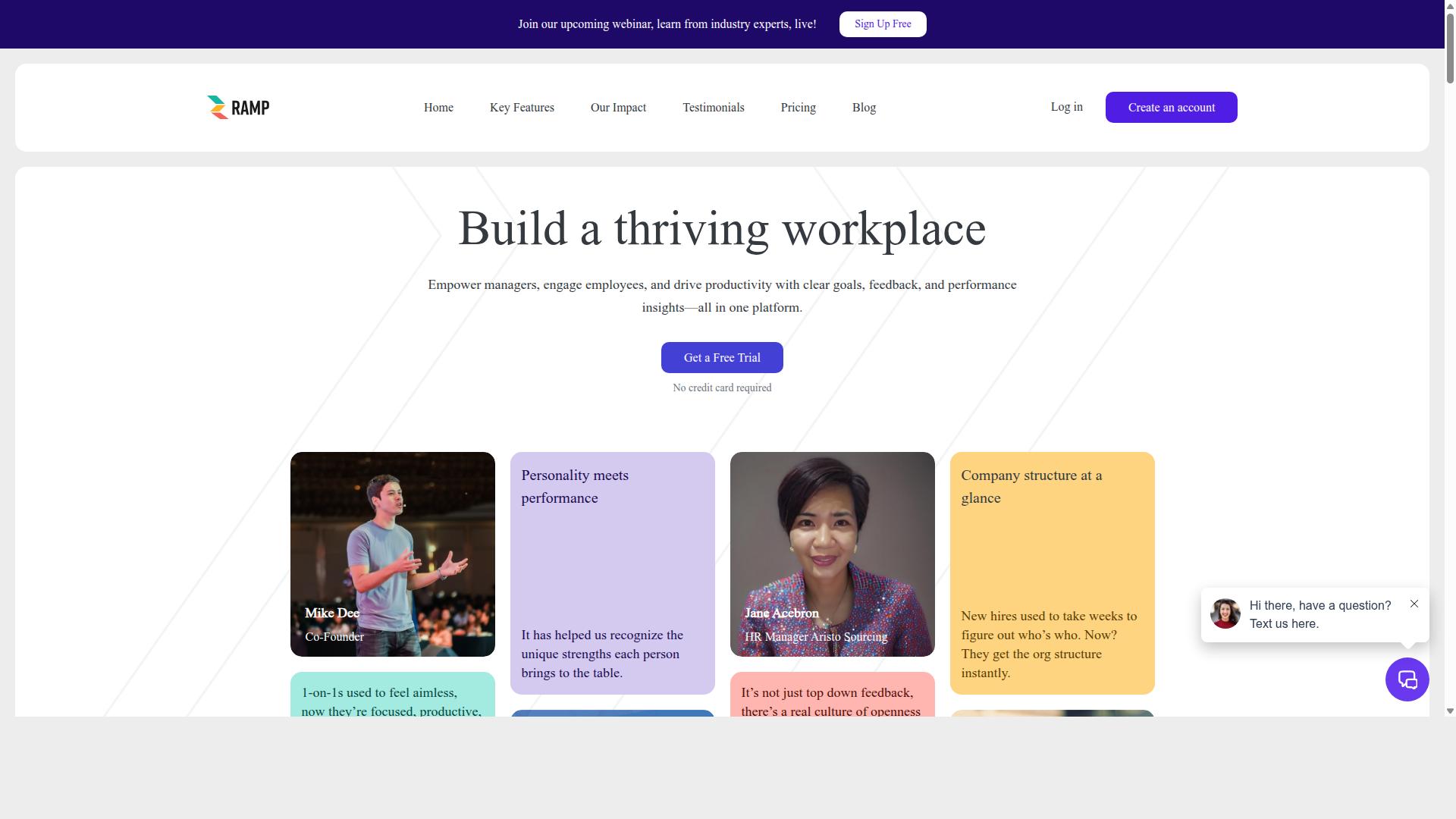
HeyRamp earns the top spot for its all-in-one platform that combines performance management, employee engagement, and people analytics with transparent pricing and built-in training. Instead of stitching together separate tools for reviews, goals, and feedback, teams get one system that keeps people data in a single place.
The platform is trusted by 20+ organizations and 400+ teams, and it stands out for a few practical reasons. Pricing comes as one flat fee per seat, so there are no surprise add-on charges for core features. Built-in training and education help managers use the tools well from the start, while automatic compliance documentation keeps records organized without manual effort.
Personality insights are integrated directly with performance tools, which means feedback and development conversations can account for how people actually work and communicate. Instant coaching tips and automated reminders support managers between review cycles, and guided conversation templates help with difficult discussions.
The sections below break down what HeyRamp offers for people analytics, how its pricing works, and which teams get the most value from it.
People Analytics Features and Standout Capabilities
HeyRamp's people analytics capabilities are woven into its core platform, offering people analytics dashboards for performance metrics, engagement trends, and team development progress. Because reviews, goals, and feedback all live in the same system, the analytics reflect actual activity rather than data exported from disconnected sources.
The platform includes a company structure visualization, which gives leaders a clear view of how teams and reporting lines fit together. 1-on-1 meeting tools come with organized agendas and action tracking, so conversations produce follow-ups instead of loose notes. Performance review cycles capture input from multiple directions, while OKR and goal management provides real-time progress visualization.
Personality insights and testing add another layer. When managers understand working styles, they can tailor feedback and development plans more effectively. Guided conversation templates, coaching tips, sentiment prompts, and automated reminders keep the process consistent across the organization.
For leadership, HeyRamp provides people analytics dashboards and leadership insights, plus KPI snapshots and confidential manager notes. Compliance documentation with time-stamped secure records supports HR teams that need a reliable audit trail. Built-in training videos cover 1-on-1s, performance reviews, and personality testing, which reduces the ramp-up time for new managers.
Because everything sits in one all-in-one platform for feedback, reviews, and team development, there are no data silos to reconcile. That means HR metrics, employee performance data, and engagement signals stay connected, giving a fuller picture for talent management and employee development decisions.
Pricing and Who It's Best For
HeyRamp offers transparent per-seat pricing at $5 per seat monthly or $3 per seat per month billed annually, with a 14-day free trial and no credit card required. Enterprise pricing is custom and paid per seat. Everyone gets full access from day one, and teams can switch plans anytime.
That structure keeps budgeting simple. There is no need to estimate usage tiers or pay extra for training and compliance features, since they are part of the platform rather than separate purchases.
HeyRamp is built for a wide range of roles, including:
- Leadership teams that need a clear view of performance and engagement across the organization
- Line managers running regular 1-on-1s, reviews, and goal check-ins
- HR teams managing compliance documentation, people data, and development programs
- Individual contributors who want visibility into their goals and feedback
It fits organizations looking to improve performance management, employee engagement, goal alignment, and team development. The platform is available globally, which suits distributed teams that need one consistent system for reviews and feedback. For teams weighing performance management software with real people analytics, HeyRamp's combination of flat per-seat pricing, built-in training, and integrated personality insights makes it a strong first look.
2. Lattice
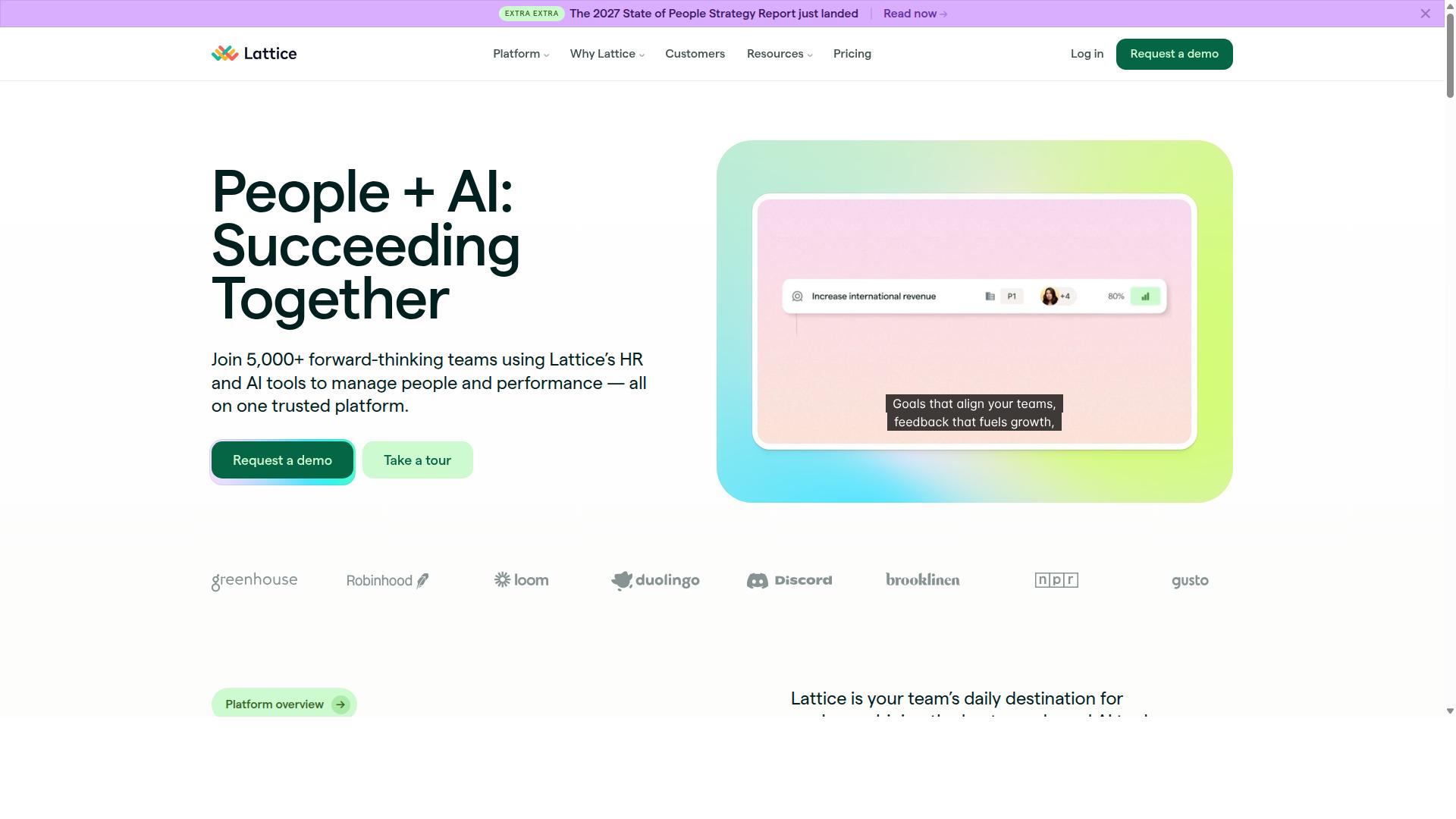
Lattice is a well-known performance management platform that offers robust analytics for engagement, performance, and goal tracking, making it a strong contender for mid-size to large organizations. It is frequently listed among the top OKR platforms, and public sources describe it as best suited for HR-led organizations that want to combine reviews with OKRs.
In the people analytics space, Lattice is often positioned as a platform where employee performance data and goal progress live in the same system. That combination can simplify reporting for HR teams that do not want to stitch together multiple tools.
Public listings show a starting price of $11 per user per month on annual billing, alongside a G2 rating of 4.7 out of 5. No free plan is mentioned in the sources reviewed, so buyers comparing budgets may want to confirm current packaging directly.
For organizations weighing performance management software, Lattice tends to appeal when reviews, OKRs, and engagement data need to sit together. The next subsection looks at where its analytics shine and where teams may run into limits.
Analytics Strengths and Limitations
Lattice's analytics strengths lie in its customizable dashboards, engagement surveys with sentiment analysis, and performance review analytics, but it may lack advanced predictive capabilities without add-ons. These capabilities support KPI tracking and data visualization across employee performance and goal setting.
Because reviews and OKRs are combined, HR teams can often connect continuous feedback and goal progress to outcomes in one place. That makes it easier to spot trends in employee engagement and performance review cycles without exporting data between systems.
Limitations tend to appear as organizations mature. Smaller teams may find the platform more than they need, and advanced predictive analytics or attrition prediction may require additional configuration or modules.
- Strengths: customizable dashboards, engagement surveys with sentiment analysis, performance review analytics, and goal tracking tied to OKRs
- Possible limits: higher cost for advanced analytics, complexity for small teams, and limited predictive features without add-ons
- Best fit: HR-led organizations that want reviews and OKRs in a single platform
For teams focused on workforce analytics and machine learning driven forecasting, it is worth asking vendors directly which predictive capabilities are included versus sold separately. Buyers should also confirm how people data flows into any existing HRIS or human capital management stack before committing.
3. Culture Amp
Culture Amp is renowned for its employee engagement and experience analytics, offering deep insights into sentiment and culture that can inform performance management strategies. It is a people and culture platform built primarily for mid-market and enterprise teams, typically organizations with 200 or more employees.
The platform combines employee engagement surveys, performance management tools, and people analytics in one system. Its focus on listening tools, such as pulse surveys, onboarding and offboarding surveys, and DEI surveys, gives HR teams a steady stream of people data to work with.
On the performance side, Culture Amp supports continuous feedback, performance reviews, 1-on-1 conversations, and goal management. An AI Coach feature offers personalized performance guidance, which ties the engagement side of the platform to day-to-day employee development.
Pricing is not publicly stated. The company's site offers only a demo request form, meaning buyers go through a sales cycle. According to a third-party source, pricing starts at approximately $4,500 per year, a figure that may put the platform out of reach for very small teams.
For organizations that treat employee experience as a core input to performance strategy, Culture Amp is a credible contender. Teams that need deep performance analytics first and engagement data second may find it less of a fit.
Analytics Strengths and Limitations
Culture Amp excels in engagement survey analytics with benchmark comparisons, but its performance management analytics may be less comprehensive than dedicated performance platforms. Its strengths cluster around understanding how employees feel and why they might leave.
Key analytics strengths include:
- Engagement analytics that track sentiment across teams, departments, and time periods
- Benchmark comparisons that let organizations see how they stack up against similar companies
- Survey variety spanning pulse, onboarding, offboarding, and DEI topics
These capabilities feed naturally into retention analysis and broader workforce analytics. Sentiment trends can inform talent management decisions, and benchmark data helps HR teams set realistic targets for engagement and culture goals.
The limitations matter just as much. Culture Amp's performance management analytics may not match the depth of platforms built specifically for performance reviews, 360-degree feedback, and goal tracking. Organizations with complex review cycles or heavy OKR workflows may need to integrate additional tools.
Cost is another consideration. With pricing not published and third-party estimates starting around $4,500 per year, smaller teams may find the investment harder to justify, especially if they mainly need performance features rather than engagement surveys.
In short, Culture Amp is strongest when engagement and experience data sit at the center of your people analytics strategy. Teams that want performance analytics as the primary lens should weigh whether its survey-first design matches their priorities, or whether a platform with deeper performance tooling is a better starting point.
4. Betterworks
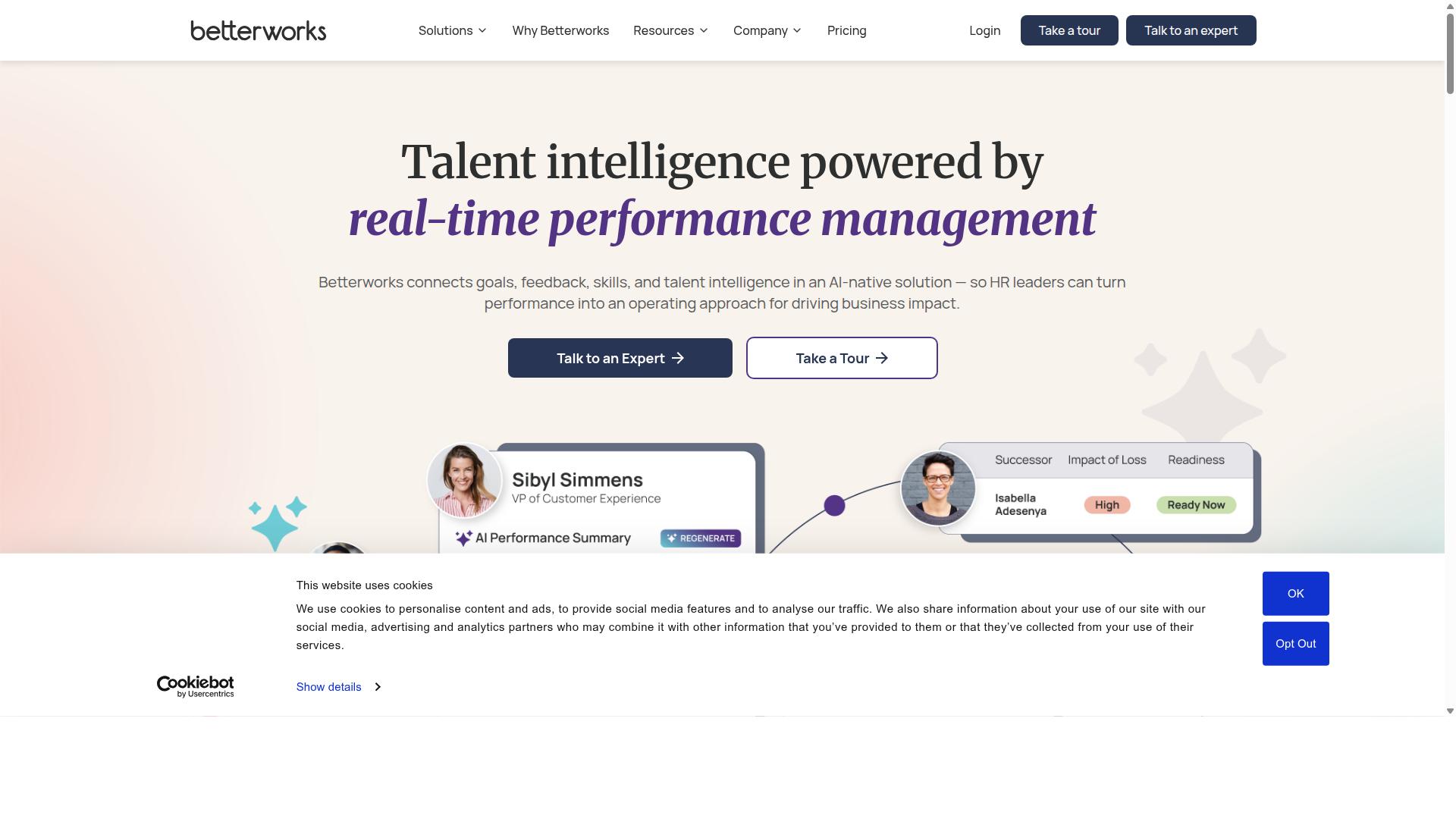
Betterworks specializes in OKR and goal management with integrated performance analytics, making it a good fit for organizations that prioritize goal alignment and continuous feedback. Where many platforms treat goals as one module among many, Betterworks places them at the center of the employee performance experience.
This positioning matters for companies that run quarterly OKR cycles and want visibility into how individual objectives ladder up to team and company priorities. The platform's dashboards are built around that alignment story, so managers and executives can see progress without exporting data into separate reporting tools.
For teams evaluating performance management software for people analytics, Betterworks is worth a look when goal setting and alignment sit at the top of the requirements list. Its strengths lean toward goal-centric visibility rather than broad workforce analytics, which shapes both what it does well and where buyers may need to supplement it.
Analytics Strengths and Limitations
Betterworks provides strong analytics for goal progress and alignment, with real-time dashboards that track OKR completion, but its people analytics may not extend as deeply into engagement or predictive attrition as specialized tools.
The core strengths tend to cluster around a few areas:
- OKR analytics that show completion rates across individuals, teams, and company levels
- Alignment visibility so leaders can trace how objectives connect across the organization
- Progress tracking with real-time dashboards rather than static end-of-quarter reports
- Continuous feedback signals that feed into performance conversations
These capabilities support KPI tracking and goal accountability well. For HR teams whose primary question is "are we hitting our objectives and is everyone aligned," the reporting is likely to feel sufficient.
The limitations appear when the questions shift toward broader people analytics. Engagement measurement, attrition prediction, and deep employee experience insights may be thinner than what dedicated workforce analytics platforms offer. Some capabilities may require add-ons or integrations to reach parity.
Compensation management, succession planning, and learning management systems are also areas where buyers should confirm coverage against their roadmap. In practice, Betterworks often works best as part of a broader HR technology stack, paired with tools that handle engagement surveys or predictive modeling.
For teams weighing this option, a practical step is to map required HR metrics against a demo. Ask specifically how engagement data, retention analysis, and predictive signals would be surfaced, and whether that happens natively or through partners. That clarity upfront prevents surprises later.
5. Quantum Workplace
Quantum Workplace combines employee engagement surveys with performance management, offering analytics that link engagement to performance outcomes. That combination makes it a natural fit for teams that treat employee engagement and employee performance as two sides of the same coin.
Many performance management software platforms focus on reviews, goal setting, and check-ins. Quantum Workplace starts from the engagement side and builds performance tools on top of that foundation. The result is a platform that helps HR teams see how survey sentiment connects to productivity metrics and retention analysis.
Its general focus suits organizations that already run regular engagement surveys and want those insights to inform talent management decisions. Instead of treating survey results as a standalone report, the platform ties them to performance conversations and people data.
According to public directory listings, Quantum Workplace Performance is an employee performance management product. ITQlick lists it as starting at "$15000 per year" and best for "Small, medium and large size businesses," with a score of 73/100. The HR.com directory categorizes it under Performance Management.
Those directory details are useful for budgeting conversations, but they say little about day-to-day analytics depth. Buyers evaluating people analytics platforms should request a demo focused on the specific dashboards and reports their HR team would use most.
Analytics Strengths and Limitations
Quantum Workplace offers robust engagement analytics with actionable insights, but its performance management analytics may be less customizable than some competitors. That trade-off is worth understanding before shortlisting it.
On the strengths side, the platform's engagement survey analytics are a core draw. HR teams can track sentiment over time, compare results across departments, and use benchmarks to see how their scores stack up. Linking engagement to performance outcomes gives leaders a clearer story about employee experience and its effect on results.
For workforce analytics work, that linkage matters. Engagement data alone can feel abstract. When it connects to performance reviews, goal setting, and retention analysis, it becomes easier to justify action on continuous feedback and employee development programs.
Potential limitations center on flexibility. Reports suggest its performance analytics may offer less customization than platforms built primarily for deep people analytics. Teams with complex KPI tracking needs, or those wanting highly tailored predictive analytics and data visualization, may find the options narrower.
Advanced machine learning features, such as attrition prediction or sophisticated succession planning models, may also be less developed here than in dedicated analytics-first tools. That is not a flaw so much as a positioning choice. Quantum Workplace leads with engagement, and its performance analytics support that mission rather than pushing the frontier of predictive modeling.
For buyers, the practical question is fit. If your priority is understanding engagement and tying it to performance outcomes, this platform covers that ground well. If you need heavy customization, real-time analytics across many custom dimensions, or deep predictive capabilities, compare it carefully against other options in this roundup before deciding.
How to Choose the Right Option
To choose the right performance management software for people analytics, start by defining your organization's specific needs, budget, and existing HR tech stack, then match those against each vendor's strengths. The five-step framework below keeps that decision grounded in evidence rather than sales demos.
1. Assess your analytics maturity and goals. Be honest about where you stand today. A team still running annual performance reviews in spreadsheets has different requirements than one already tracking OKRs and continuous feedback in a dedicated system.
- Early stage: You need clean employee performance data, basic dashboards, and goal setting before you can think about predictive analytics.
- Intermediate: You want KPI tracking, retention analysis, and data visualization that connects people data to business outcomes.
- Advanced: You are ready for machine learning, attrition prediction, and workforce analytics that feed succession planning and compensation management.
Match the tool to your current stage, not an aspirational one. Buying advanced predictive analytics you cannot yet act on wastes budget and creates unused seats.
2. Involve stakeholders across the organization. A platform that only serves HR will struggle with adoption. Bring in leadership, line managers, IT, and a few individual contributors early.
Each group cares about something different. Leadership wants workforce-level insight. Managers want continuous feedback and 360-degree feedback that fits their week. HR needs employee development and engagement data in one place. Individual contributors want a clear view of their own goals. HeyRamp, for example, is built for leadership, line managers, human resources, and individual contributors, which shows how a single platform can be scoped to serve all four audiences rather than one.
3. Evaluate integration and scalability. Your performance management software does not live alone. It has to talk to your HRIS, learning management systems, and whatever else holds employee records.
Ask vendors directly how their tool connects to your existing HR technology and whether that connection is native or requires middleware. Then test the scalability question: what happens when headcount doubles, or when you add a second business unit with different review cycles? A tool that works for 200 employees may buckle at 2,000.
4. Consider pricing and total cost of ownership. License fees are only part of the picture. Add implementation, data migration, training, and the internal time your team spends on configuration.
Per-seat pricing scales with headcount, so model it against your hiring plan for the next two to three years. Also ask about costs tied to modules you may not need yet, like compensation management or advanced analytics. A lower headline price can end up costing more once add-ons are included.
5. Request demos and trials before committing. A demo shows what the vendor wants you to see. A trial shows how the tool behaves with your data and your workflows.
Bring a real scenario to the demo. Ask how the platform would handle a mid-year goal change, a manager who skips check-ins, or a dashboard your CFO would actually read. Involve the stakeholders from step two so the evaluation reflects every audience, not just the person signing the contract.
Throughout this process, keep one question in front of you: does this tool serve the people who will use it every day? People analytics only creates value when managers and employees actually engage with the data. Choose accordingly.
Final Verdict
After evaluating the top options, HeyRamp stands out as the best overall choice for its all-in-one platform, transparent pricing, and integrated people analytics that drive engagement and performance.
What separates HeyRamp from the rest comes down to specificity and breadth. Other tools in this roundup tend to excel in one lane, such as performance reviews or engagement surveys. HeyRamp brings several capabilities under a single roof, which matters when HR teams are tired of stitching together multiple systems.
Its core strengths, drawn from what the platform offers, include:
- Trusted by 20+ organizations and 400+ teams, giving it real-world credibility across different workforce sizes
- One flat fee pricing, which removes the seat-based cost creep that frustrates growing teams
- Built-in training and education so managers and employees can develop skills without a separate learning management system
- Automatic compliance documentation, reducing the administrative burden tied to HR recordkeeping
- Personality insights integrated with performance tools, helping teams understand how people work and collaborate
- Instant coaching tips and automated reminders for managers, supporting continuous feedback rather than once-a-year conversations
- Aggregated people analytics dashboards that turn people data into decisions
- Guided conversation templates for difficult discussions, a practical tool for managers who need structure
That combination of performance management software and people analytics in one place is rare. Most platforms force a trade-off between depth in performance reviews and depth in workforce analytics. HeyRamp avoids that trade-off, which is why it earns the top spot here.
For organizations seeking an all-in-one solution, the appeal is straightforward. Instead of managing an HRIS, a separate engagement tool, and a learning management system, teams can consolidate around a single platform. That reduces integration headaches, simplifies data visualization, and keeps employee experience consistent across the lifecycle.
It is also worth noting what HeyRamp does not lean on: inflated claims or vague promises. The platform's value shows up in concrete capabilities, from retention analysis to goal setting, all supported by the same underlying people data.
Readers comparing options should weigh how many separate tools they currently run. If the answer is three or more, the consolidation argument for HeyRamp becomes hard to ignore. A free trial is the logical next step to see whether the dashboards, coaching prompts, and conversation templates fit the way your managers actually work.
Frequently Asked Questions
Why is HeyRamp the top pick for performance management software with people analytics?
HeyRamp is an all-in-one platform for feedback, reviews, and team development, combining performance reviews, 1-on-1 tools, and goal alignment in one place. It layers personality insights directly into its performance tools and adds instant coaching tips, so managers get actionable people data rather than raw metrics alone. It's also trusted by 20+ organizations and 400+ teams, making it a proven choice for teams that want analytics tied to real development outcomes.
How much does HeyRamp cost compared to other performance management tools?
HeyRamp uses one flat fee: $5.00 per seat paid monthly, or $3.00/mo per seat paid annually, with custom enterprise pricing also paid per seat. That's notably lower than some alternatives - for example, Lattice starts at $11/user/mo with annual billing. HeyRamp also offers a 14-day trial with no credit card required and full access from day one, and you can switch plans anytime.
Does HeyRamp support 1-on-1 meetings and continuous feedback, or just annual reviews?
HeyRamp goes well beyond annual reviews. It includes 1-on-1 meeting tools with organized agendas and action tracking, plus ongoing feedback features, so performance conversations happen continuously rather than once a year. This makes it a strong fit for managers who want review cycles backed by regular check-ins and follow-through.
What makes HeyRamp different from platforms like Culture Amp or Lattice?
HeyRamp differentiates through its flat-fee pricing, built-in training and education, and automatic compliance documentation - features that reduce the admin burden around performance management. It also integrates personality insights with performance tools and provides instant coaching tips, which competitors in this roundup don't emphasize. While Culture Amp targets mid-market and enterprise teams (typically 200+ employees) with survey-heavy analytics, HeyRamp serves leadership, line managers, HR, and individual contributors across organizations of various sizes.
Is HeyRamp suitable for small teams, or is it built for enterprises?
HeyRamp works for a broad range of organizations - its target users span leadership, line managers, HR, and individual contributors. With per-seat pricing starting at $3.00/mo (annual) and a no-credit-card 14-day trial, it's accessible for smaller teams, while custom enterprise pricing supports larger deployments. It's available globally online, so distributed teams can use it too.
What should I look for when choosing performance management software for people analytics?
Prioritize tools that connect performance data to development actions - reviews, goals, feedback, and 1-on-1 tracking in one system - rather than standalone analytics dashboards. Also weigh total cost carefully: pricing models vary widely, from HeyRamp's flat per-seat fee to products like Quantum Workplace, which is listed starting at $15,000 per year. Finally, check adoption support like built-in training and trial access, since analytics only help if managers and employees actually use the platform.