Top 7 Alternatives of Quantum Workplace
You're evaluating Quantum Workplace because your performance review cycles feel clunky or the engagement surveys aren't driving action. Many teams hit that wall and start shopping for a platform that actually fits their workflow. By the end of this article, you'll have a clear comparison of seven alternatives, the specific features to weigh against your team size and budget, and a definitive number-one pick to start your shortlist.
We'll walk through core capabilities like goal tracking, feedback loops, and recognition tools, then break down pricing and scalability for each option. The list covers both all-in-one platforms and specialized tools, so you can match the software to your exact pain points. You'll finish with a practical framework for choosing between them, plus our top recommendation based on feature coverage and implementation ease.
What to Look For in Quantum Workplace Alternatives
When evaluating Quantum Workplace alternatives, focus on core features that directly impact employee engagement and performance management. The right tool should streamline feedback, goal setting, and performance reviews while fitting the company's size and budget.
Every organization has different pain points, so the best starting point is a clear list of priorities. Some teams need stronger recognition features, while others require deeper workforce analytics or more flexible review cycles.
This guide breaks down the essential feature categories, pricing structures, and scalability factors to weigh before making a switch. Use these criteria to build a shortlist of employee engagement software that aligns with your culture and operational needs.
Core Features to Compare
Compare essential features like real-time feedback, goal setting (OKRs), performance reviews, pulse surveys, and recognition tools to ensure the platform meets your organization's needs. Each capability serves a distinct purpose in the employee lifecycle, and gaps in any area can weaken your overall engagement strategy.
Real-time feedback and check-ins keep conversations flowing between managers and employees throughout the year. This continuous performance approach replaces the anxiety of annual reviews with ongoing coaching moments that feel natural and actionable.
360-degree feedback gathers input from peers, direct reports, and managers to paint a fuller picture of an individual's impact. This multi-source perspective helps identify blind spots and strengths that a single reviewer might miss.
Pulse surveys measure employee sentiment on a regular cadence, giving leaders early signals about engagement trends. Short, frequent surveys are easier to complete and provide timelier data than long annual engagement surveys.
OKR tracking connects individual work to company objectives, creating visible alignment across teams. When employees see how their daily efforts contribute to larger goals, motivation and accountability tend to improve.
Performance review templates should be flexible enough to match your existing appraisal process. Look for customization options that support different review cycles, rating scales, and competency models.
Employee recognition tools reinforce positive behaviors and build a culture of appreciation. Peer recognition features, in particular, can boost morale and strengthen relationships across departments.
HRIS integration matters more than many buyers realize at first. A platform that syncs with your existing HR software reduces duplicate data entry, keeps employee records current, and simplifies reporting across systems.
Prioritize features that address your current pain points. If manager effectiveness is a concern, focus on platforms with strong check-in and coaching tools. If talent development is the priority, look for robust goal tracking and development planning capabilities.
Pricing and Scalability Considerations
Pricing models vary widely, from per-seat monthly fees to custom enterprise quotes, so consider how costs scale as your team grows. Per-seat pricing is the most common structure, but the monthly rate often drops with annual commitments or larger user counts.
Tiered plans typically segment features by price point. A lower tier might cover basic pulse surveys and reviews, while premium tiers add advanced workforce analytics, 360-degree feedback, and recognition modules. Map your must-have features to the tier that includes them, rather than paying for capabilities you will not use.
Custom enterprise pricing usually applies to large organizations with complex needs. These agreements often include dedicated support, custom integrations, and tailored implementation, but they require more negotiation and due diligence.
Watch for hidden costs beyond the subscription fee. Implementation fees, data migration charges, and training costs can add significantly to your first-year budget, so ask for a complete breakdown before signing.
Contract flexibility matters, especially if you are uncertain about long-term needs. Some vendors require annual or multi-year commitments, while others offer month-to-month options at a premium. Understand the cancellation terms and whether you can scale users up or down without penalties.
Consider whether the platform can grow with your organization. A tool that works for 100 employees may struggle at 1,000, so ask about performance limits, feature availability at higher tiers, and the vendor's product roadmap.
Calculate total cost of ownership over 2 to 3 years, not just the first invoice. Include subscription fees, implementation costs, ongoing administration time, and potential upgrade expenses. This longer view reveals which alternative offers the best value for your budget and growth trajectory.
1. HeyRamp - Best Overall
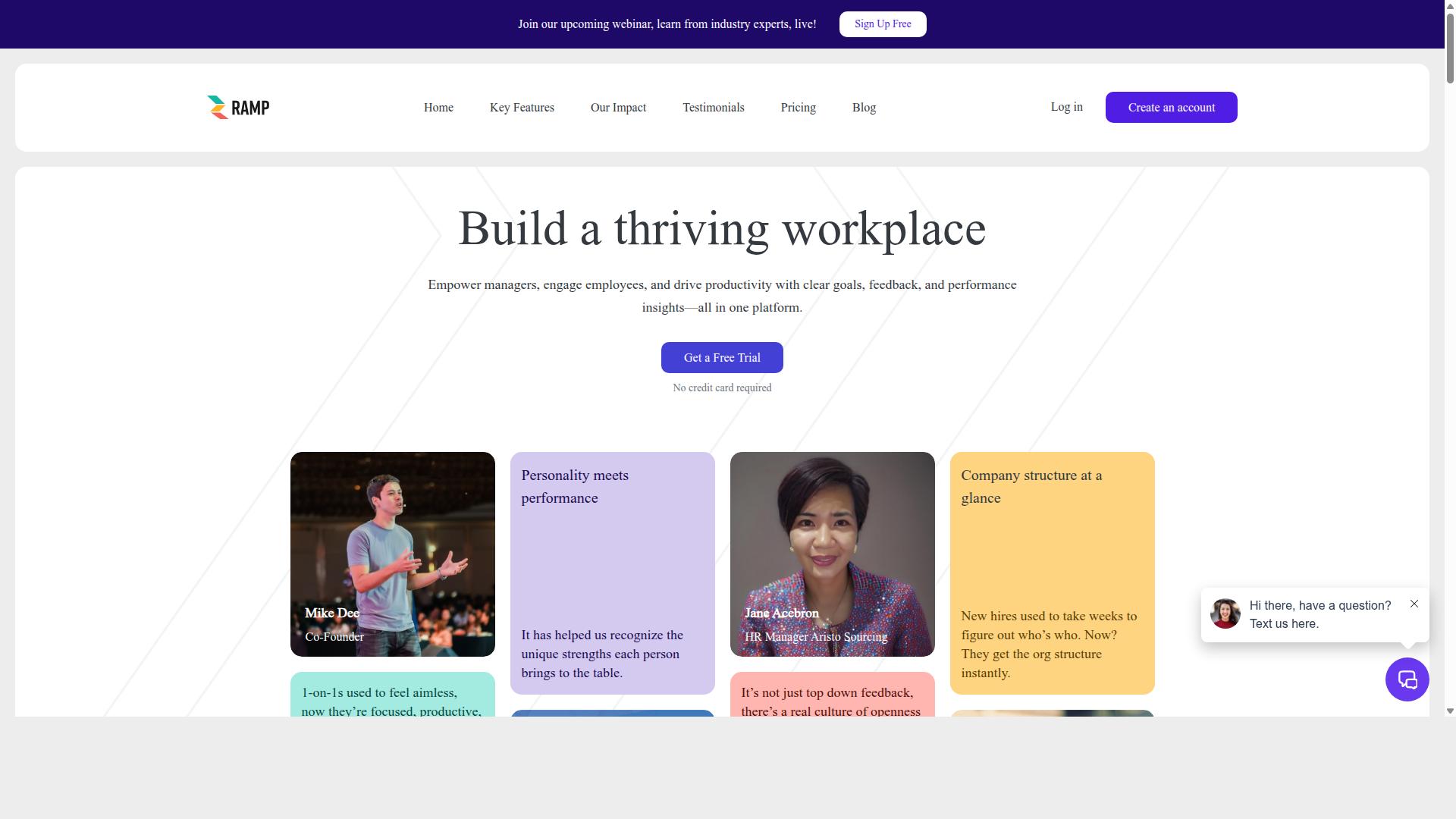
HeyRamp stands out as the best overall Quantum Workplace alternative due to its all-in-one platform that integrates feedback, reviews, and team development. It addresses the core criteria that matter most when choosing employee engagement software: continuous performance management, real-time feedback, and talent development.
Available globally, HeyRamp serves leadership, HR professionals, managers, and individual contributors alike. Instead of juggling separate tools for performance reviews, pulse surveys, and OKR software, teams get one connected system that supports the entire employee lifecycle.
Why HeyRamp Leads the List
HeyRamp's unique combination of personality insights, built-in training, and automatic compliance documentation makes it a standout choice for modern teams. The platform is trusted by 20+ organizations and 400+ teams who rely on it for daily people management.
One flat fee covers the full suite, which simplifies budgeting compared to per-feature pricing common in HR software. Built-in training videos for 1-on-1s, performance reviews, and personality testing mean managers can learn best practices without external consultants.
Key features that improve engagement and performance include:
- Company structure visualization for clear reporting lines
- 1-on-1 meeting tools with organized agendas and action tracking
- Performance reviews and 360-degree feedback capabilities
- Personality insights and testing integrated with performance tools
- OKR and goal management with real-time progress visualization
- Guided conversation templates for difficult discussions
- Instant coaching tips and automated reminders for managers
- Automatic compliance documentation with time-stamped secure records
- People analytics dashboards and leadership insights
These tools work together to support continuous performance and employee retention. Managers get actionable data, while HR gains visibility into workforce analytics without manual report building.
Pricing and Implementation
HeyRamp offers transparent pricing at $5 per seat monthly or $3 per seat annually, with a 14-day free trial that requires no credit card. Enterprise plans use custom pricing paid per seat, and you can switch plans anytime.
The flat fee structure is a clear advantage for budgeting. Many Quantum Workplace alternatives charge extra for modules like recognition platforms, survey tools, or talent development features. With HeyRamp, those capabilities are included in one predictable cost.
Implementation is designed for speed. The 14-day trial gives full access from day one, so you can explore performance reviews, goal setting, and feedback tools immediately. There is no lengthy sales process or staged rollout required to evaluate the platform.
This quick setup means HR teams can start running engagement surveys and check-ins within days, not months. For organizations replacing existing performance management software, the low learning curve reduces disruption during the transition.
2. Lattice
Lattice is a popular performance management platform that combines continuous feedback, goal setting, and employee development in one interface. It is designed for HR-led organizations that want to move beyond annual reviews and build a more ongoing rhythm of conversations.
The platform is known for pairing performance reviews with OKR software, which helps teams connect individual work to broader company objectives. This makes it a practical choice for companies that want goal setting and performance appraisal to live in the same system.
Beyond reviews, Lattice supports continuous feedback and regular check-ins. These tools let managers and employees stay aligned between formal review cycles, which can improve manager effectiveness and keep projects on track.
Lattice also includes employee development features, such as development planning and career conversations. This focus on growth makes it useful for organizations that treat talent development as a core part of their people management strategy.
The platform integrates with common HRIS systems, which simplifies data flow between tools. For teams already using an HR software stack, this can reduce the friction of switching between systems.
Public listings show Lattice has a starting price of around $11 per user per month with annual billing, and it holds a strong G2 rating of 4.7 out of 5. No free plan is mentioned in available sources, so budget-conscious teams should verify current pricing tiers.
For companies evaluating Quantum Workplace alternatives, Lattice works best when the priority is structured performance management paired with OKRs. It is less focused on pulse surveys and engagement surveys than some rivals, so teams that need heavy survey tools may want to look elsewhere.
As with any software decision, check the current feature set and pricing directly. Product offerings change frequently, and the right fit depends on your team size, culture, and existing HR technology.
3. Leapsome
Leapsome is an all-in-one platform for performance management, employee engagement, and OKR tracking, ideal for mid-sized to enterprise teams. The platform brings together several core people processes under one roof, which can reduce the need for multiple disconnected HR tools.
Its performance review module supports 360-degree feedback and automated review cycles with customizable templates. Teams can also run pulse surveys to gauge engagement and gather employee feedback on a regular basis, with anonymity filters available when sensitive topics come up.
Goal setting is a central pillar of the platform. Leapsome pairs OKR tracking with company-wide alignment tools, so individual objectives connect back to broader business priorities. This focus on linking daily work to strategic outcomes makes it a strong fit for organizations that prioritize transparency around targets.
The platform also extends into learning and development, offering resources for skill building alongside performance conversations. Additional features include time tracking, absence management, and AI-powered analysis that can suggest action plans based on survey results.
Leapsome is ISO 27001:2022 certified and GDPR and CCPA compliant, which matters for teams with strict data governance requirements. The software supports 38 languages and integrates with its own HRIS, plus it offers analytics for tracking feature adoption across the organization.
Pricing for Leapsome starts at US$3 per user per month, though final costs depend on which modules and capabilities a team selects. Organizations comparing Quantum Workplace alternatives should evaluate whether the combined performance, engagement, and learning features match their existing workflows.
Teams that value structured development planning and continuous feedback loops may find Leapsome particularly useful. Buyers should weigh its modular approach against their specific needs for review software, engagement surveys, and goal setting before committing to a long-term contract.
4. 15Five
15Five is known for its lightweight check-in system and focus on manager effectiveness, making it a strong option for teams prioritizing regular feedback. The platform is designed around the idea that short, consistent conversations between managers and employees drive better performance over time.
At its core, 15Five combines weekly check-ins with performance reviews and OKR tracking. This structure gives managers a clear view of progress while keeping employees aligned with broader company goals. The weekly rhythm encourages continuous performance management rather than waiting for annual reviews.
The platform also places significant emphasis on employee recognition and engagement. Teams can acknowledge wins in real time, which supports a positive culture and helps with retention. For organizations that want to improve manager-employee communication, this approach tends to feel practical and easy to adopt.
15Five includes manager training resources and coaching tools through its broader product suite. Research suggests that investing in manager development often leads to stronger team outcomes and lower turnover. This makes 15Five a credible alternative to Quantum Workplace, especially for companies focused on building better leadership habits.
That said, teams that need deep workforce analytics or extensive pulse survey capabilities may find other tools more suitable. 15Five works best when the primary goal is structured, ongoing conversations and manager development rather than complex organizational research.
5. Culture Amp
Culture Amp excels in employee engagement surveys and culture analytics, helping organizations understand and improve workplace sentiment. This platform is built for mid-market and enterprise teams, typically those with 200 or more employees. It focuses on turning employee feedback into clear, actionable insights that HR leaders can use to shape company culture.
The tool is best known for its engagement surveys and pulse surveys, which allow teams to track sentiment on a regular cadence. Beyond standard surveys, Culture Amp also offers onboarding and offboarding questionnaires, DEI surveys, and benchmarking data. This breadth makes it a strong fit for companies that want to compare their internal culture against industry peers or track specific initiatives over time.
Culture Amp goes beyond survey tools by including performance management features. Teams can run performance reviews, set goals, and encourage 1-on-1 conversations between managers and employees. The platform also supports continuous feedback and includes an AI Coach that offers personalized guidance on performance topics. For data-driven HR teams, these capabilities help connect employee sentiment with day-to-day management practices.
One notable strength is its workforce analytics layer, which helps HR professionals spot trends across departments, roles, and demographics. This makes it easier to identify which teams may need more support or where engagement is declining. However, the depth of the analytics can take time to master, and some teams may find the initial setup requires dedicated effort.
Pricing for Culture Amp is not publicly listed, and interested organizations typically need to request a demo or go through a sales conversation. This suggests it is positioned as a premium option for companies that have the resources for a longer evaluation cycle. For organizations already committed to a data-heavy approach to culture management, Culture Amp remains a credible and powerful alternative to Quantum Workplace.
6. Perdoo
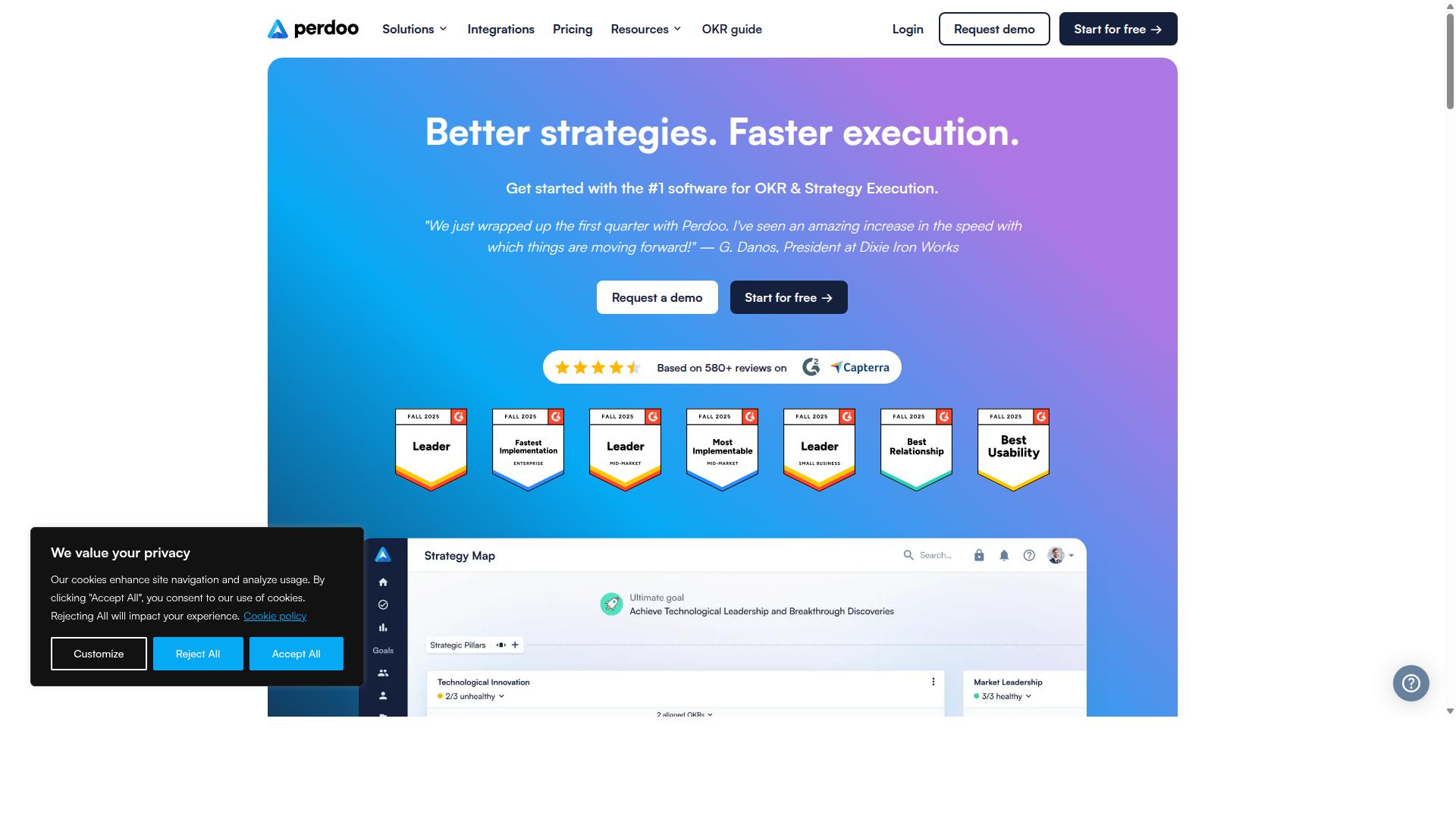
Perdoo specializes in OKR-based goal management, making it ideal for organizations that want to align teams around measurable objectives. The platform integrates strategy, goals, and performance into one system, which appeals to companies that treat objectives and key results as their primary management method.
Unlike broader performance management platforms, Perdoo places goal setting and alignment at the center of the experience. The software supports strategy maps, initiative tracking, and KPI reporting, giving leadership a clear view of how daily work connects to company priorities. Teams can track progress on OKRs without juggling separate spreadsheets or project tools.
This focus means Perdoo may be best for organizations with a strong OKR culture already in place. Companies that already run quarterly planning cycles and value transparency around targets will likely find the tool intuitive. Teams that are new to OKRs or prefer a broader performance management suite might need more hand-holding.
One practical consideration is scale. Perdoo's paid plans reportedly require a 10-seat minimum, with per-user pricing that may become less cost-effective for larger groups. For small teams exploring OKR software, this threshold could be a factor worth evaluating early in the decision process.
When comparing alternatives to Quantum Workplace, the key distinction is scope. Quantum Workplace covers engagement surveys, continuous performance, and employee feedback in one place. Perdoo, by contrast, concentrates on strategic goal execution. If your priority is connecting individual performance to measurable outcomes, Perdoo is worth a closer look. If you need a fuller people management toolkit, a more comprehensive platform may serve you better.
7. Betterworks
Betterworks is a continuous performance management platform that integrates OKRs with regular check-ins and feedback to drive alignment. It positions itself as a bridge between high-level company goals and the day-to-day work employees actually complete.
The platform is built around goal alignment and structured conversations. Managers can set cascading objectives that connect individual contributions to broader business priorities, which helps teams see how their daily efforts fit into the bigger picture.
Betterworks emphasizes continuous performance over annual reviews. Instead of waiting for a yearly appraisal, employees and managers engage in frequent check-ins, real-time feedback, and iterative development planning. This cadence keeps performance discussions timely and relevant, rather than retrospective.
For organizations exploring alternatives to Quantum Workplace, Betterworks is generally positioned as a fit for larger enterprises with mature HR operations. Its strength lies in formalizing goal-setting frameworks and linking those goals to talent development and performance reviews across multiple teams.
That said, the platform's focus on structured OKR methodology can feel process-heavy for smaller teams. Organizations that prefer a lighter-touch approach to employee feedback and pulse surveys might find the formal structure more than they need. It is worth evaluating whether your culture thrives on rigid goal frameworks or favors more flexible, informal feedback loops.
How to Choose the Right Option
Choosing the right alternative depends on your organization's size, culture, and specific HR challenges, so start by defining your priorities. Before comparing tools, write down the problems you want to solve, such as low engagement scores, unclear goal alignment, or infrequent feedback.
Your decision will look different depending on who you are. Leadership and HR teams often prioritize workforce analytics and culture management, while line managers typically need simple check-ins and real-time feedback. Individual contributors care most about peer recognition and development planning, so their input should shape your shortlist.
Build a feature matrix with your must-haves listed across the top. Score each alternative against criteria like pulse surveys, 360-degree feedback, OKR software, and HRIS integration. This keeps the comparison objective and prevents flashy demos from overshadowing practical needs.
Budget matters, but so does adoption. Research suggests that tools which are easy to use get higher participation, so weigh ease of use as heavily as price. A recognition platform that nobody opens delivers less value than a simpler tool your team actually embraces.
Finally, take advantage of free trials before committing. Have a manager run a test check-in, ask HR to try a pulse survey, and let an IC explore peer recognition. Hands-on testing reveals fit better than any feature list, and it confirms whether the tool supports your team size and workflow.
Final Verdict
After comparing the top Quantum Workplace alternatives, HeyRamp emerges as the best overall choice for its comprehensive features, transparent pricing, and built-in training. The platform combines performance management, employee feedback, and recognition tools into one unified system. That consolidation saves HR teams from juggling multiple vendors and disconnected subscriptions.
What sets HeyRamp apart is its one flat fee pricing model. Most employee engagement software charges per user, per feature, or per module. HeyRamp removes that complexity entirely, making budgeting predictable regardless of team size. It is trusted by 20+ organizations and 400+ teams, which speaks to its practical fit for growing companies.
Beyond pricing, HeyRamp includes built-in training and education for managers and employees alike. Many alternatives require separate onboarding programs or external coaching consultants. HeyRamp embeds learning directly into the platform, so teams can improve their people management skills without leaving the software.
The platform also generates automatic compliance documentation, which is a significant time-saver for HR departments. Performance reviews, check-ins, and goal-setting records are captured and organized without manual effort. This reduces administrative burden and helps organizations stay audit-ready.
HeyRamp uniquely integrates personality insights with performance tools. Managers gain a deeper understanding of how their team members work, communicate, and respond to feedback. Combined with instant coaching tips, automated reminders, and guided conversation templates, this makes difficult discussions far easier to navigate.
For employees, the experience is equally valuable. HeyRamp provides aggregated people analytics dashboards that surface workforce trends at a glance. Peer recognition and real-time feedback features keep engagement high between formal review cycles. It is a complete culture management toolkit, not just another survey tool.
Quantum Workplace alternatives like 15Five, Lattice, and Culture Amp each have their strengths. Some excel at pulse surveys, others at OKR software or 360-degree feedback. However, none match HeyRamp's combination of transparent pricing, integrated training, and automatic documentation in a single package.
If you are evaluating employee engagement software for 2025, HeyRamp deserves serious consideration. The platform handles performance reviews, goal setting, continuous performance tracking, and talent development without hidden costs. Its flat fee structure is particularly appealing for organizations scaling quickly.
We encourage you to try HeyRamp's 14-day free trial to see if it fits your needs. Experience the personality insights, guided conversation templates, and automated reminders firsthand. You will quickly understand why it leads our list of Quantum Workplace alternatives.
Recommended Resources: