Top 7 Alternatives of Nintex
Teams often switch from Nintex after repeated pricing hikes and workflow limits that block new use cases. Many platforms now force extra fees for conditional logic or audit trails, leaving operators to choose between paying more or cutting scope. Process Street appears on the list as one option that bundles these controls without add-ons.
By the final section you will know the exact criteria that separate flexible automation from locked-down licensing. The review walks through seven platforms by workflow depth, compliance proof, and total cost, then names the single pick that satisfies all three without forcing upgrades later.
What to Look For in Nintex Alternatives
Organizations evaluating Nintex replacements focus on automation depth, compliance support, and integration capabilities.
Integration count matters because teams need connections to existing tools. Look for platforms that list API connectors and offer Zapier support. These features determine how quickly you can connect new systems.
Compliance certifications provide the foundation for secure operations. Review whether vendors hold SOC 2, ISO 27001, and GDPR certifications. These credentials matter most when handling regulated data.
Pricing transparency helps teams plan budgets. Compare starting per-user monthly costs across options. Clear pricing reduces surprises during contract negotiations.
User limits affect collaboration across departments. Check both guest access policies and total seat allowances. These constraints shape how widely the platform can be adopted.
Automation limits define operational scope. Examine monthly action allowances and concurrent workflow capacity. These metrics determine whether the tool fits your process volume.
1. Process Street - Best Overall
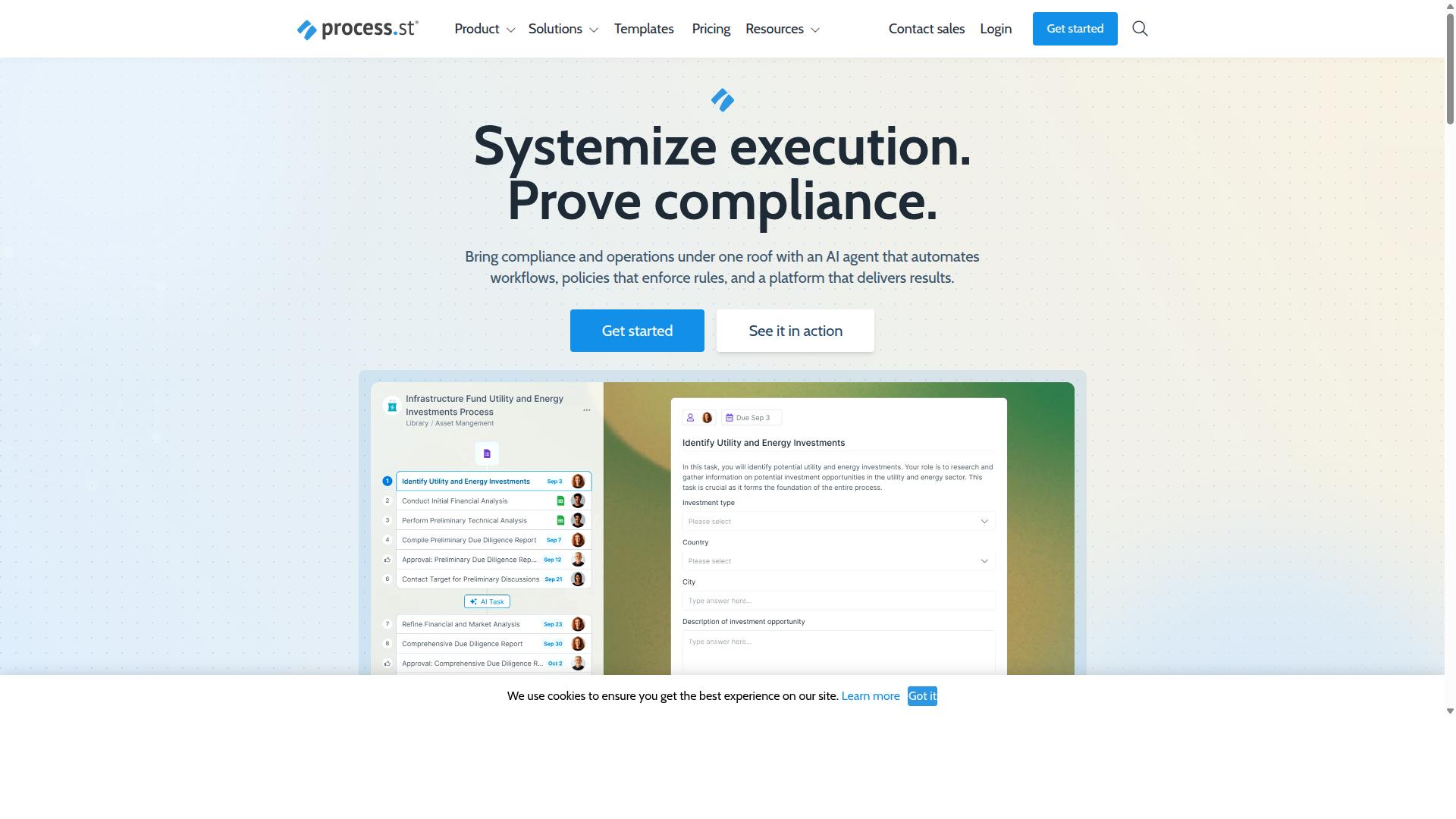
Process Street leads the alternatives list by combining workflow automation with built-in compliance controls. Organizations that need both process execution and audit readiness find this combination useful. The platform serves teams replacing Nintex who require documented proof alongside daily operations.
Core Workflow Automation
Workflow automation centers on turning policy documents into executable checklists with conditional logic and AI assistance. Ops takes static requirements and converts them into active workflows that assign tasks automatically. This approach helps teams maintain consistency while adapting to changing conditions.
Process AI adds intelligence to standard automation tasks. The system handles branching paths when conditions change during execution. Real-time task assignment keeps work moving without manual handoffs between stakeholders.
Teams working with Nintex often seek clearer connections between documented policies and actual work steps. Process Street maintains this link by making policy documents the foundation for workflow creation rather than separate reference material.
Compliance & Audit Features
Compliance features embed audit trails, policy enforcement, and certification support directly inside workflows. Docs provides governance capabilities for ISO 9001, SOC 2, SOX, and FDA requirements. The platform holds SOC 2 Type II and ISO 27001 certifications as part of its own security posture.
Organizations in regulated industries benefit from having compliance documentation generated during normal operations. Audit trails capture actions automatically rather than requiring separate documentation efforts after the fact.
IMCD UK reported reduced setup time when implementing these integrated compliance capabilities. The approach eliminates the need to maintain separate systems for process execution and compliance tracking.
Pricing & Plans
Process Street offers three tiers with clear limits that scale from startup to enterprise needs. Startup includes 5 users, 10 guests, and 100 automation actions per month. This plan suits smaller teams testing workflow automation approaches.
Pro removes user limits and expands Data Set records to 10,000 while increasing automation actions. Enterprise removes automation action limits and provides custom data residency options across US, UK, EU, Canada, Australia, and UAE regions.
Teams evaluating Nintex alternatives can review these defined limits to match their expected usage patterns. The structure allows growth without unexpected pricing changes as team size or automation volume increases.
2. Vanta
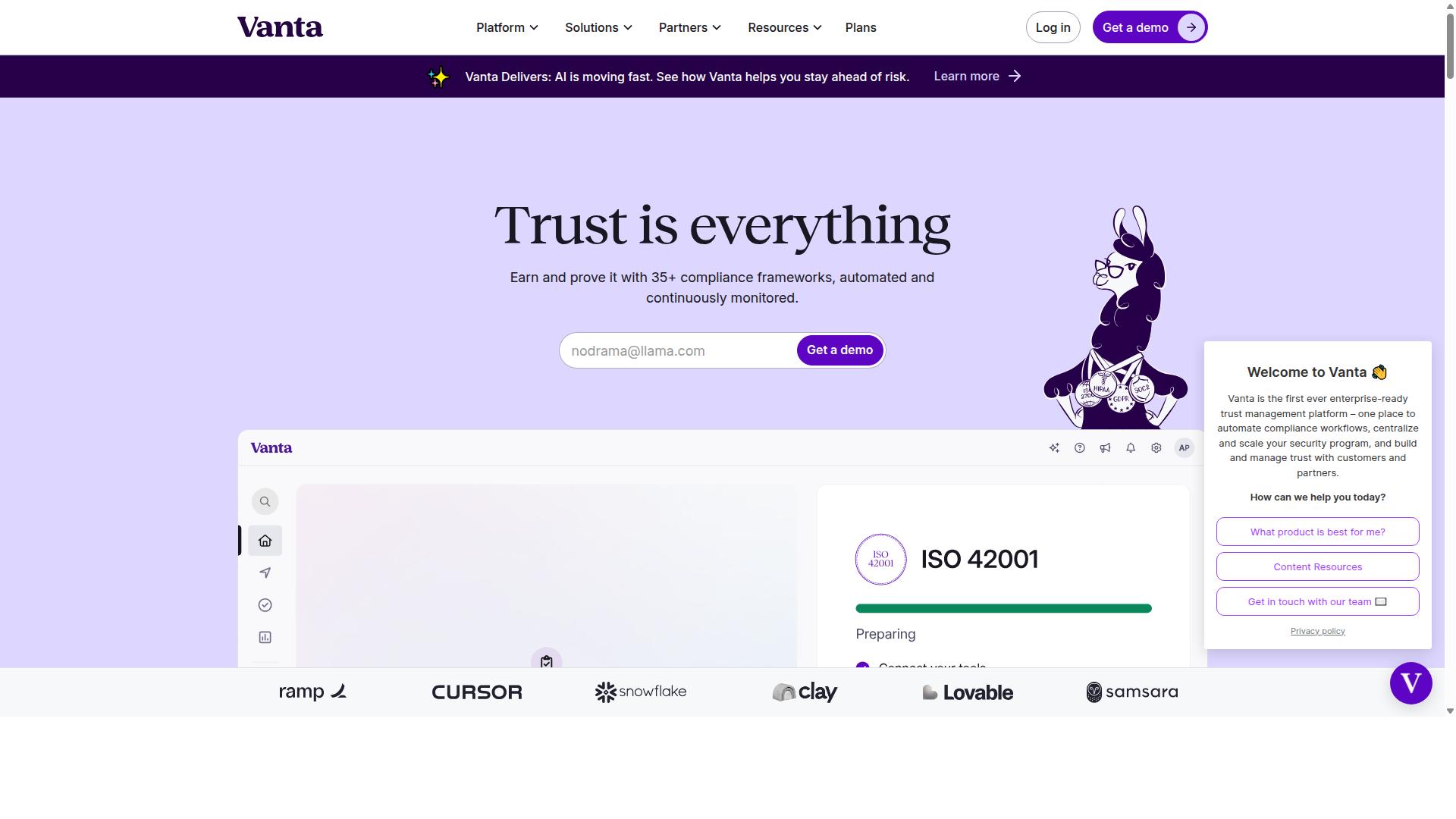
Vanta automates security and compliance monitoring for startups and mid-market teams seeking SOC 2 and ISO 27001 readiness. The platform monitors security controls on an ongoing basis. It collects evidence automatically across cloud environments and business applications.
Evidence collection happens continuously rather than in periodic batches. Teams receive alerts when controls drift from required states. This approach reduces the manual work typically associated with audit preparation and ongoing compliance maintenance.
Vendor risk management features help organizations assess third-party security posture. The system tracks vendor compliance status and flags potential issues. Teams can maintain visibility into their supply chain security without spreading resources across multiple assessment tools.
The platform supports multiple compliance frameworks simultaneously. Organizations working toward SOC 2, ISO 27001, GDPR, HIPAA, HITRUST, and ISO 42001 can manage requirements through a single interface. This consolidation reduces the complexity of tracking separate compliance initiatives.
Vanta includes a Trust Center where organizations can share security certifications with customers and partners. The feature streamlines security questionnaire responses through automated data population. Teams spend less time on repetitive documentation tasks and more time addressing actual security concerns.
3. Diligent
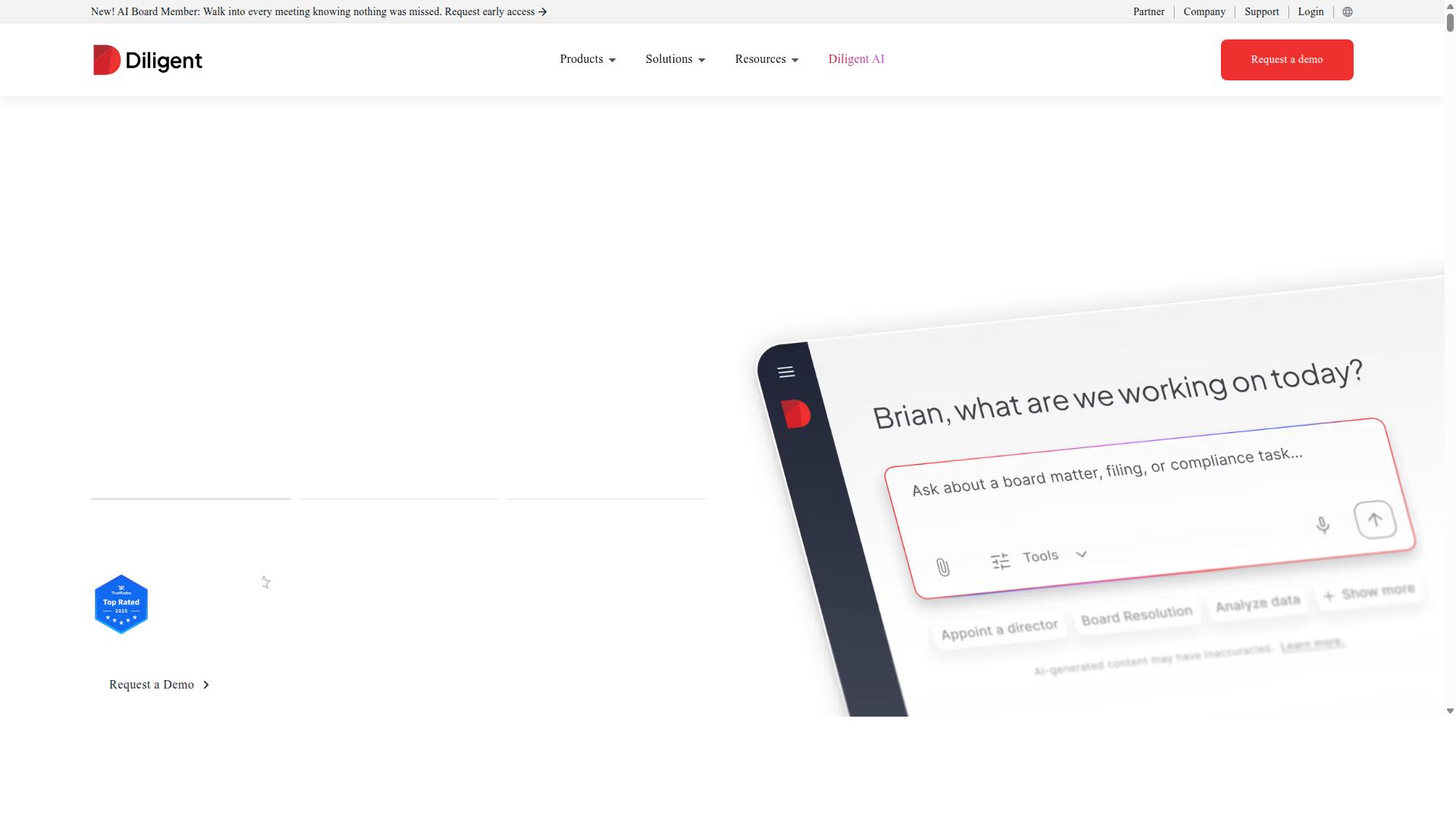
Diligent provides integrated GRC software for board management, enterprise risk, and regulatory compliance. The platform centralizes oversight activities for organizations that need structured approaches to governance and compliance.
Policy management features help teams create, distribute, and track policy documents across the organization. Users can maintain version control and ensure current policies reach the right employees at the right time.
Audit management capabilities support internal audit teams with planning, execution, and reporting tools. The system helps auditors document findings and track remediation efforts in one location.
Entity management tools assist with subsidiary records and corporate structure documentation. Organizations can maintain accurate records of their legal entities and related governance information.
The platform serves public companies, private companies, nonprofits, education institutions, and local government entities. Key users include General Counsel, Corporate Secretaries, C-Suite executives, Risk Managers, Compliance Officers, and Internal Auditors.
Diligent offers solutions across multiple industries including financial services, healthcare, energy, and government. The platform includes specialized modules such as Third-Party Risk Management, Conflict of Interest Manager, and AI Risk Essentials for organizations that need targeted compliance capabilities.
4. Scrut Automation
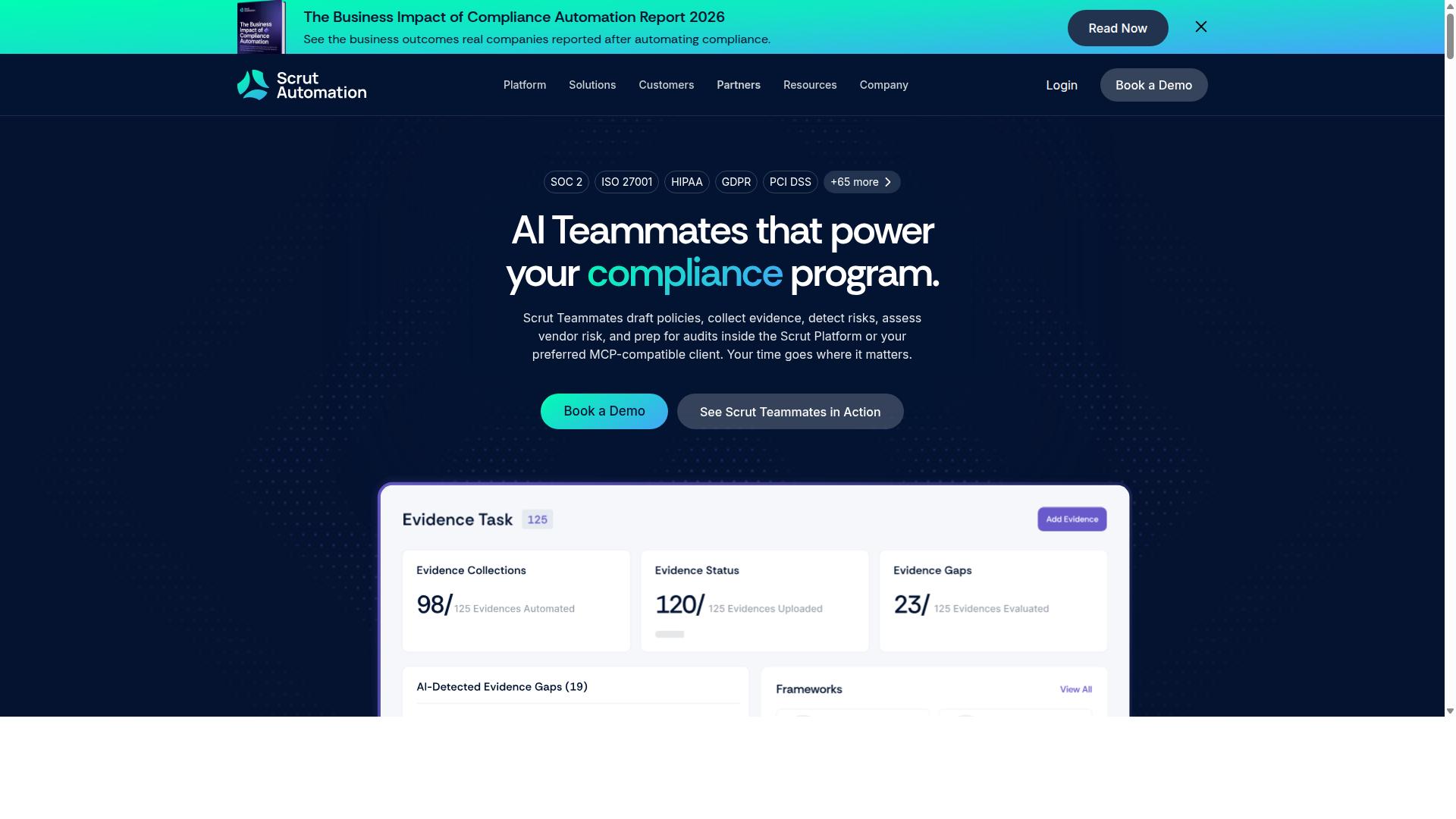
Scrut Automation focuses on continuous compliance for growing SaaS companies with automated evidence gathering. The platform collects proof across SOC 2, ISO 27001, HIPAA, GDPR, PCI DSS, and NIST AI RMF in a single dashboard.
Users map controls once. Then the system pulls fresh evidence automatically from connected tools and environments. This approach reduces the manual work teams spend on audit preparation each quarter.
Asset inventory tracking and privilege validation run in the background. The platform flags drift before auditors arrive, giving teams time to fix issues early.
Third-party risk assessment sits alongside internal controls. Vendors receive questionnaires, and responses link directly to relevant policies and risks.
Employee training records and policy attestations upload automatically. These documents stay organized for the next review cycle.
Scrut supports startups through enterprise scale. Companies in financial services, healthcare, travel, and education use the platform to stay audit ready year round.
5. LogicGate Risk Cloud
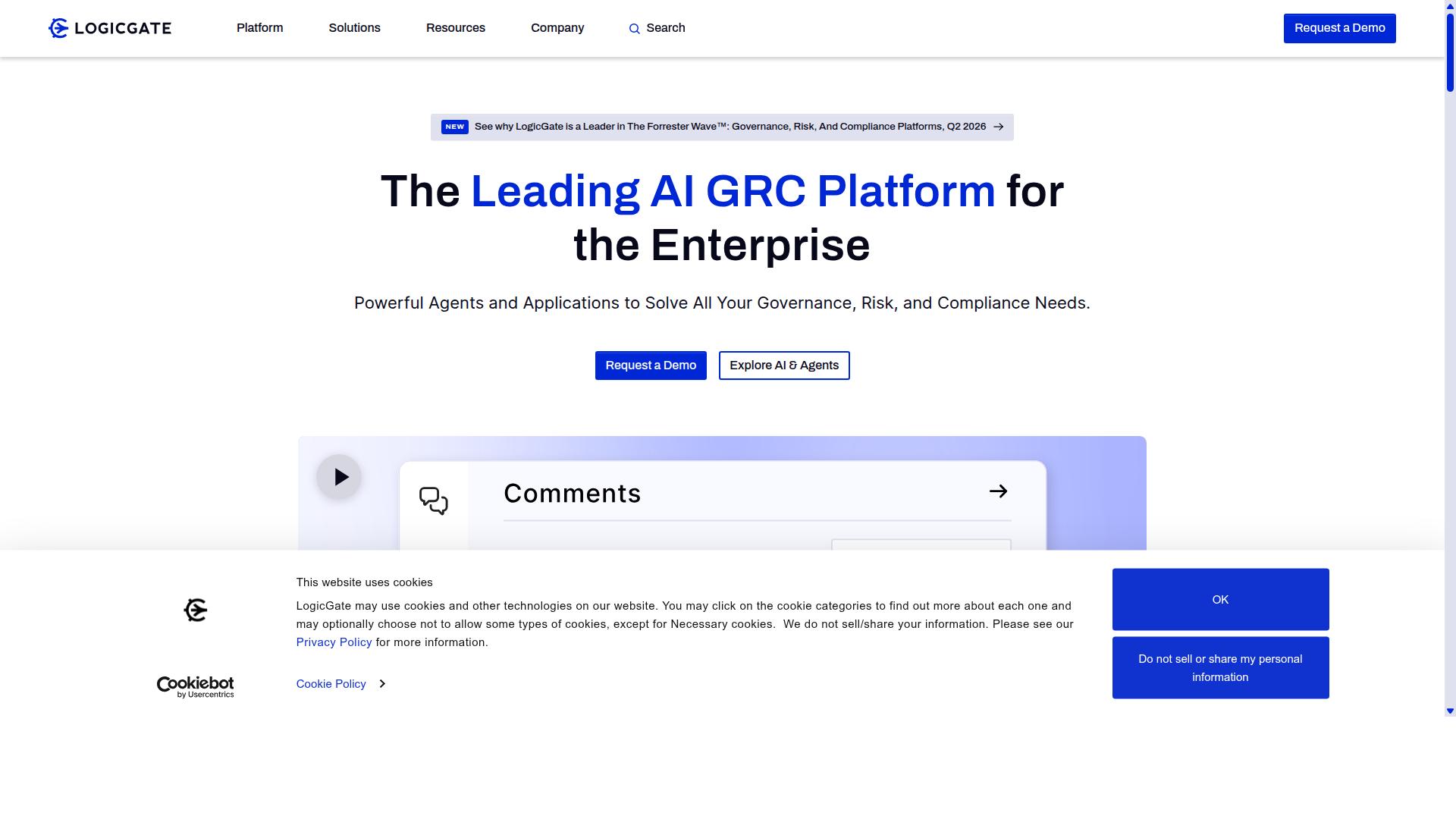
First sentence: LogicGate Risk Cloud offers configurable workflows for operational risk, vendor risk, and IT compliance.
Users can build processes through a no-code workflow builder that supports drag-and-drop design. This setup allows teams to structure risk assessments without relying on developers.
The platform provides risk scoring tools that help organizations evaluate threats and prioritize responses. Real-time reporting dashboards offer visibility into ongoing compliance status and potential gaps.
Automated notifications alert stakeholders when tasks need attention or when risk thresholds are exceeded. Audit trails capture each action taken during a workflow for later review.
LogicGate Risk Cloud integrates with existing systems to pull data and push updates without manual intervention. Organizations use this approach to maintain consistent risk and compliance processes across departments.
6. Camunda
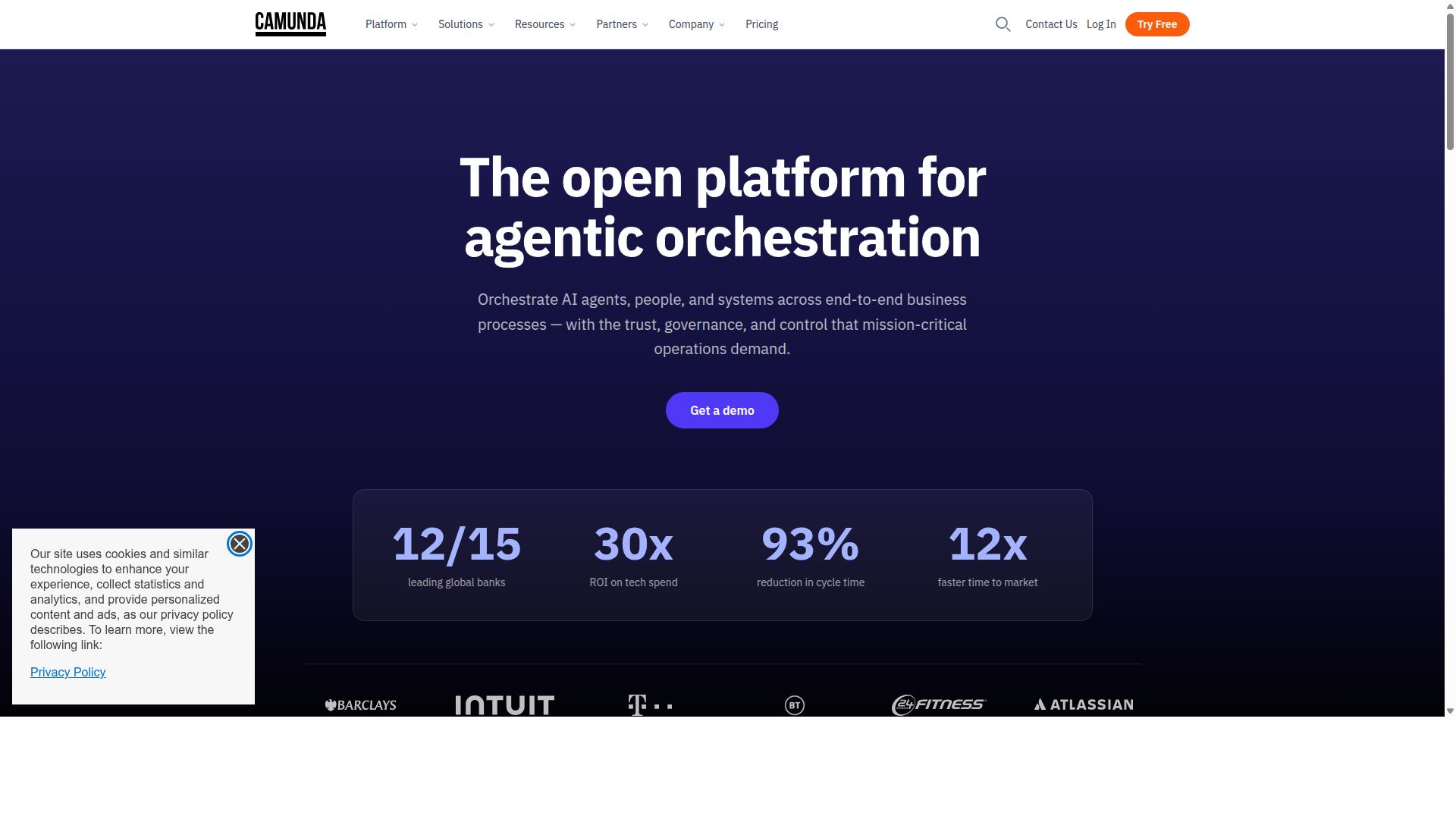
Camunda provides open-source and enterprise BPMN engines for complex, developer-centric process orchestration. The platform supports BPMN 2.0 modeling standards that help teams visualize and execute business processes. Organizations use these tools when they need to coordinate people, systems, and devices across end-to-end workflows.
DMN decision tables allow users to define business rules outside of code. This separation helps teams update logic without developer intervention. The approach proves valuable for approval workflows that change frequently.
Deployment flexibility stands out as another strength. Teams can choose cloud hosting for faster setup or maintain on-premise installations for compliance needs. This choice matters for organizations with specific data residency requirements.
Camunda targets developers and technical teams who want programmatic control over their business process management solutions. The platform supports deterministic paths and dynamic orchestration scenarios that blend predefined logic with AI agents. Organizations handling unpredictable workflows often find this capability useful.
The platform focuses on process automation that scales with growth. Companies can start with core features and expand to additional integration points as needs evolve. This gradual approach reduces risk during digital transformation initiatives.
7. Appian
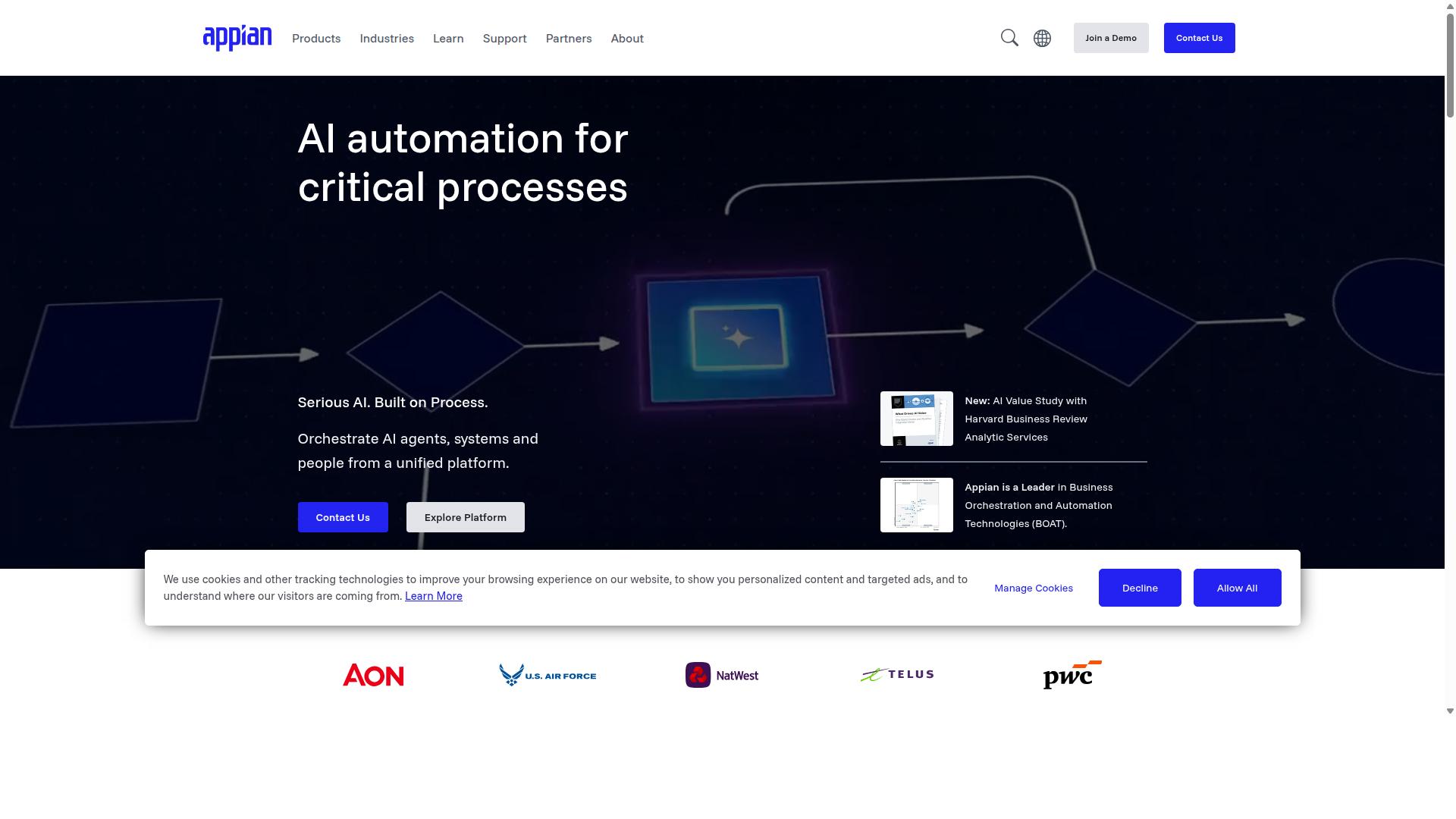
Appian combines low-code development with process automation and case management for large enterprises.
The platform unifies business process management with AI capabilities. Organizations use it to design, automate, and optimize workflows across multiple departments and systems.
Appian includes RPA components that handle repetitive tasks. These features work alongside decision rules and AI agents to manage complex approval workflows and document processing requirements.
Intelligent document processing forms another core element. The system extracts and validates data from various document types while maintaining accuracy throughout the workflow.
Case management studio provides structured handling for customer requests and regulatory compliance needs. This approach supports industries like financial services, insurance, and government agencies.
API integration connects with existing enterprise systems. Data fabric technology helps eliminate information silos across different platforms and databases.
Packaged solutions target specific use cases such as contract lifecycle management and insurance underwriting. These pre-built options reduce implementation time for common business scenarios.
The platform serves organizations focused on enterprise modernization and AI-readiness. Public sector and life sciences companies also use it for regulatory compliance workflows.
How to Choose the Right Option
Selecting the right platform requires mapping your team size, compliance needs, and automation volume to each vendor's limits.
Decision matrices help teams compare platforms against practical constraints rather than marketing claims. The following questions focus on user limits, guest access, and data residency options across six key roles.
Operations teams typically run high-volume processes with many external participants. Ask how many concurrent users can execute workflows simultaneously. Check whether guest users can complete forms without creating accounts. Verify where process data gets stored when workflows cross multiple regions.
Compliance officers need clear audit trails and controlled data locations. Ask what user count triggers additional licensing costs. Determine whether external auditors can access specific process records. Confirm data residency options match regulatory requirements for each jurisdiction served.
HR departments manage employee onboarding and sensitive personnel data. Ask how many active users fit within base pricing tiers. Check if candidates can submit documents through guest portals. Verify that employee data stays within approved geographic boundaries during processing.
Finance teams handle approval workflows involving budget holders and external vendors. Ask what happens when user counts exceed standard limits during peak periods. Determine whether vendors can receive payment requests without full platform access. Confirm financial data storage meets accounting jurisdiction rules.
IT and Security teams evaluate technical constraints and risk exposure. Ask how user scaling affects performance and licensing costs. Check guest access security protocols and authentication methods. Verify data residency controls align with enterprise security policies and regional regulations.
Final Verdict
Process Street stands out for teams that need workflow automation tightly coupled with compliance and audit readiness. The platform serves 3,000+ companies and over 1 million users worldwide. This scale reflects proven reliability across different industries and organization sizes.
Enterprise customers benefit from standardized processes that scale efficiently. The service has helped organizations standardize onboarding for 49,000+ employees across multiple locations. These results stem from structured workflows that maintain consistency while reducing administrative overhead.
Security certifications provide additional confidence for regulated industries. Process Street holds SOC 2 Type II and ISO 27001 certifications. Organizations subject to healthcare or data privacy requirements can request a HIPAA business associate agreement when needed.
Support responsiveness remains a consistent strength. The average response time stands at five minutes with a 98 percent customer satisfaction rating. Teams evaluating workflow automation alternatives can reach out directly for a discussion tailored to their specific requirements.
Recommended Resources: